
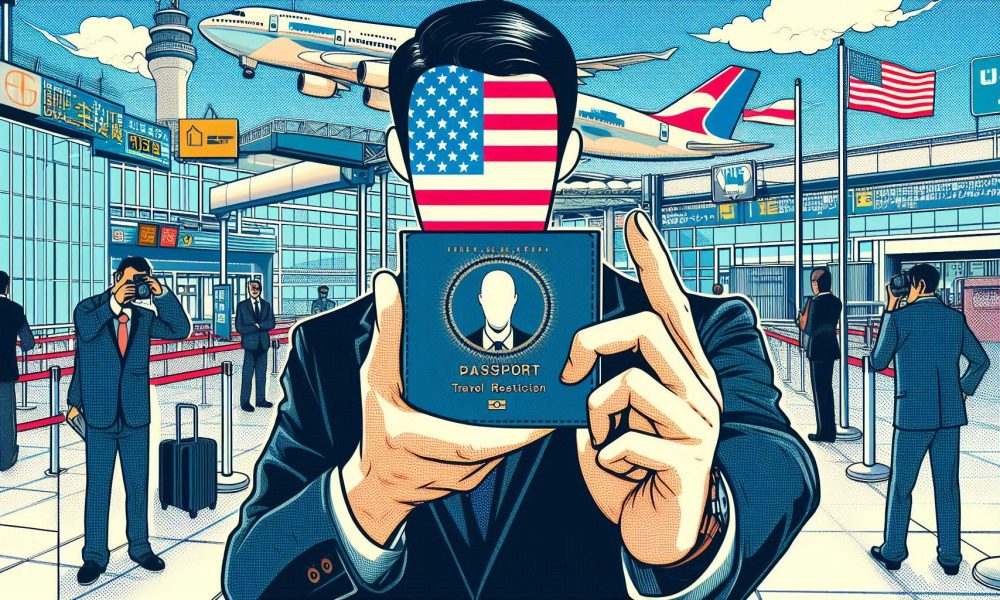
How Surveillance, Sanctions, and Selective Sovereignty Are Redrawing the Map of Who Can Travel in 2025
VANCOUVER, British Columbia — June 5, 2025 — Once hailed as a triumph of globalization and diplomacy, visa-free access, unrestricted tourism, and economic migration have been sharply curtailed. In 2025, the promise of global mobility has been replaced with digital walls, biometric checkpoints, algorithmic profiling, and a new form of travel apartheid that silently determines who gets to move—and who doesn’t.
A comprehensive investigation by Amicus International Consulting, a firm specializing in second passports, digital identity restructuring, and privacy-driven mobility solutions, reveals that global travel freedom is shrinking at an alarming pace. This rollback is not occurring solely through declared policy changes, but rather through an invisible scaffolding of surveillance infrastructure, preemptive vetting systems, AI-generated no-fly lists, and ever-expanding visa regimes.
While passports once opened doors, today they merely mark the starting point of a digital evaluation that determines your mobility score—and your future.
A Decade of Regression: The Fall of Mobility Rankings
In the early 2010s, international travel hit an all-time high. Visa-free treaties multiplied, low-cost airlines expanded access, and millions moved freely for work, education, and leisure.
But the last decade has reversed that progress. According to the 2025 Passport Index, only 48 countries have seen improvements in mobility since 2020, while 127 have seen either stagnation or decline. Nations previously considered “passport strongholds”—such as the U.S., U.K., and Germany—now face reciprocal visa requirements, particularly in the Middle East, Asia, and Africa.
The reasons include:
Retaliatory diplomatic measures
AI-based national risk scoring
Rise in right-wing populism and nationalism
Militarized pandemic-era travel protocols that were never rolled back
Algorithmic suspicion based on digital behaviour
Case Study: Indian Entrepreneur Denied Despite Visa-Free Access
Rohit P., a 37-year-old Indian national and business executive, was denied boarding at Frankfurt Airport in 2024 en route to Mexico, a country with which India has reciprocal visa-free agreements for business travellers.
Although his documents were in order, a biometric scan flagged his previous travel to Iran and the use of encrypted messaging apps on his phone, as a result, airline staff were issued an “offload request” by Mexican border authorities via the global API-PNR system (Advanced Passenger Information and Passenger Name Record).
He was never officially denied entry, yet he was prevented from travelling, and the incident never appeared on paper. His only mistake: travel metadata that made him look suspicious to a machine.
The New Gatekeepers: AI and Predictive Border Security
In 2025, travel freedom is not determined by what you’ve done, but by what a government thinks you might do. Using real-time AI systems, countries now run predictive threat assessments on travellers. These systems scan for:
Political affiliations
Search engine histories
Encrypted communication use
Travel routes overlapping with “high-risk” zones
Social network affiliations and “guilt by association” analytics
This “Minority Report”-style system of pre-crime prediction has led to hundreds of thousands of denied entries, most without explanation or recourse.
Biometrics as Borders: The New Global Checkpoint
While traditional travel controls relied on passports and visas, modern mobility is increasingly filtered through biometric data, including facial recognition, iris scans, and fingerprinting. These systems are:
Deployed at 92% of all international terminals
Integrated with INTERPOL and FBI databases
Used to generate real-time matches with terrorist, criminal, or political threat profiles
Increasingly outsourced to private vendors with limited accountability
According to Amicus’ 2025 field report, over 120,000 travellers were rejected due to biometric mismatches or facial recognition misidentification last year alone.
Case Study: South Korean NGO Worker Flagged as a Threat
In 2023, a South Korean national working with a humanitarian NGO in Lebanon was denied entry to Canada at Pearson International Airport. The traveller held a visa and had no criminal record.
CBSA agents cited an algorithmic security risk. Internal documents later revealed that the traveller’s association with Middle Eastern activists on Facebook triggered an AI-generated national security warning, despite no direct communication with any blocked entity.
Second Passports: The Only Path Around Geopolitical Targeting
Amicus International Consulting reports a significant increase in second citizenship applications from individuals who wish to escape travel discrimination based on their nationality. Many are from:
China, Hong Kong, and Taiwan
Russia, Ukraine, and Belarus
Iran and Lebanon
Nigeria, Sudan, and Ethiopia
Venezuela and Colombia
By acquiring second passports legally through economic citizenship or ancestral lineage, clients can bypass risk profiling associated with their original nationality.
One such client, a Lebanese tech entrepreneur, was repeatedly denied visas to the EU and the U.S. despite his business credentials. After acquiring Grenadian citizenship through Amicus, he can now travel visa-free to over 145 countries and is no longer subject to secondary screening at airports.
Digital Discrimination: Metadata Is the New Border Wall
In the post-pandemic digital era, travel bans no longer need to be physical; instead, they can be implemented virtually. A person can be denied entry before they even board a plane—by machines interpreting their online behavior. Risk engines now scan for:
Tweets or posts criticizing foreign governments
Participation in protests (flagged via facial recognition in crowds)
Shared devices or IPs with high-risk individuals
Anonymous browsing tools like Tor or VPNs
Use of cryptocurrency wallets associated with sanctioned addresses
This level of surveillance has created a two-tier system of mobility: those with clean, controlled digital lives and those permanently flagged by invisible systems.
Dark Web Visas and the Rise of Black Market Mobility
As legal pathways narrow, the underground has risen to fill the void. Amicus cyber teams report a 300% increase in dark web listings for forged biometric passports, visa approvals, and synthetic identities.
Current black-market offerings include:
Legitimate visa approvals obtained via bribes in understaffed embassies
Deepfake-assisted biometric profiles that match stolen passport data
Fabricated travel histories that bypass algorithmic risk filters
“Clean” digital identities linked to shell corporations and crypto wallets
Interpol estimates that in 2024 alone, over 75,000 travellers entered countries using forged or manipulated travel profiles, many of which went undetected due to biometric spoofing.
Case Study: Stateless Activist Finds Mobility Through Amicus
An activist from Myanmar, stripped of her citizenship after organizing protests, was left stateless and unable to travel. She retained Amicus in 2023.
Through a combination of:
Legal name change via religious conversion in South Asia
Second passport from Dominica via the donation route
Digital footprint removal and metadata scrub
Resettlement support and diplomatic backing
She now resides legally in Europe under a new identity, has full mobility, and speaks freely as a human rights advocate, outside the reach of her persecutors.
Where You Can Still Move Freely
According to Amicus’ 2025 Global Mobility Resilience Index, the top five countries offeringfavourablee passport strength, digital neutrality, and geopolitical flexibility are:
Grenada
Portugal
Uruguay
Georgia
Antigua and Barbuda
These nations have minimal data-sharing obligations with aggressive surveillance states and offer flexible residency and citizenship programs.
Amicus International: Restoring Freedom of Movement
Amicus provides bespoke solutions to clients facing travel restrictions, including:
Second citizenship and passport acquisition
Metadata audit and digital cleansing services
Appeals for unjust visa denials
Residency relocation to privacy-focused countries
Legal support for political asylum and safe passage
With more than 900 successful second passport cases in the last two years, Amicus remains a global leader in restoring lawful movement rights to those trapped by digital profiling and geopolitical bans.
Conclusion: A New Cartography of Control
Borders have moved from maps to machines. Your travel rights are no longer printed in your passport, but instead coded into algorithms that assess your perceived intent, associations, and threat level. We have moved from open borders to silent closures, from diplomatic agreements to automated denials.
In this new world, knowledge is powe, —and Amicus International Consulting remains at the forefront of protecting that power.
Whether you’re a refugee from surveillance, a businessperson unfairly flagged, or a global citizen seeking freedom from digital constraints, Amicus ensures your right to move is restored, protected, and reimagined.
Contact Information
Phone: +1 (604) 200-5402
Email: [email protected]
Website: www.amicusint.ca




