

U.S. Clean Energy Market Overview
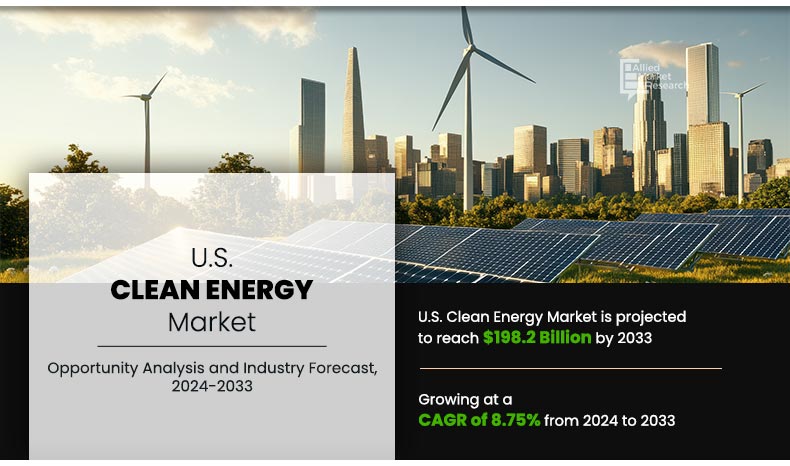
According to a new report published by Allied Market Research, the U.S. clean energy market size was valued at $85.7 billion in 2023, and is projected to reach $198.2 billion by 2033, growing at a CAGR of 8.7% from 2024 to 2033.
Clean energy produces minimal greenhouse gas emissions, particularly carbon dioxide (CO2), during its generation and utilization. This includes renewable energy sources as well as geothermal energy, which, while controversial in some respects, produce low CO2 emissions during operation.
Download PDF Brochure: https://www.alliedmarketresearch.com/request-sample/A325461
The U.S. clean energy market share expansion is profoundly influenced by policies and regulations enacted at both national and international levels.
The major players operating in the U.S. clean energy industry report include Vestas Wind Systems A/S, Siemens A.G., GE Vernova, NextEra Energy, First Solar, Inc., JA Solar, First Gen Corporation, Terra Gen LLC, Calpine, and DTE Energy.
Governments worldwide have implemented measures to promote the adoption of clean energy technologies as part of broader efforts to combat climate change and reduce greenhouse gas emissions.
Policies such as renewable energy mandates, feed-in tariffs, tax incentives, and carbon pricing mechanisms foster investments in clean energy projects and create a favorable market environment.
International agreements such as the Paris Agreement provide a framework for global cooperation on climate action, further incentivizing the transition to clean energy sources.
Sources of Clean Energy
- Solar Energy:
- Captured through solar panels and photovoltaic cells.
- Can be used for electricity generation and heating.
- Wind Energy:
- Generated by wind turbines that convert wind kinetic energy into electricity.
- Often used in large wind farms or smaller, distributed setups.
- Hydropower:
- Produced by harnessing the energy of flowing water, typically from rivers or dams.
- Can be a significant source of renewable electricity.
- Geothermal Energy:
- Utilizes heat from the Earth’s interior for electricity generation and direct heating applications.
- Particularly effective in volcanic regions.
- Biomass:
- Organic materials (like wood, agricultural crops, and waste) are converted into energy through combustion or biochemical processes.
- Can be used for heating, electricity, and biofuels.
Green building technologies represent a significant opportunity for the growth of the U.S. clean energy market. The construction and operation of buildings account for a substantial portion of global energy consumption and carbon emissions.
Green building technologies aim to reduce energy consumption, improve indoor air quality, and minimize environmental impact throughout the building’s lifecycle.
Strategies such as passive solar design, energy-efficient HVAC systems, green roofs, and smart building automation systems are incorporated into new construction and retrofitted into existing buildings.
As sustainability becomes a priority for developers, investors, and occupants, the demand for green building technologies is expected to grow, driving innovation and market expansion in this sector.
Despite the rapid growth of renewable energy sources such as solar and wind power, intermittent generation remains a significant challenge for the U.S. clean energy market. The variability of sunlight and wind patterns leads to fluctuations in electricity supply, posing grid stability concerns.
Energy storage technologies, such as batteries, pumped hydro storage, and thermal energy storage, are essential for mitigating intermittency by storing excess energy during periods of high generation and releasing it when demand is high.
By type, the market is divided into solar energy, wind energy, geothermal energy, biomass, and others. Geothermal energy, with a projected 9.8% CAGR from 2024 to 2033, is growing rapidly due to its continuous, reliable power generation, minimal environmental impact, and scalability. It offers a sustainable and accessible source of electricity and heat globally.
In 2023, the wind energy segment held the highest market share, accounting for nearly one-third of clean energy revenue. This is due to its scalability, reliability, and abundant resource availability. Wind turbines generate electricity on a large scale, offering a cost-effective solution.
By application, the market is segregated into residential, commercial, and industrial. The commercial segment is projected to experience the highest CAGR of 9.1% from 2024 to 2033, driven by infrastructure development in developing countries and a shift towards sustainable power generation.
Benefits of Clean Energy
- Reduced Emissions: Lowers greenhouse gas emissions and air pollutants, combating climate change and improving air quality.
- Sustainability: Renewable sources are abundant and can be replenished naturally, providing a sustainable energy supply.
- Energy Independence: Reduces reliance on fossil fuels, enhancing energy security and stability.
- Economic Growth: Creates jobs in manufacturing, installation, and maintenance of clean energy technologies.
Procure This Report (128 Pages PDF with Insights, Charts, Tables, and Figures): https://bit.ly/4h5OzlU
In 2023, the industrial segment held the largest market share in the U.S. clean energy market, accounting for over half of revenue. This growth is attributed to increased demand for emergency backup power in industrial buildings, which has led to the use of renewable energy sources like wind, solar, geothermal, and biomass.
Future Trends
- Energy Storage: Advancements in battery technologies are essential for storing energy from intermittent sources.
- Smart Grids: Digital technology can help manage energy distribution more efficiently.
- Policy Support: Government incentives and regulations can promote clean energy adoption and investment.




