
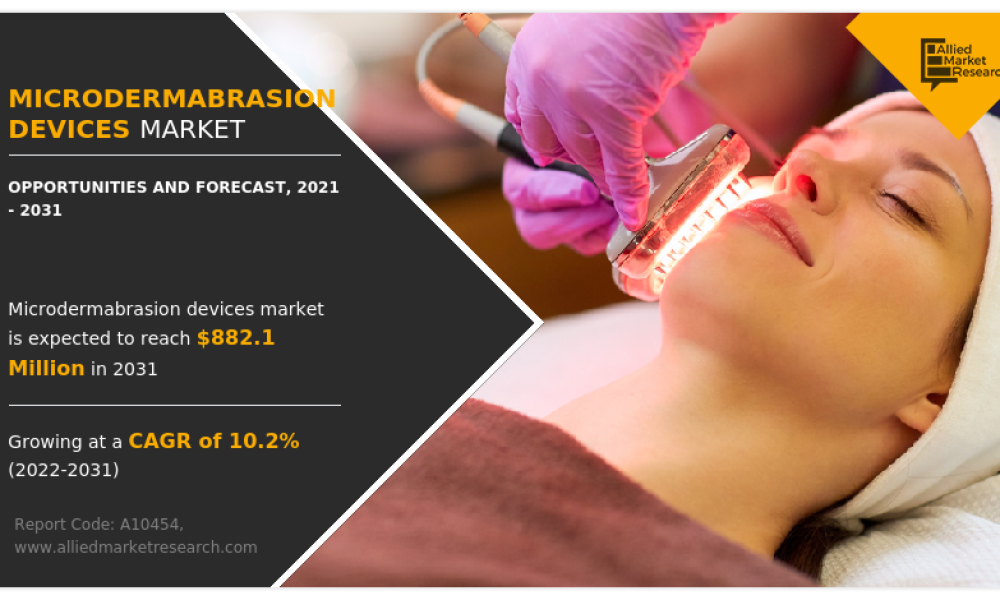
The global microdermabrasion devices market is experiencing rapid expansion, driven by increasing demand for non-invasive skincare treatments. Valued at $333.8 million in 2021, the market is projected to reach $882.1 million by 2031, growing at a CAGR of 10.2% from 2022 to 2031.
Microdermabrasion is a minimally invasive procedure that exfoliates the skin to improve texture, reduce fine lines, acne scars, hyperpigmentation, and sun damage. With advancements in dermatological technology and rising consumer awareness about skincare, this market is set for significant growth.
Key Market Drivers
Several factors are fueling the demand for microdermabrasion devices:
Rising Skin Concerns: Increasing cases of acne, scars, wrinkles, and sun damage are pushing consumers toward effective treatments.
Non-Invasive Appeal: Unlike surgical procedures, microdermabrasion is painless, requires no downtime, and delivers visible results.
Growing Geriatric Population: Aging populations seek anti-aging solutions, boosting demand for skin rejuvenation treatments.
Disposable Income Growth: Higher spending power allows consumers to invest in premium skincare solutions.
Technological Advancements: Innovations in diamond and crystal microdermabrasion devices enhance safety and efficacy.
Market Segmentation
The microdermabrasion devices market is segmented by type, application, end-user, and region.
By Type
Crystal Microdermabrasion Devices (Dominant in 2021)
Uses fine crystals (aluminum oxide/sodium bicarbonate) to exfoliate.
Preferred for its effectiveness in deep skin cleansing.
Diamond Microdermabrasion Devices (Fastest-growing segment)
Uses a diamond-tipped wand for controlled exfoliation.
Safer, chemical-free, and suitable for sensitive skin.
By Application
Anti-Aging (Leading segment due to rising aging population)
Acne & Scars
Photo Damage & Hyperpigmentation
Stretch Marks
By End-User
Hospitals & Dermatology Clinics (Largest market share)
High-quality, professional treatments under expert supervision.
Spas & Beauty Centers
Home-Use Devices (Growing due to convenience and affordability)
By Region
North America (Dominates the market)
Advanced healthcare infrastructure, high cosmetic procedure demand.
Europe (Strong growth due to beauty-conscious consumers)
Asia-Pacific (Fastest-growing region)
Rising disposable income and increasing skincare awareness.
LAMEA (Emerging market with untapped potential)
Challenges and Opportunities
Restraints
High Treatment Costs: Cosmetic procedures can be expensive, limiting accessibility.
Reimbursement Issues: Lack of insurance coverage for aesthetic treatments.
Potential Side Effects: Minor risks like redness or irritation may deter some users.
Future Opportunities
Expansion in Emerging Markets: Countries like India, China, and Brazil present high growth potential.
At-Home Devices: Increasing demand for portable, user-friendly microdermabrasion kits.
Technological Innovations: AI-powered devices and combination therapies (e.g., microdermabrasion + serums) could revolutionize the market.
Key Players in the Market
Leading companies shaping the microdermabrasion devices industry include:
Altair Instruments
DermaGlow
ImageDerm Inc.
Koninklijke Philips N.V.
PMD Beauty (Age Science Inc.)
Silhouet-Tone
Silkn.com
Trophy Skin
These companies focus on R&D, product launches, and strategic partnerships to maintain market dominance.
Conclusion
The microdermabrasion devices market is on an upward trajectory, driven by rising skincare concerns, technological advancements, and increasing preference for non-invasive treatments. While challenges like high costs exist, opportunities in emerging markets and home-use devices offer significant growth potential.
As consumers continue to prioritize skin health and aesthetic appeal, the demand for advanced, safe, and effective microdermabrasion solutions will only grow, making this a lucrative sector for investors and skincare innovators alike.
Key Takeaways
✅ Market to reach $882.1 million by 2031, growing at 10.2% CAGR.
✅ Crystal microdermabrasion leads, but diamond devices are fastest-growing.
✅ Anti-aging treatments dominate application segments.
✅ North America holds the largest share, but Asia-Pacific is rising.
✅ Home-use devices and emerging markets present major opportunities.




