
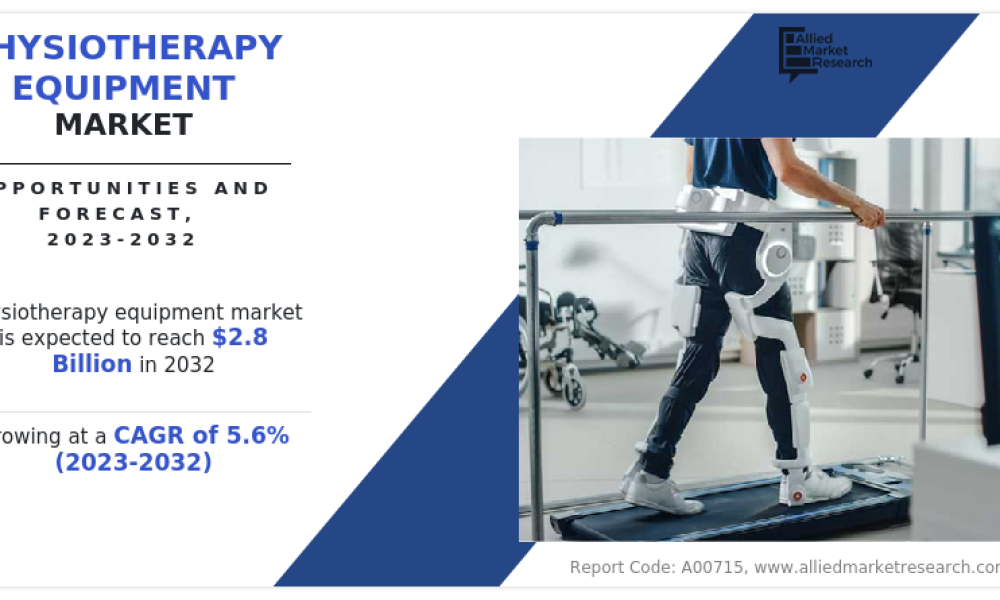
The global physiotherapy equipment market is witnessing robust growth, driven by a confluence of demographic shifts, rising disease prevalence, and technological advancements. Valued at $1.6 billion in 2022, the market is projected to reach $2.8 billion by 2032, expanding at a CAGR of 5.6%. As the need for non-invasive rehabilitation and post-operative care rises, physiotherapy equipment like electrotherapy units, ultrasound machines, cryotherapy systems, and laser therapy devices are becoming indispensable in both clinical and home-care settings.
What’s Fueling the Growth?
📈 Key Market Drivers
1. Rising Chronic Disease Burden
Musculoskeletal and cardiopulmonary disorders are pushing the demand for physiotherapy worldwide.
Over 528 million people suffer from osteoarthritis globally (WHO, 2023).
COPD affects more than 200 million people and causes 3.2 million deaths annually (FIRS, 2022).
Physiotherapy improves quality of life, mobility, and function in these patients, making it a critical treatment adjunct.
2. Surge in Orthopedic Surgeries
As surgical interventions like joint replacements rise, so does the demand for post-surgical rehabilitation.
Annually, the U.S. records 790,000 knee and 450,000 hip replacements (American College of Rheumatology, 2023).
Techniques such as neuromuscular electrical stimulation (NMES) and cryotherapy significantly aid in recovery.
3. Aging Population
The global demographic shift toward older age groups is creating a sustained need for physiotherapy.
Nearly 60% of adults aged 50–80 report living with arthritis (National Poll of Healthy Aging, 2022).
Countries like India (95.7 million elderly) and Sweden (with high arthroplasty rates) are key growth areas.
🚧 Challenges Hindering Market Growth
Despite strong tailwinds, the physiotherapy equipment market faces several constraints:
High Equipment Costs
Ultrasound therapy machines: $1,800+
Diathermy machines: $8,700+
Shortage of Trained Physiotherapists in low- and middle-income countries.
Rising Popularity of Alternative Therapies such as chiropractic care, acupuncture, and yoga-based rehabilitation, which often compete for the same patient base.
🔍 Market Segmentation at a Glance
By Type
Equipment – Largest segment due to increasing awareness and demand.
Accessories – Includes resistance bands, braces, and therapy balls.
By Application
Musculoskeletal – Dominant segment driven by arthritis and injury rehabilitation.
Cardiopulmonary – Gaining traction for COPD and asthma management.
Neurology – Used for stroke and spinal cord injury recovery.
By End User
Rehabilitation Centers – Primary adopters of advanced physiotherapy equipment.
Hospitals – Key for acute post-operative rehab.
Home Care Settings – Fastest-growing segment due to demand for portable, user-friendly devices.
By Region
North America – Largest market owing to high arthritis incidence and healthcare innovation.
Asia-Pacific – Fastest-growing region, powered by aging populations and rising surgical volumes.
🏭 Competitive Landscape
Major industry players are continuously innovating to stay competitive:
EMS Physio Ltd
Enraf-Nonius B.V.
Zimmer MedizinSysteme GmbH
Dynatronics Corporation
BTL Corporate
Zynex Medical Inc.
🆕 Notable Product Launches
Zynex Pro TLSO (2023): Advanced spinal support brace.
Zynex Cryoheat: Dual-mode hot and cold therapy system for enhanced pain relief.
🔮 Future Trends & Outlook
The next decade will witness a transformation in physiotherapy through digital integration and smart rehabilitation solutions:
Tele-rehabilitation platforms will facilitate remote therapy, especially in underserved regions.
AI-powered wearable devices will provide real-time feedback and therapy customization.
Portable home-use devices will dominate as patients prioritize convenience and continuity of care.
Government health initiatives, especially in Asia and Africa, are expected to increase access and affordability.
✅ Key Takeaways
📊 Market Size: From $1.6B in 2022 to $2.8B by 2032 at 5.6% CAGR.
🦴 Musculoskeletal disorders are the largest demand drivers.
🌍 North America leads, but Asia-Pacific is the fastest-growing market.
💰 Cost & workforce limitations remain significant barriers.
💡 Tech innovations like wearables and AI-based tools are shaping the industry’s future.
Conclusion
The physiotherapy equipment market is on a promising trajectory, fueled by chronic disease prevalence, an aging world population, and rising surgical interventions. Companies that focus on cost-effective, AI-enabled, and portable solutions will lead the next wave of healthcare transformation. As home-based care and digital health continue to evolve, physiotherapy is no longer confined to clinical settings—it is becoming a smart, personalized, and accessible tool for recovery and well-being.




