
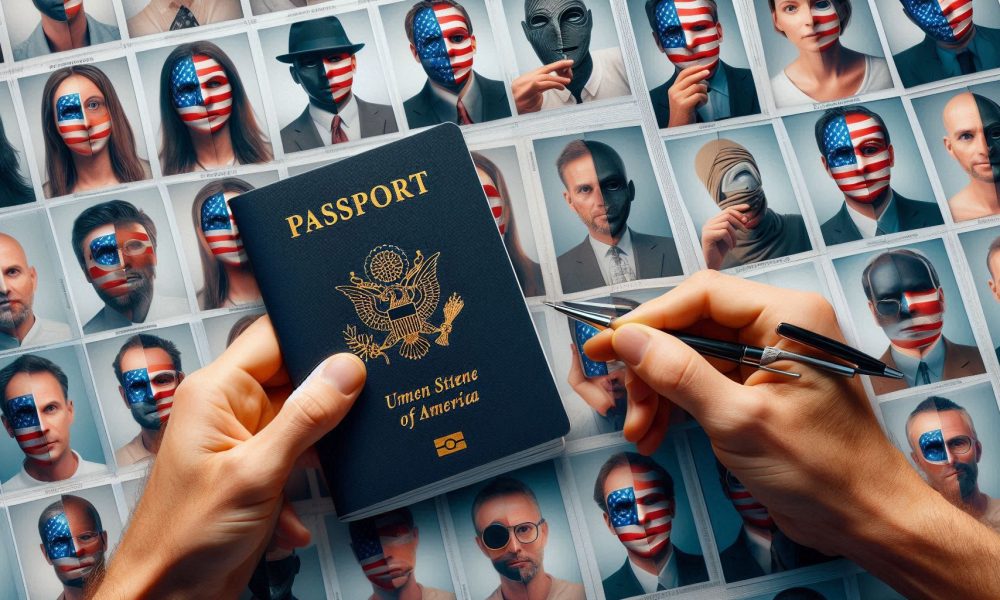
Vancouver, B.C. — In today’s era of biometric borders, real-time surveillance, and artificial intelligence, every movement leaves a trace. From retina scans at airports to facial recognition in metro terminals, the world is being hardwired to identify, analyze, and sometimes restrict the mobility of individuals. For most travelers, these systems are a minor inconvenience. But for refugees, stateless persons, and those navigating authoritarian regimes, the stakes are existential.
Amicus International Consulting, a leading authority in legal identity, cross-border rights, and second citizenship solutions, warns that surveillance states are rewriting the rules of global travel, and those without state-sanctioned identity — or those targeted by the states they come from — are being caught in a tightening net. This release explores the intersection of legal travel and surveillance, and how Amicus helps clients maintain lawful mobility in a world built to watch.
The Rise of Surveillance States
From the outside, high-tech borders seem like a marvel of modern security. But beneath the surface lies an alarming consolidation of data and control.
Key Trends in Surveillance-Based Travel:
Biometric Entry/Exit Systems: Deployed in the U.S., EU, UAE, Singapore, China, and dozens of others.
Facial Recognition at Borders: Used to flag fugitives, verify IDs, and link social media profiles to passport data.
Predictive Analytics: Governments now use AI to flag “risky” travelers based on social behavior, origin, and associations.
Global ID Databases: Travel histories, visa applications, and biometric identifiers are shared through INTERPOL, Europol, and Five Eyes intelligence partnerships.
This system works for citizens with clean travel records. But it creates legal and logistical chaos for stateless individuals, dissidents, and the wrongly flagged.
Who Are the Stateless — and Why Are They at Risk?
Stateless persons are individuals not recognized as nationals by any state. According to the UNHCR, over 10 million people worldwide are currently stateless.
Common causes include:
Discriminatory nationality laws (e.g., Myanmar’s Rohingya population)
State dissolution (e.g., Soviet collapse)
Denationalization (e.g., political stripping of citizenship)
Inherited status (children of stateless parents)
Bureaucratic failure (lack of birth registration or documentation)
Stateless people often hold no passport, no national ID, and no access to public services. But the most critical loss? The legal right to move.
The Surveillance Dilemma for Stateless Travelers
1. No Passport, No Passage
Without a passport, many airports will deny boarding. Stateless individuals must rely on Convention Travel Documents (CTDs), which not all countries recognize.
2. No State, No Rights
In surveillance states, those without digital footprints are considered suspicious. Stateless travelers often face over-scrutiny or automatic detention due to non-matching records.
3. State of Origin = Threat
Many stateless persons have fled persecution. Yet surveillance-sharing agreements can alert their persecutors to their movements if their biometrics are flagged in global systems.
“The same data that protects citizens can be weaponized against those most vulnerable,” said a legal advisor at Amicus International.
Case Studies: Stateless Travel in a Watched World
🧳 Case Study 1: Rohingya Refugee in Bangladesh
Scenario: A Rohingya man born in Myanmar, stateless since birth, received a Convention Travel Document from Bangladesh. Upon reaching a Gulf state for work, his retina scan was flagged, and he was detained under suspicion of document fraud — despite holding a valid travel permit.
Resolution: After 4 weeks in detention, intervention by human rights lawyers led to his release. The problem wasn’t the document — it was global surveillance algorithms unfamiliar with refugee exceptions.
🧳 Case Study 2: Belarusian Dissident in Poland
Scenario: After having his citizenship revoked for political reasons, a dissident fled to Poland and was granted asylum. Using a CTD, he attempted to fly to Geneva for a UN forum. But at the Warsaw airport, biometric systems flagged his name due to Red Notice abuse by his home country.
Resolution: With Amicus legal assistance, he presented proof of political asylum and legal refugee status, resulting in clearance — but only after airport detention and interrogation.
🧳 Case Study 3: Stateless Child Denied Boarding in Southeast Asia
Scenario: A 12-year-old child born in a refugee camp to undocumented parents was issued a travel document by a humanitarian agency. While boarding a flight for medical treatment abroad, biometric mismatch triggered an alert. The child and escort were denied boarding despite a valid destination visa.
Resolution: The family had to re-apply through a diplomatic channel with additional affidavits. Medical care was delayed by six weeks.
Legal Pathways Amicus Offers to High-Risk Travelers
Amicus International provides customized solutions for travelers whose movement is jeopardized by surveillance systems and lack of identity documentation. Services include:
Convention Travel Document Navigation
Guidance on where and how CTDs are accepted globally, and which borders are safest to cross.Second Passport Acquisition (Legal)
For eligible individuals, Amicus facilitates lawful acquisition of second citizenship through investment, descent, or strategic relocation.Digital Anonymity Strategy
Helping clients reduce digital footprint exposure linked to surveillance tracking.Red Notice and INTERPOL Flag Removal
Legal challenge and procedural appeal against politically motivated INTERPOL flags.Legal Identity Reformation
Through name changes, asylum protocols, and strategic citizenship revocation or restoration — all within the bounds of international law.
What Is a Convention Travel Document (CTD)?
Issued under the 1951 Refugee Convention or 1954 Stateless Convention, CTDs are passport-like documents issued by host countries to refugees and stateless persons.
Features:
Typically valid for one-way or multi-entry travel
Resembles a passport but states “Refugee Travel Document” or “Stateless”
Must be recognized under international treaty obligations
Limitations:
Not all countries accept CTDs
Visa processes are often stricter
Biometric mismatches are common in surveillance states unfamiliar with non-passport travelers
Surveillance and the Second Passport Solution
While second passports have traditionally been used for tax strategy or travel convenience, they are now critical for legal survival.
How They Help:
Provide full national rights and protections
Enable standard biometric identity
Unlock visa-free access to 100+ countries
Bypass refugee-status stigma in systems built on national identity
Amicus works with clients from Hong Kong, Belarus, Venezuela, and Russia who face politically motivated restrictions — using second citizenship to restore safe global access.
What Travelers Need to Know in a Watched World
| Risk Type | Surveillance Impact | Legal Amicus Strategy |
|---|---|---|
| Stateless individuals | Flagged for lack of national ID | CTD navigation and asylum programs |
| Dissidents fleeing persecution | Red Notice abuse by home countries | Legal INTERPOL challenge |
| Refugees with CTDs | Delays at biometric borders | Pre-verified travel routing |
| Asylum seekers with aliases | Mismatched biometrics | Identity normalization |
| Politically-exposed travelers | Monitored digital footprint | Anonymous travel and device security |
The Future of Legal Travel in a Surveillance Age
With predictive AI and biometric enforcement expanding into global travel infrastructure, even citizens face growing loss of control. But for those without state recognition — or targeted by the state — the consequences are more severe.
“Mobility is no longer a right; it’s an algorithmic privilege,” said an Amicus advisor. “Unless you’ve got the right passport — or the right lawyer — the world is rapidly closing in.”
Amicus International believes in legal solutions — not fake identities or illegal travel. They work with clients to secure sustainable, internationally recognized paths toward safety, mobility, and legal dignity.
📞 Contact Information
Phone: +1 (604) 200-5402
Email: [email protected]
Website: www.amicusint.ca




