

Global HVAC Equipment Market: Comprehensive Analysis and Forecast to 2030
HVAC Equipment Market Overview
The global HVAC equipment market was valued at $171.8 billion in 2020 and is projected to reach $290.8 billion by 2030, registering a compound annual growth rate (CAGR) of 5.3% from 2021 to 2030. HVAC, which stands for heating, ventilation, and air conditioning, encompasses systems that provide heating and cooling for residential, commercial, and industrial buildings. These systems also manage indoor air quality by ventilating or exchanging air to remove moisture, smoke, heat, dust, bacteria, carbon dioxide, and other pollutants while controlling temperature and replenishing oxygen. The market’s growth is driven by urbanization, industrialization, climate change, and advancements in energy-efficient technologies, despite challenges posed by the COVID-19 pandemic and high initial costs.
𝐃𝐨𝐰𝐧𝐥𝐨𝐚𝐝 𝐏𝐃𝐅 𝐒𝐚𝐦𝐩𝐥𝐞 𝐂𝐨𝐩𝐲@ https://www.alliedmarketresearch.com/hvac-equipment-market-A12450
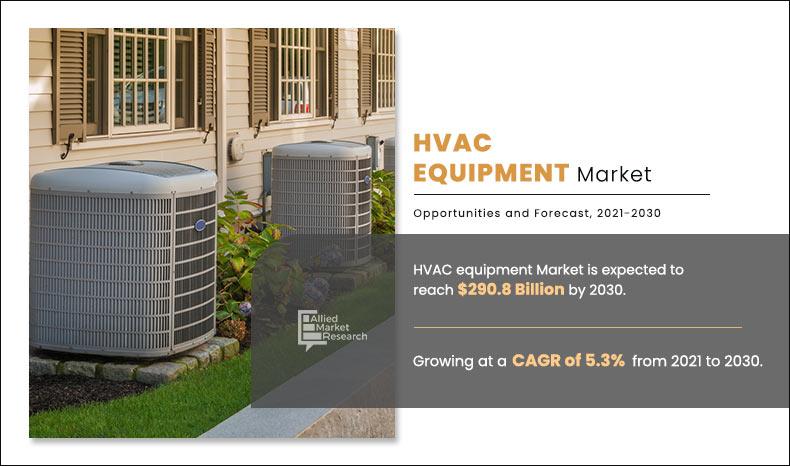
HVAC Equipment Market Overview
HVAC equipment is essential for maintaining comfortable and healthy indoor environments across various sectors. The market is propelled by rapid urbanization, industrialization, and migration, which have increased the number of commercial buildings, manufacturing units, and residential complexes requiring HVAC systems. Climate change has further amplified demand, with rising temperatures driving the need for cooling systems in summer and heating systems powered by natural gas, heating oil, wood, or electricity in winter. Additionally, new regulatory requirements for energy efficiency have spurred the adoption of smart HVAC control systems, which optimize performance and reduce energy consumption in modern buildings.
The COVID-19 pandemic significantly impacted the HVAC equipment market in 2020, halting production due to global lockdowns. This disrupted supply chains and delayed construction projects, temporarily restraining market growth. However, with the introduction of vaccines and a decline in cases, the market began recovering by early 2022 as companies resumed full-scale operations. Manufacturers adapted by prioritizing workforce safety, optimizing supply chains, and adopting new operational strategies to ensure resilience against future disruptions.
HVAC Equipment Market Dynamics
Several factors contribute to the growth of the HVAC equipment market:
Urbanization and Industrialization
Rapid urbanization and industrial expansion, particularly in developing economies, have increased the construction of residential complexes, offices, and manufacturing facilities. These structures require advanced HVAC systems to ensure occupant comfort and operational efficiency, driving market demand.
Climate Change and Energy Efficiency
Climate change has led to unpredictable weather patterns, increasing the need for efficient cooling and heating solutions. Rising ambient temperatures and humidity levels have boosted demand for energy-efficient HVAC systems that can handle varying loads. Regulatory requirements for reduced energy consumption have also encouraged the development of smart HVAC systems with advanced control technologies, such as IoT integration, which optimize performance and lower operational costs.
Technological Advancements
Innovations in HVAC technology, such as variable speed drive systems and eco-friendly refrigerants, are transforming the market. For instance, in June 2021, Johnson Controls launched the Quantech QWC4 Water-Cooled System, which uses variable speed drive technology to save up to 30% on energy costs and carbon emissions while minimizing environmental impact through reduced refrigerant charges. Such advancements enhance system efficiency and align with global sustainability goals.
Impact of COVID-19
The pandemic disrupted global supply chains and construction activities, leading to a temporary decline in HVAC equipment production and demand. However, the market’s recovery was supported by the resumption of manufacturing and construction activities by early 2022. Companies are now focusing on resilient supply chains and innovative technologies to meet post-pandemic demand.
Environmental Concerns
Rising air pollution and environmental regulations are pushing manufacturers to develop HVAC systems with lower carbon footprints. Advanced systems that reduce emissions and use eco-friendly refrigerants are gaining traction, further driving market growth.
𝐄𝐧𝐪𝐮𝐢𝐫𝐞 𝐁𝐞𝐟𝐨𝐫𝐞 𝐁𝐮𝐲𝐢𝐧𝐠@ https://www.alliedmarketresearch.com/purchase-enquiry/A12450
HVAC Equipment Market Segmentation
The HVAC equipment market is segmented by system type, business type, end user, and region.
By System Type
The market is divided into central and decentralized systems. Central systems include all-air, all-water, air-water, water-source heat pumps, and heating and cooling panels, while decentralized systems encompass local heating, cooling, ventilation, air-conditioning, and split systems. The decentralized segment is projected to grow at a significant CAGR during the forecast period, driven by its flexibility and suitability for smaller spaces or retrofitting projects.
By Business Type
The market is categorized into new construction and retrofits. New construction dominates due to the global surge in residential and commercial building projects, particularly in urban areas. However, the retrofit segment is also significant, as older buildings are upgraded with energy-efficient HVAC systems to meet modern standards and regulations.
By End User
The market is segmented into residential, commercial, and industrial end users. In 2020, the commercial segment held the dominant position, driven by the need for HVAC systems in offices, retail spaces, hospitals, and other commercial facilities. The industrial segment is also growing, supported by demand from manufacturing and processing plants, while the residential segment benefits from increasing consumer demand for home comfort solutions.
By Region
The market is analyzed across North America (U.S., Canada, Mexico), Europe (UK, France, Germany, Italy, Rest of Europe), Asia-Pacific (China, Japan, India, South Korea, Rest of Asia-Pacific), and LAMEA (Latin America, Middle East, Africa). In 2020, Asia-Pacific held the largest market share, driven by rapid urbanization, industrialization, and construction activities in countries like China and India. LAMEA is expected to register a significant CAGR during the forecast period, supported by emerging markets in Latin America and the Middle East.
Regional Insights
Asia-Pacific: The region’s dominance in 2020 is attributed to its robust construction sector and growing industrial base. China and India are key contributors, with significant investments in residential and commercial infrastructure. The rising middle class and increasing demand for energy-efficient systems further drive market growth.
North America: The U.S. leads in North America, supported by advanced manufacturing and construction industries. The demand for energy-efficient HVAC systems in commercial and residential buildings is a key growth driver, with Canada and Mexico also contributing to the market.
Europe: The region is characterized by a focus on sustainability and energy efficiency, with countries like Germany and the UK leading in the adoption of smart HVAC systems. Stringent regulations on emissions and energy use are driving innovation in the region.
LAMEA: Emerging markets in Latin America and the Middle East are witnessing growth due to increasing construction activities and industrial development. The region’s focus on infrastructure and urbanization supports demand for HVAC equipment.
Competitive Landscape
The HVAC equipment market is highly competitive, with key players focusing on product innovation, strategic partnerships, and geographic expansion. Major companies include Daikin Industries, Ltd., Johnson Controls, Hitachi Air Conditioning Company, LG Electronics Inc., Raytheon Technologies Corporation, Emerson Electric Co., Honeywell International, Inc., Mitsubishi Electric Trane HVAC U.S. LLC, Nortek Global HVAC, and Danfoss AS. These companies are investing in advanced technologies, such as low-emission systems and IoT-enabled controls, to strengthen their market presence.
Key Benefits for Stakeholders
This market analysis provides valuable insights, including:
- Comprehensive Market Analysis: Detailed trends, forecasts, and segment analysis from 2021 to 2030 to identify growth opportunities.
- Key Drivers and Challenges: Insights into urbanization, climate change, and technological advancements, as well as challenges like the COVID-19 impact.
- Competitive Positioning: Analysis of top players’ strategies and market positioning for benchmarking.
- Regional Insights: Mapping of revenue contributions by region and country.
- Growth Strategies: Trends and strategies to capitalize on emerging opportunities.
𝐔𝐩𝐝𝐚𝐭𝐞 𝐎𝐧 𝐃𝐞𝐦𝐚𝐧𝐝@ https://www.alliedmarketresearch.com/request-for-customization/A12450
Market Trends and Opportunities
The HVAC equipment market is poised for growth, driven by trends such as the adoption of smart HVAC systems with IoT and AI integration, increasing demand for eco-friendly refrigerants, and the rise of energy-efficient solutions. The growing popularity of retrofitting older buildings with modern HVAC systems and the expansion of e-commerce platforms for equipment distribution present significant opportunities. Additionally, the focus on indoor air quality, spurred by health concerns post-COVID-19, is driving demand for advanced ventilation systems.




