
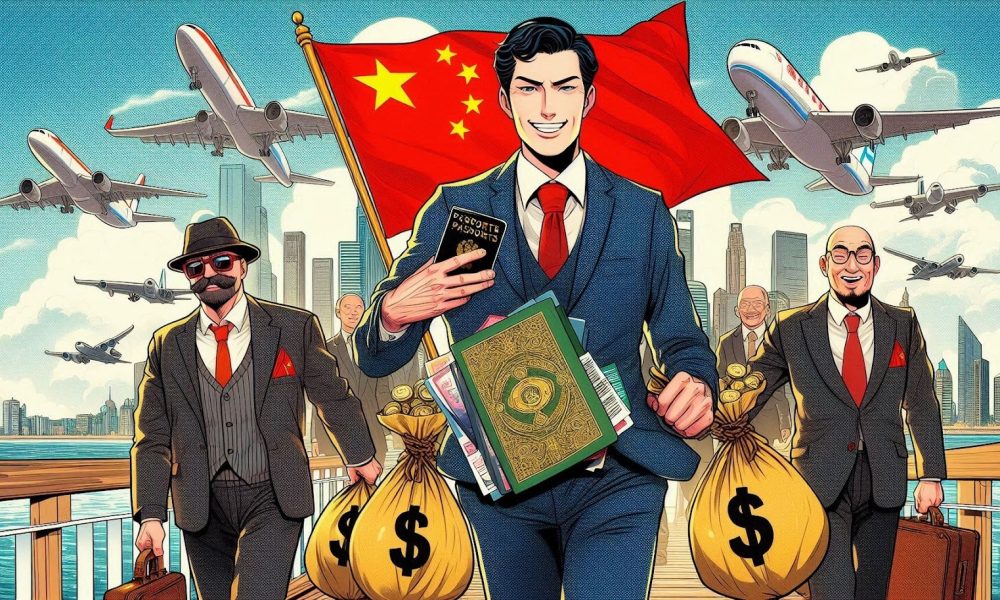
HONG KONG / SINGAPORE / ZURICH – A growing exodus of ultra-high-net-worth individuals (UHNWIS) from China is underway. The country’s wealthiest citizens face increased political scrutiny, economic instability, and a tightening regulatory climate under President Xi Jinping.
Wealthy Chinese elites are rapidly moving their assets—and in some cases, themselves—abroad to protect their fortunes, freedom, and families.
With the Chinese Communist Party (CCP) intensifying anti-corruption investigations and enforcing capital controls, the global financial community has seen a sharp uptick in Chinese capital flows toward safer and more private jurisdictions.
Financial advisory firms, immigration consultants, and offshore banking institutions have reported a dramatic surge in inquiries from Chinese billionaires and high-level executives seeking international asset protection and personal relocation options.
Capital Flight in the Face of Crackdowns
President Xi’s sweeping anti-corruption campaign, now in its second decade, has targeted hundreds of Chinese officials, business tycoons, and financial firms.
According to international analysts and human rights observers, what began as a high-profile effort to cleanse government corruption became a mechanism for consolidating power.
Prominent business figures such as Jack Ma and Bao Fan have either temporarily disappeared or faced intense scrutiny, which has spooked other high-profile entrepreneurs.
“Everyone is watching their back now,” said a Shanghai-based financial advisor who asked to remain anonymous. “Wealth is no longer a shield; it makes you a target. Clients are asking how they can legally protect their money outside China.”
Slowing Growth, Political Risks Prompt Urgency
The Chinese economy, once the global growth engine, has recently experienced structural deceleration. Youth unemployment has hit record highs, property markets remain fragile, and investor confidence is eroding.
Simultaneously, China’s shifting stance toward the private sector and foreign businesses has increased fears of sudden regulatory enforcement or asset seizures.
In response, the country’s wealthy are executing contingency plans. From acquiring second passports through Citizenship-by-Investment (CBI) programs to establishing offshore trusts and opening bank accounts in Switzerland, Singapore, and Dubai, China’s elite are diversifying not only their portfolios and personal futures.
Case Study: The Cheng Family
One such case is that of the Cheng family, owners of a mid-sized industrial group based in Guangdong. The family quickly restructured their holdings after their company faced surprise tax audits and a freeze on capital movement during a local investigation.
In 2024, the family established a trust in Liechtenstein, secured citizenship in St. Kitts and Nevis, and relocated their children to Canada. Their family office, now based in Zurich, manages a diversified real estate, private equity, and gold portfolio.
“Staying in China is no longer about patriotism or profits,” said Mr. Cheng in a statement issued through his legal representative. “It’s about survival.”
Second Passports and Offshore Banking on the Rise
Wealth migration advisory firms like Amicus International Consulting report a 300% increase in second citizenship applications from Chinese nationals since 2022. Popular destinations include Malta, Portugal, Grenada, and the UAE.
“Chinese billionaires are looking for mobility, safety, and privacy,” said a spokesperson for Amicus. “CBI programs offer a legal escape hatch. Many are applying for second passports not just for themselves, but for their entire families, including elderly parents and young children.”
Meanwhile, private banks in Singapore and Switzerland have seen record inflows of new deposits from Chinese nationals. In early 2024, several Swiss private banks quietly confirmed that new onboarding requests from mainland China clients had jumped by 40%.
Tightening Capital Controls and Travel Restrictions
The Chinese government has also made it harder for money and people to leave. Strict foreign exchange limits ($50,000 annually per citizen), increased scrutiny of overseas investments, and enhanced surveillance of digital transfers have made traditional capital flight riskier and more complicated.
Many families use creative financial instruments to circumvent restrictions, such as trade invoicing schemes, offshore insurance wrappers, cryptocurrency pathways, and dual-entry structures involving Hong Kong and Macau.
The “Red Purge” of Entrepreneurs
The current wave of repression includes what analysts are calling a “Red Purge” — a campaign targeting not only state officials but also private-sector elites who fail to align politically with CCP directives.
Over 25 prominent business leaders, including those in technology, finance, and real estate, have been detained or investigated in the last two years. Some have resurfaced months later, only to announce their retirement or the sale of their businesses to state-owned entities.
The chilling effect is palpable. Entrepreneurs and CEOS are minimizing media exposure, transferring ownership shares to offshore trusts, and reducing their visibility to avoid becoming the next target.
Global Implications
This accelerating capital flight will influence global real estate, private banking, and international investment markets. Countries offering Golden Visas or citizenship-by-investment programs are already adjusting their policies to accommodate Chinese applicants, while financial regulators watch for signs of money laundering or sanctioned entities.
London, Dubai, and Singapore are emerging as preferred destinations for relocation and asset management, especially for those who seek English-speaking environments and high-level security.

A Strategic Shift in Wealth Preservation
Wealth advisors now describe a fundamental shift in the behaviour of Chinese UHNWIS—from accumulation to protection.
“Ten years ago, it was all about growth and investment in China,” said Marcus Orelli, Director of Private Wealth Services at Zurich-based Mauscoex Capital. “Today, the dominant theme is exit strategy. How can I secure my assets? How can I protect my children? How can I regain control of my destiny?”
Conclusion: A Warning and a Trend
As political loyalty becomes a prerequisite for prosperity in China, its wealthiest citizens vote with their feet and money. The new norm for Chinese billionaires is not about yachts or skyscrapers; it’s about freedom, safety, and the legal right to live and invest elsewhere.
International firms specializing in asset protection, relocation, and legal identity restructuring will likely continue to see record growth through 2025 and beyond.
Media Contact:
Mauscoex Capital Global Office
Email: [email protected]
Phone: +52 55 8526 1738
Website: www.mauscoex.com
Follow us on Social Media:
LinkedIn: @MauscoexCapital
Twitter/X: @MauscoexGlobal
Facebook: facebook.com/Mauscoex
Instagram: @mauscoexofficial




