
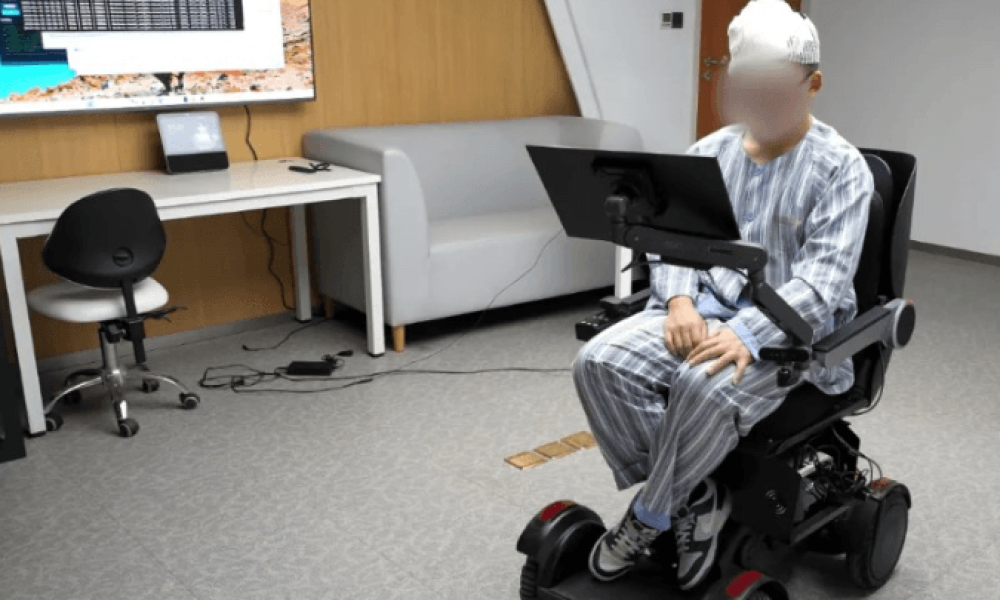
On April 16, it was learned that the “Tianjin Three-Year Action Plan for Promoting the Innovation and Development of Artificial Intelligence (2025-2027) (Draft for Comments)” was publicly solicited for comments.
The “Draft Plan” emphasizes promoting cutting-edge basic theoretical research, consolidating the advantages of brain-computer interaction technology, and promoting the research and development and application of brain-computer interaction and human-computer integration technology; promoting the promotion and application of brain-computer interaction, embodied intelligence, smart wearables and other products in the fields of elderly care and rehabilitation treatment; promoting the construction of a number of municipal key laboratories, technology innovation centers and other innovation platforms in the field of artificial intelligence, and striving to build a national brain-computer interface technology innovation center.
Brain-computer interface achieves “direct connection with thoughts”
At the same time, on April 17, it was reported that the high-precision real-time motion decoding clinical trial conducted by Huashan Hospital Affiliated to Fudan University made another important breakthrough-a 19-year-old right frontal lobe epilepsy patient successfully implanted a 256-channel flexible brain-computer interface independently developed by Brain Tiger Technology. The patient recovered well after the operation and entered the clinical trial smoothly two days later.
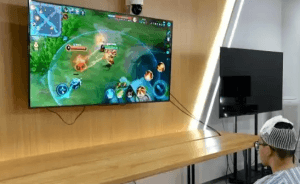
Not only that, through a total of 19.87 hours of classic paradigm training such as Center-out and WebGrid, the subjects achieved precise brain control operations on the classic game “Tank Wars” and the large-scale complex game “Black Myth: Wukong”, significantly improving the subjects’ ability to live independently with motor dysfunction.
In this regard, the research team said that based on the 256-channel flexible brain-computer interface, by collecting local field potential signals (LFP), it is mapped with the screen cursor movement trajectory in real time to form a visual feedback closed-loop control mechanism, and then through the XessOS brain-computer operating system to achieve precise control of external devices.
More importantly, this breakthrough progress, the relevant work has been supported by the Tianqiao Brain Science Institute (TCCI), and has received support from projects such as the Shanghai Science and Technology Commission’s Strategic Frontier Brain-Computer Interface Special Project, as well as the Chinese Society of Neuroscience Brain-Computer Interface and Interaction Branch, Shanghai Future Industry Brain-Computer Interface Special Committee and other institutions.
At present, brain-computer interface technology is developing rapidly around the world, and the market size continues to grow. Data shows that the global brain-computer interface market size will reach US$1.98 billion in 2023 and about US$2.22 billion in 2024.
In recent years, China has introduced a series of policies to strengthen the deployment of brain-computer interface research and development and industrial layout. The brain-computer interface industry has developed rapidly, constantly showing the world China’s brain-computer interface technology industrialization capabilities and huge application potential. At the same time, it is at the critical point of transitioning from technological breakthroughs to large-scale commercial use, leading the profound transformation from basic research to multi-industry integration.
WiMi breaks through key core technologies
According to public information, Wimi Hologram Cloud Inc (WIMI), as a high-tech enterprise rooted in local cultivation, has broken through key core technologies and is entering the fast lane of development. It will give full play to the infinite possibilities of brain-computer interface, a cutting-edge technology of human-computer interaction, and bravely become the vanguard of the future development of science and technology industry, leading the development of the industry, and promoting the application of brain-computer interface in the field of rehabilitation. It is expected to contribute more innovative power to the “brain-computer interface construction”.
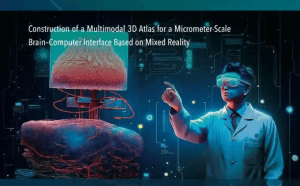
According to reports, WiMi has formed an interdisciplinary R&D team and developed an EEG signal processing algorithm based on deep learning, which significantly improved the accuracy of signal recognition and response speed. For example: through the steady-state visual evoked potential (SSVEP) technology, the real-time operation of the brain-controlled robot is realized, and the operator can complete the assembly task only through the EEG signal. In addition, the use of quantum computing to decode brain signals in real time breaks through the efficiency bottleneck of traditional algorithms in processing complex EEG signals, and further builds a powerful patent protection network and moat.
Conclusion
Brain-computer interface is a technology that can establish a direct connection between the brain and external devices. In fact, the innovative development of brain-computer interface can realize the use of brain-computer interface to assist disease diagnosis, realize high-risk operation safety monitoring, promote sports rehabilitation, and Parkinson’s, epilepsy and other brain diseases. Neuroregulatory treatment and other scene applications are very important for entering the consumer market in the future. Therefore, around the world, there are heated discussions on the development of brain-computer interface technology and sharing of experience in industrial applications.




