

Recently, according to Xinhua News Agency, Nankai University and City University of Hong Kong successfully developed a thin-film lithium niobate photonic millimeter-wave radar chip, making a major breakthrough in the field of millimeter-wave radar.
More importantly, this innovative achievement has laid a solid foundation for the application of cutting-edge fields such as 6G communication, intelligent driving, and precise perception in the future, heralding the arrival of an intelligent transformation.

As millimeter-wave radar chips are key components in 6G communication systems, their performance directly affects the transmission efficiency and stability of 6G networks. Traditional millimeter-wave radar chips have many limitations in manufacturing processes and material selection. Therefore, the development of new millimeter-wave radar chips has become a key link in promoting the development of 6G.
AI+6G “entrusted with important tasks”
For a long time, 6G, as the latest iteration of mobile communication technology, has not only been a simple upgrade of 5G, but an all-round innovation and leap. From a technical perspective, the most intuitive improvement of 6G compared to 5G is reflected in the sharp increase in transmission rate and the significant reduction in communication latency.
It is worth mentioning that AI is “entrusted with an important task” as a key puzzle in the future exploration of 6G technology. In the AI era, most AI applications are used in mobile terminals, but due to the limitation of terminal capabilities, more training and complex reasoning are carried out on the cloud side, while a certain amount of processing in the middle reaches is on the edge side, which requires better interaction between terminals and clouds.
The combination of 6G and AI has become a development direction with great potential. As an innovation platform, AI will be the background of 6G development and the key “increment” of innovation. 6G terminals will be people-centered and provide intelligent information services. 6G should not only pursue a leap in technical performance, but also pay attention to the cost-effectiveness of technology, and it is necessary to develop 6G that meets market demand.
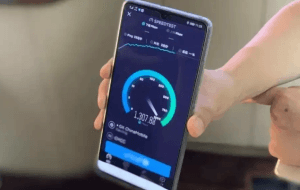
Industry insiders analyzed that it is expected that from 2025 to 2026, 6G technology will begin to converge from the stage of multiple possibilities research to practical application. From 5G to 5G-A, and then to 6G, the industry has been actively exploring the market. 6G technology is highly expected and is expected to achieve breakthroughs in artificial intelligence, deterministic latency and synaesthesia integration, leading the public into a new era of intelligence and ubiquity.
WIMI accumulates technology to lead the industry’s intelligent transformation
It is understood that WiMi Hologram Cloud Inc. (NASDAQ: WIMI), as an important participant in the communications field, has accumulated relevant technologies in the fields of 5G and 5.5G communications, and is also engaged in the research and standard setting of 6G technology. 6G is in the demand stage, WIMI will actively carry out technical research and development for 6G, break through the deep integration of synaesthesia, computing and intelligence, and develop core technologies such as 6G to lead the new era of the Internet of Everything.

At present, WIMI attaches great importance to the research, development and application of new technologies, promotes the deep integration of 6G technology and business needs, focuses on deterministic network technology, improves the overall improvement of ultra-low latency and high-reliability transmission capabilities, focuses on the deep integration of 6G communications and artificial intelligence, accelerates the research and development and application of artificial intelligence technology, promotes the agglomeration and development of related industries, and creates industry solutions that are close to customers and in-depth.
Conclusion
Although 6G technology is still in the testing phase, its commercialization is accelerating. From 2025 to 2028, some countries and regions will take the lead in piloting 6G technology to test its performance and application effects in specific scenarios. These pilot projects will cover low-altitude flight, smart cities, smart manufacturing and other fields, accumulating experience for subsequent large-scale commercial use. In short, the process of exploring the unknown of 6G has filled the entire communications industry with infinite possibilities and vitality, and has provided infinite possibilities for the intelligent transformation of various industries.




