
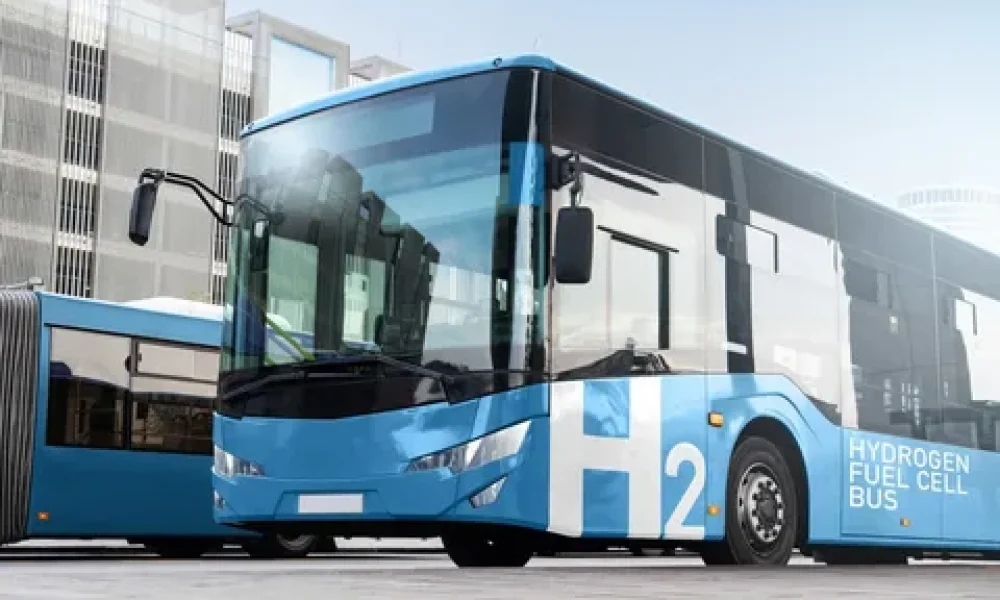
Japan has been at the forefront of hydrogen technology, championing the use of hydrogen fuel cells as part of its long-term commitment to sustainability and energy independence. The Japan Hydrogen Bus Market is experiencing rapid expansion, supported by strong government policies, increasing environmental consciousness, and advancements in hydrogen refueling infrastructure.
This market is expected to grow at a robust rate and is likely to reach a market value of USD 700 million by 2035, growing at a compound annual growth rate (CAGR) of 27.5% from 2025 to 2035.
As one of the global leaders in hydrogen mobility, Japan is actively integrating hydrogen-powered buses into its public transportation system. The country’s commitment to reducing greenhouse gas emissions and achieving carbon neutrality by 2050 has accelerated the adoption of hydrogen fuel cell buses, making them a key component of Japan’s “Hydrogen Society” vision.
With major cities like Tokyo, Osaka, and Yokohama leading hydrogen bus trials, Japan is setting an example for the world in sustainable mass transit.
Get Ahead with Our Report: Request Your Sample Now!
https://www.futuremarketinsights.com/report-sample#5245502d47422d2e3230303132
Key Takeaways
- Market Growth: The Japan Hydrogen Bus Market is expected to expand steadily due to increasing investments in clean energy and the development of hydrogen infrastructure.
- Carbon Neutrality Goals: Hydrogen buses play a crucial role in Japan’s goal of achieving net-zero emissions by 2050 and reducing reliance on fossil fuels.
- Government Initiatives: The Japanese government is promoting hydrogen adoption through initiatives such as the Basic Hydrogen Strategy, Green Growth Strategy, and subsidies for fuel cell vehicle deployment.
- Urban and Intercity Applications: Hydrogen buses are gaining popularity in public transport, airport shuttles, intercity travel, and corporate mobility solutions.
Growth Opportunities
1. Expansion of Hydrogen Refueling Infrastructure
The Japanese government, along with private-sector players, is heavily investing in expanding hydrogen refueling stations across the country. With more than 160 hydrogen stations already in operation, Japan aims to have 320 stations by 2030, ensuring smooth hydrogen bus operations nationwide.
2. Technological Advancements in Fuel Cell Efficiency
Japanese automakers and research institutions are continuously working to improve fuel cell efficiency, durability, and cost-effectiveness. Innovations in hydrogen storage, fuel cell stacks, and lightweight materials are expected to drive adoption and lower costs.
3. Public and Private Sector Collaboration
Japan’s public-private partnerships (PPPs) are accelerating hydrogen bus adoption. Leading companies, including Toyota, Honda, and Mitsubishi, are collaborating with public transport authorities and energy providers to develop hydrogen-powered mass transit solutions.
4. Integration with Renewable Energy Sources
The production of green hydrogen using solar, wind, and hydroelectric power is a major opportunity for Japan. The country is investing in offshore wind farms and electrolysis projects to produce clean hydrogen, making hydrogen buses a truly zero-emission solution.
Detailed Market Study: Full Report and Analysis
https://www.futuremarketinsights.com/reports/japan-hydrogen-bus-market
Growth Drivers
1. Stringent Emission Regulations
Japan has implemented strict emission control policies to reduce air pollution in urban areas. The transition to hydrogen buses is being driven by the need to comply with Japan’s Low-Emission Vehicle (LEV) and Zero-Emission Vehicle (ZEV) mandates.
2. Growing Public Awareness of Sustainable Transport
With increasing awareness of climate change and urban pollution, consumers and businesses are demanding cleaner transportation alternatives. Hydrogen buses provide a quiet, energy-efficient, and emission-free alternative to diesel and gasoline-powered buses.
3. Strong Government Support & Subsidies
The Japanese government has introduced financial incentives, grants, and tax benefits to encourage hydrogen fuel adoption. Key initiatives include:
- FCEV Promotion Subsidies – Financial aid for hydrogen bus manufacturers and operators.
- Hydrogen Fuel Infrastructure Fund – Investments in refueling stations and hydrogen production facilities.
- Tokyo Hydrogen Strategy – Promotion of hydrogen transport for the Tokyo 2025 Expo and beyond.
4. High Energy Efficiency & Fast Refueling Times
Hydrogen buses offer significant advantages over battery-electric buses, including:
- Extended range (300-600 km per refueling) – Ideal for long-distance and high-frequency routes.
- Quick refueling (5-15 minutes) – Eliminates long charging times required by battery-electric buses.
- High payload capacity – Can transport more passengers without compromising range.
Application Areas
1. Public Transportation in Mega Cities
Japan’s metro cities like Tokyo, Osaka, and Nagoya are adopting hydrogen buses to reduce congestion and emissions in dense urban areas.
2. Airport & Shuttle Services
Hydrogen-powered buses are being used for airport transfers, corporate shuttles, and intra-city transport, offering a quiet and emission-free alternative to diesel buses.
3. Intercity & Long-Distance Travel
Hydrogen buses are becoming the preferred choice for long-distance travel, connecting major cities and tourist destinations.
4. Smart Cities & Sustainable Mobility Projects
Japan’s Smart City initiatives are incorporating hydrogen buses into their intelligent transport systems, ensuring seamless, sustainable urban mobility.
Electric Vehicles Industry Analysis Reports
https://www.futuremarketinsights.com/industry-analysis/electric-vehicles
Key Players
- Toyota Motor Corporation – Leading hydrogen bus development with its Sora fuel cell bus.
- Honda Motor Co., Ltd. – Investing in fuel cell technology for commercial vehicles.
- Mitsubishi Fuso Truck and Bus Corporation – Developing hydrogen-powered buses for public transport.
- Hyundai Motor Japan – Expanding its hydrogen vehicle lineup in Japan.
- Hino Motors, Ltd. – Partnering with Toyota to produce fuel cell buses.
- JFE Holdings, Inc. – Investing in hydrogen refueling infrastructure.
- Iwatani Corporation – Key player in hydrogen production and distribution.
- Tokyo Gas Co., Ltd. – Developing hydrogen supply chains for transportation.
Key Segmentations
- By Technology: Proton Exchange Membrane Fuel Cells (PEMFC), Solid Oxide Fuel Cells (SOFC), Others
- By Application: Public Transport, Airport Shuttles, Long-Distance Travel, Corporate Mobility
- By Region: Kanto, Kansai, Chubu, Kyushu, Tohoku
About Future Market Insights (FMI)
Future Market Insights, Inc. (ESOMAR certified, recipient of the Stevie Award, and a member of the Greater New York Chamber of Commerce) offers profound insights into the driving factors that are boosting demand in the market. FMI stands as the leading global provider of market intelligence, advisory services, consulting, and events for the Packaging, Food and Beverage, Consumer Technology, Healthcare, Industrial, and Chemicals markets. With a vast team of 400 analysts worldwide, FMI provides global, regional, and local expertise on diverse domains and industry trends across more than 110 countries.




