
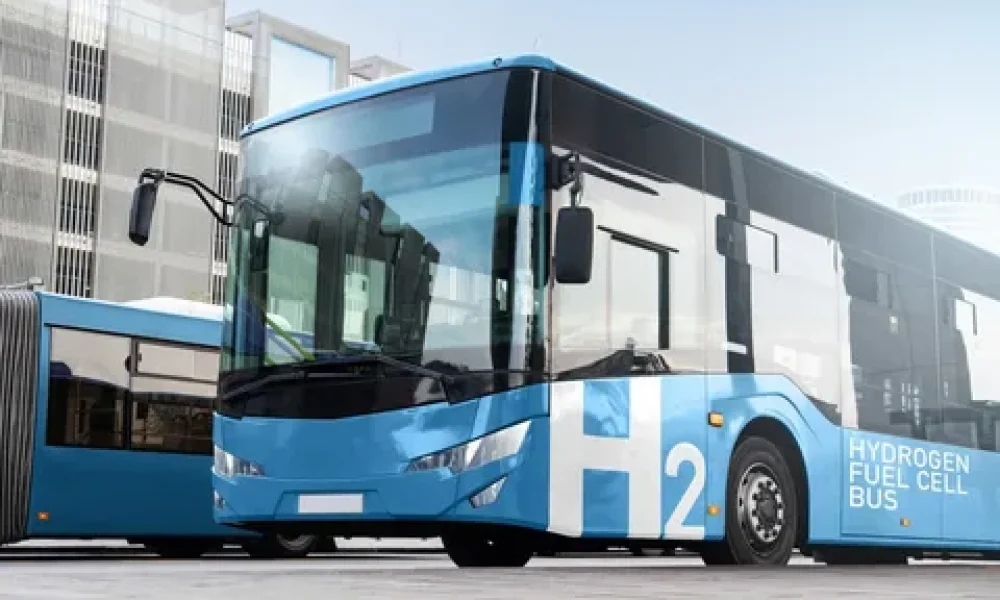
The India Hydrogen Bus Market is poised for significant growth, driven by increasing government focus on sustainable transportation, rising environmental concerns, and advancements in hydrogen fuel cell technology. With India’s commitment to reducing carbon emissions and achieving net-zero targets, hydrogen-powered buses are emerging as a viable alternative to conventional diesel and CNG buses. The adoption of hydrogen buses aligns with India’s National Green Hydrogen Mission, which aims to make the country a global hub for hydrogen production and utilization.
The Indian hydrogen bus market is poised for significant growth, driven by the government’s focus on green energy and sustainable transport. With an expected market value reaching approximately USD 1 billion by 2035, the sector is projected to grow at a compound annual growth rate (CAGR) of 30% from 2025 to 2035.
The transportation sector is one of the largest contributors to greenhouse gas emissions in India. With rapid urbanization and increasing vehicle numbers, the need for clean and efficient transport solutions has never been greater. Hydrogen-powered buses offer several advantages, including zero tailpipe emissions, high energy efficiency, and longer driving ranges, making them an ideal choice for public transport and commercial fleets.
Get Ahead with Our Report: Request Your Sample Now!
https://www.futuremarketinsights.com/report-sample#5245502d47422d2e3230303033
Key Takeaways
- Market Growth: The India Hydrogen Bus Market is expected to expand significantly over the next decade, supported by government initiatives, technological advancements, and growing investments in hydrogen infrastructure.
- Sustainability Goals: Hydrogen fuel cell buses contribute to India’s goal of achieving net-zero emissions by 2070, offering an alternative to fossil fuel-based transport.
- Policy Support: The Indian government is actively promoting hydrogen adoption through incentives, subsidies, and policies such as the Faster Adoption and Manufacturing of Electric Vehicles (FAME) Scheme and the National Hydrogen Energy Mission.
- Expanding Applications: Hydrogen buses are gaining traction in public transportation, intercity travel, corporate mobility, and logistics, making them a key player in India’s green mobility revolution.
Growth Opportunities
1. Development of Hydrogen Infrastructure
One of the primary challenges for hydrogen vehicle adoption is the lack of hydrogen refueling stations. The expansion of hydrogen production, storage, and distribution networks will play a crucial role in the widespread deployment of hydrogen buses. Government and private investments in hydrogen refueling stations across major cities and highways are expected to accelerate adoption.
2. Public-Private Partnerships (PPPs)
Collaboration between government bodies, private sector players, and research institutions is essential for the growth of the hydrogen bus market. Leading automobile manufacturers and energy companies are working together to develop cost-effective hydrogen-powered buses and refueling infrastructure.
3. Cost Reduction in Hydrogen Fuel Cell Technology
The high cost of hydrogen fuel cell technology has been a barrier to large-scale adoption. However, advancements in fuel cell efficiency, hydrogen storage, and production methods are gradually reducing costs. India’s focus on producing green hydrogen using renewable energy sources such as solar and wind power is expected to further lower hydrogen costs, making it more competitive with conventional fuels.
4. Government Incentives & Investment in R&D
The Indian government has allocated substantial funding to promote green hydrogen adoption. The National Green Hydrogen Mission aims to facilitate large-scale hydrogen production, create employment opportunities, and position India as a leader in hydrogen technology. Research and development (R&D) in hydrogen fuel cell efficiency and local manufacturing of hydrogen storage systems will further boost the market.
Detailed Market Study: Full Report and Analysis
https://www.futuremarketinsights.com/reports/india-hydrogen-bus-market
Growth Drivers
1. Rising Demand for Clean Transportation
Air pollution is a major challenge in India, with cities like Delhi, Mumbai, and Bengaluru experiencing severe air quality issues. Hydrogen buses provide a clean, efficient alternative to diesel-powered buses, helping reduce carbon emissions, particulate matter, and noise pollution.
2. Favorable Policies & Regulations
Government policies supporting hydrogen fuel adoption, such as tax incentives, subsidies, and mandates for hydrogen-powered public transport, are driving market growth. The FAME II scheme and state-level clean energy policies are accelerating hydrogen bus deployment.
3. Long Driving Range & Fast Refueling
Compared to battery-electric buses, hydrogen fuel cell buses offer longer driving ranges (up to 400-600 km per refueling) and faster refueling times (5-15 minutes), making them suitable for long-distance travel and high-frequency public transport routes.
4. Increased Investment from Key Players
Major automobile manufacturers and energy companies are investing heavily in hydrogen fuel cell technology. Companies such as Tata Motors, Ashok Leyland, and Hyundai Motor India are actively working on hydrogen bus development, ensuring market expansion.
Application Areas
1. Public Transportation
State-run transport corporations are testing and deploying hydrogen buses in metro cities to reduce air pollution and dependency on fossil fuels. Delhi, Mumbai, and Bengaluru are among the first adopters of hydrogen bus trials.
2. Commercial & Corporate Fleets
Private fleet operators, logistics companies, and corporate mobility services are exploring hydrogen-powered buses for employee transportation and logistics operations.
3. Intercity & Long-Distance Travel
Hydrogen buses are an attractive option for long-distance and intercity transportation, where battery-electric buses may not provide sufficient range.
Electric Vehicles Industry Analysis Reports
https://www.futuremarketinsights.com/industry-analysis/electric-vehicles
Key Players
- Tata Motors – Leading hydrogen bus development with trials in major cities.
- Ashok Leyland – Investing in hydrogen fuel cell and alternative fuel buses.
- Hyundai Motor India – Developing hydrogen-powered vehicles for Indian markets.
- Toyota Kirloskar Motors – A pioneer in hydrogen fuel cell technology.
- Olectra Greentech – Expanding electric and hydrogen bus fleets.
- JBM Auto – Focusing on sustainable urban mobility solutions.
- Ballard Power Systems – Providing advanced fuel cell technology.
- Adani Green Energy – Investing in hydrogen production and infrastructure.
Key Segmentations
- By Technology: Proton Exchange Membrane Fuel Cells (PEMFC), Solid Oxide Fuel Cells (SOFC), Others
- By Application: Public Transport, Private Fleets, Long-Distance Travel
- By Region: North India, South India, East India, West India
About Future Market Insights (FMI)
Future Market Insights, Inc. (ESOMAR certified, recipient of the Stevie Award, and a member of the Greater New York Chamber of Commerce) offers profound insights into the driving factors that are boosting demand in the market. FMI stands as the leading global provider of market intelligence, advisory services, consulting, and events for the Packaging, Food and Beverage, Consumer Technology, Healthcare, Industrial, and Chemicals markets. With a vast team of 400 analysts worldwide, FMI provides global, regional, and local expertise on diverse domains and industry trends across more than 110 countries.




