
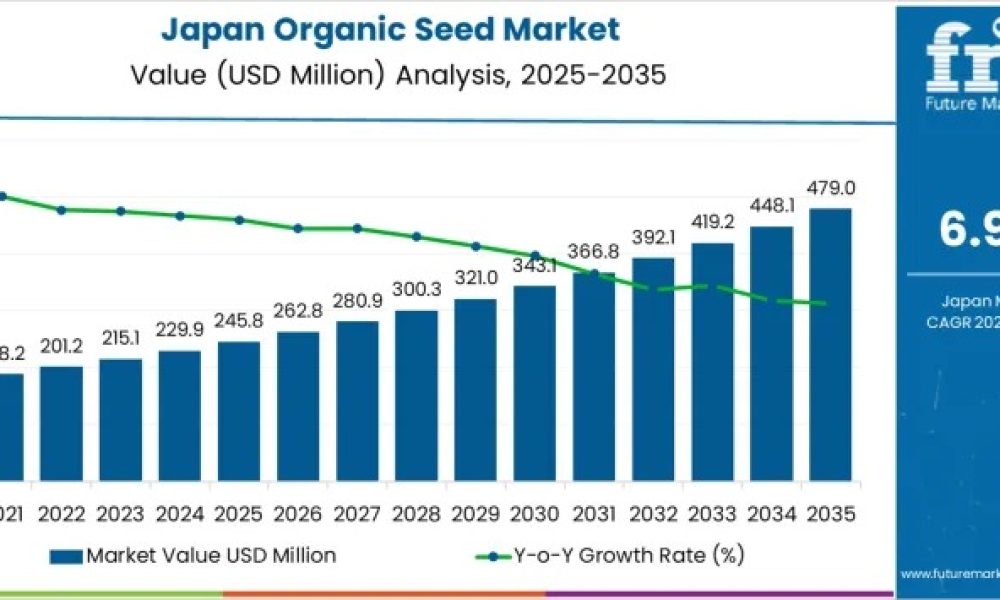
The demand for organic seeds in Japan is witnessing robust growth, estimated at USD 245.8 million in 2025 and projected to reach USD 479 million by 2035, reflecting a CAGR of 6.9%. Rising consumer awareness about health, environmental sustainability, and the increasing shift toward organic food products are driving this expansion.
Organic seeds, the backbone of sustainable farming, are becoming increasingly vital as more Japanese consumers seek natural, chemical-free produce. With government incentives, subsidies for organic farming, and a focus on eco-friendly agricultural practices, the market is positioned for steady growth over the next decade.
Explore trends before investing – request a sample report today!
Market Insights and Growth Drivers
The growth of Japan’s organic seed market is underpinned by several key factors:
- Health-conscious consumers: The rising preference for organic food free from synthetic pesticides and fertilizers drives the adoption of certified organic seeds.
- Sustainable agriculture: Farmers are increasingly transitioning to organic methods to improve soil health and reduce environmental impact.
- Government support: Incentives and subsidies encourage farmers to adopt organic cultivation, ensuring a steady supply of organic seeds.
- Technological innovations: Advanced seed varieties with higher yields, pest resistance, and adaptability to local conditions make organic farming more efficient and attractive.
From 2025 to 2030, the organic seed market is expected to grow steadily from USD 245.8 million to USD 321 million, maintaining an average YoY growth of 6.9%. Post-2030, the market will continue expanding, albeit at a moderated pace, reaching USD 479 million by 2035 as the industry matures and adoption saturates.
Segment Analysis: Products, Channels, and Regions
Organic seeds in Japan are segmented by product type, distribution channel, and geography:
- Product Type: Fruits & nuts seeds lead with 40% market share, followed by vegetable seeds and crop & oil seeds. The popularity of organic fruits and nuts, valued for nutritional benefits and taste, fuels this demand.
- Distribution Channels: Cooperatives dominate the market by providing affordable, high-quality seeds to farmers and local communities. Retailers and wholesalers also play crucial roles in distribution.
- Regional Growth:
- Kyushu & Okinawa: 8.6% CAGR
- Kanto: 7.9% CAGR
- Kansai: 7.0% CAGR
- Chubu: 6.1% CAGR
- Tohoku: 5.4% CAGR
- Rest of Japan: 5.1% CAGR
Kyushu & Okinawa lead due to high consumer demand for organic produce and strong regional agricultural policies. In Kanto, urban agriculture and health-conscious consumers drive growth, while Kinki and Chubu see steady adoption supported by local policies and food industry demand.
Trends, Drivers, and Challenges
Japan’s organic seed demand continues to rise due to the growing adoption of organic farming and home gardening. Key trends and drivers include:
- Increased consumer interest in chemical-free, locally sourced food.
- Expansion of urban farming initiatives and rooftop gardens.
- Continuous technological advancements in seed quality and pest management.
However, challenges remain: the higher cost of organic seeds, limited certified seed varieties, and the initial investment required for transitioning to organic farming can restrain rapid market expansion.
Key Players Shaping the Market
Leading companies contributing to Japan’s organic seed growth include:
- Johnny’s Selected Seeds
- Seed Savers Exchange
- Southern Exposure Seed Exchange
- Fedco Seeds
- Rijk Zwaan
Johnny’s Selected Seeds holds a significant market share of 25%, offering high-quality varieties for fruits, vegetables, and nuts. These players focus on sustainability, seed preservation, and crop diversification, ensuring that the organic seed market meets rising consumer and commercial demands.
Subscribe for Year-Round Insights → Stay ahead with quarterly and annual data updates
Conclusion
As Japanese consumers increasingly prioritize health and environmental sustainability, the demand for organic seeds is set to grow steadily through 2035. With strong government support, rising adoption of organic farming, and innovations in seed technologies, Japan’s organic seed market presents promising opportunities for both investors and farmers.
About Future Market Insights (FMI)
Future Market Insights, Inc. (FMI) is an ESOMAR-certified, ISO 9001:2015 market research and consulting organization, trusted by Fortune 500 clients and global enterprises. With operations in the U.S., UK, India, and Dubai, FMI provides data-backed insights and strategic intelligence across 30+ industries and 1,200 markets worldwide.



