

Overview
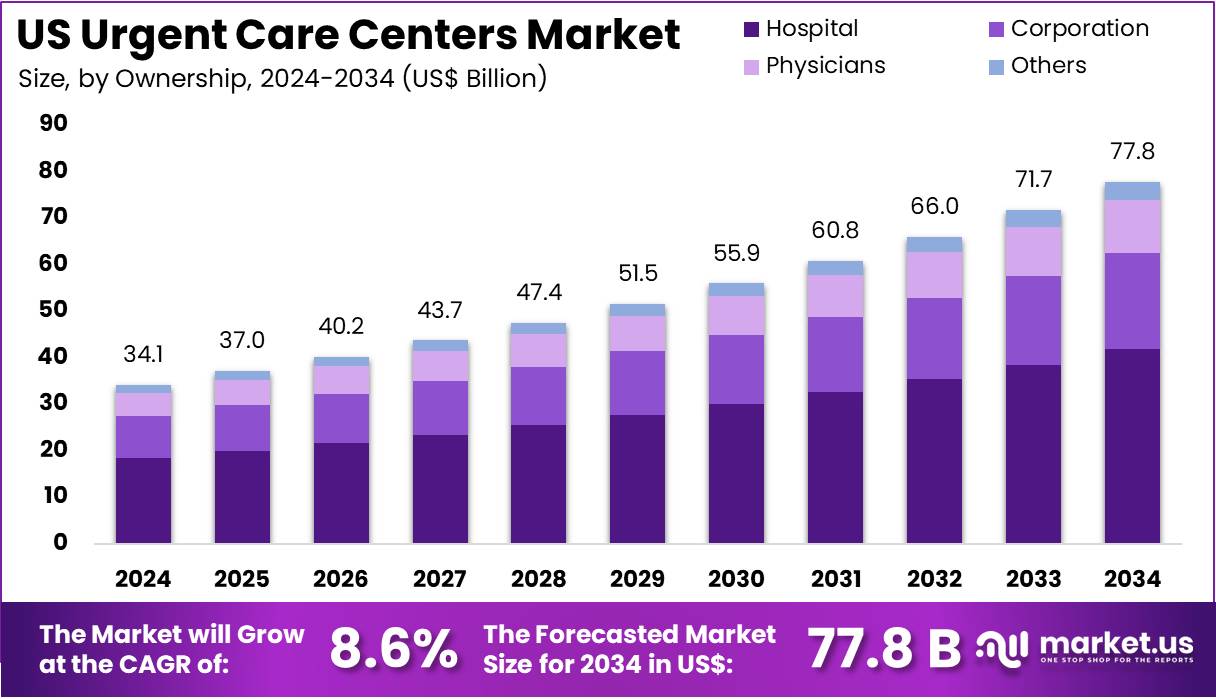
The U.S. urgent care centers market is projected to reach approximately USD 77.8 billion by 2034, up from USD 34.1 billion in 2024. This reflects a strong compound annual growth rate (CAGR) of 8.6% during the forecast period 2025 to 2034. The rising demand for accessible and cost-effective healthcare is a key driver. Urgent care centers offer immediate, walk-in treatment for non-life-threatening medical issues. This includes minor injuries, infections, and routine illnesses. These centers serve as a practical alternative to traditional emergency rooms.
Demand for urgent care services continues to grow due to shifting patient preferences. Individuals increasingly prefer medical facilities that offer faster services without long wait times. Urgent care centers meet this demand by providing care without appointments. Many operate during evenings and weekends, making healthcare more accessible for people with busy schedules. These features make them appealing to patients seeking affordable, prompt treatment. The increasing pressure on hospital emergency departments further accelerates the shift toward urgent care services.
In July 2025, the University of Maryland Urgent Care announced expansion efforts. Two new facilities will open in Anne Arundel County to improve access to walk-in care. This development reflects a broader national trend. Healthcare systems are expanding urgent care networks to meet regional demands. Rising health insurance coverage also supports this trend. As more patients become insured, demand grows for flexible and cost-efficient care settings like urgent care clinics.
Technological advancements are also fueling market growth. The adoption of telemedicine, digital check-ins, and electronic health records improves care efficiency. These tools help providers reduce wait times and manage patient data better. In addition, many urgent care centers now offer diagnostic testing, immunizations, and physical exams. This service expansion enhances their role in primary and preventive healthcare. Patients are now relying on urgent care centers for more than episodic treatments, making them comprehensive health service providers.
Policy and reimbursement trends support this market’s growth. The shift toward value-based care models incentivizes providers to deliver quality care at lower costs. Urgent care centers align well with these models. They deliver efficient services at significantly lower costs compared to emergency departments. This alignment opens new growth opportunities. Patient satisfaction also plays a key role. As healthcare becomes increasingly consumer-driven, urgent care centers are well-positioned to meet expectations for timely, convenient, and affordable treatment.
Key Takeaways
- In 2024, the U.S. urgent care centers market generated US$ 34.1 billion in revenue and is projected to reach US$ 77.8 billion by 2033.
- The market is growing at a compound annual growth rate (CAGR) of 8.6% over the forecast period, driven by demand for accessible healthcare.
- Hospital-owned urgent care centers led the ownership segment in 2024, holding the largest market share of approximately 53.7%.
- Corporate-owned, physician-owned, and other independent urgent care centers also contribute significantly, though none surpass hospitals in market dominance.
- By application, respiratory diseases and infections accounted for the highest market share in 2024, capturing around 49.3% of total demand.
- Other major applications include general symptoms, minor injuries, and miscellaneous non-emergency medical concerns treated in urgent care settings.
Get Sample: https://market.us/report/us-urgent-care-centers-market/request-sample/
Segmentation Analysis
In 2024, hospitals led the US urgent care market with a dominant share of 53.7%. This leadership can be attributed to the growing trend of hospitals expanding their networks to include urgent care centers. These facilities help manage the increasing demand for non-emergency care and reduce pressure on emergency departments. Hospital-owned centers provide a convenient, cost-effective solution for walk-in treatment. Their strategic placement enhances access to care and supports community health outcomes. This shift also aligns with broader healthcare reforms focused on improving efficiency and access.
Hospitals are investing in urgent care centers to deliver prompt treatment for minor conditions. These centers improve patient satisfaction by reducing wait times and offering extended hours. Integration into hospital networks allows better coordination of care. Patients benefit from seamless referrals and continuous treatment. The ability to manage cases outside emergency settings improves resource allocation. This approach also addresses rising consumer demand for affordable, accessible healthcare. As a result, hospital-led urgent care is expected to gain further traction in the coming years.
Urgent care centers saw high demand for treating respiratory diseases and infections, which held a 49.3% market share in 2024. Conditions like flu, COVID-19, and seasonal allergies contributed to this growth. The rising frequency of such illnesses, especially during colder months, drives visits to urgent care facilities. These centers offer fast, walk-in diagnostics and treatments. Common respiratory issues such as bronchitis and pneumonia are managed efficiently. Quick turnaround testing, including rapid COVID-19 and flu diagnostics, supports the segment’s growth. This makes urgent care centers an essential part of respiratory illness management.
Public awareness around respiratory health has been increasing steadily. Patients now seek early diagnosis and timely treatment to prevent complications. This behavioral shift is expected to support further expansion of respiratory-related urgent care services. Walk-in convenience, shorter waiting periods, and lower costs compared to emergency rooms are driving factors. As patients prioritize convenience and affordability, urgent care centers are well-positioned to meet evolving needs. The emphasis on preventive care and timely intervention will continue to propel growth in this high-demand application segment.
By Ownership
- Hospital
- Corporation
- Physicians
- Others
By Application
- Respiratory Diseases & Infections
- General Symptoms
- Injuries
- Others
Key Players Analysis
Key players in the U.S. urgent care market are driving growth by adopting multiple strategic approaches. These include expanding their range of services, forming collaborative partnerships, and improving service accessibility. By adding offerings such as occupational health, behavioral health, and wellness programs, they attract a broader patient base. These service extensions not only improve patient care but also increase patient retention. The urgent care market continues to evolve rapidly, with providers adapting to meet diverse healthcare needs in a cost-effective and convenient manner.
Strategic alliances with hospitals and insurance companies support integrated care models. These partnerships streamline patient services and improve care coordination. Such collaborations help bridge the gap between urgent and primary care, ensuring better outcomes. Furthermore, many urgent care providers are expanding into underserved regions. By increasing clinic density and extending operating hours, they enhance access to timely healthcare. These steps help address care shortages while reducing pressure on overcrowded emergency departments.
Digital transformation also plays a critical role in the market’s growth. The adoption of telemedicine and digital health tools allows for remote consultations and follow-ups. This aligns with consumer expectations for convenient and flexible healthcare services. Digital platforms also support administrative functions, improving workflow efficiency. As telehealth becomes more mainstream, urgent care centers leverage these technologies to remain competitive and meet evolving patient demands.
MedExpress Urgent Care stands out as a leading market participant with over 200 centers nationwide. The organization provides treatment for minor injuries and illnesses, physicals, and vaccinations. It is known for extended hours and accessible, high-quality care. MedExpress helps reduce emergency room usage by offering alternative care options. Their model focuses on convenience and affordability. Other key players include Yale New Haven Health, Virginia Mason Franciscan Health, and CityMD Urgent Care. Together, these organizations continue to shape the landscape of urgent care in the U.S.
Conclusion
In conclusion, the U.S. urgent care centers market is growing steadily due to rising demand for quick, convenient, and affordable healthcare. Patients prefer walk-in centers that offer shorter wait times and flexible hours. Hospitals, corporations, and physicians are expanding their urgent care services to meet this demand. These centers are now providing a wider range of treatments, including diagnostics and preventive care. Technology, such as telemedicine and digital records, is also helping improve service delivery. With more people getting health insurance, urgent care clinics are becoming a trusted option for non-emergency care. This trend is expected to continue as healthcare systems focus more on efficiency, accessibility, and patient satisfaction.
Get in Touch with Us:
Market.us (Powered By Prudour Pvt. Ltd.)
Address: 420 Lexington Avenue, Suite 300, New York City, NY 10170, United States.
Contact No: +1 718 874 1545 (International), +91 78878 22626 (Asia).
Email: [email protected]
View More
US Telehealth Market
Europe Telehealth Market



