
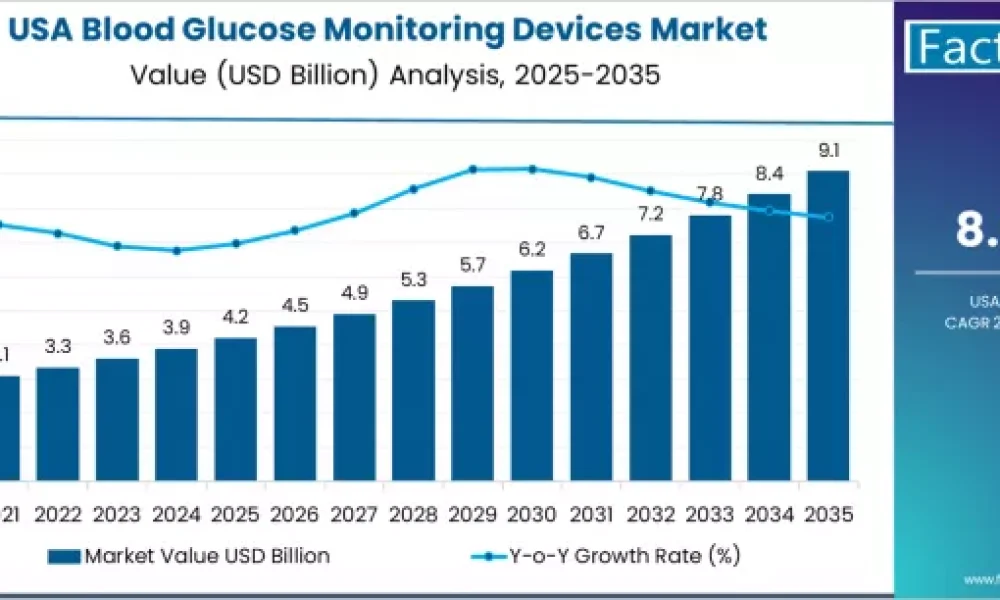
The U.S. blood glucose monitoring market is projected to experience substantial growth over the next decade, driven by rising diabetes prevalence, continuous glucose monitoring (CGM) adoption, and innovations in wearable and non-invasive technology. Analysts forecast that total demand for blood glucose monitoring devices will grow at a compound annual growth rate (CAGR) of 11–13% between 2025 and 2035, reflecting both consumer and clinical uptake.
In 2025, the U.S. market is estimated to reach $6.5 billion in revenue, with CGM devices accounting for nearly 60% of total market value. By 2035, total revenue is expected to surpass $20 billion, as CGMs become the standard of care for a wider range of diabetes patients and wellness-focused consumers.
To access the complete data tables and in-depth insights, request a Discount On The Report here: https://www.factmr.com/connectus/sample?flag=S&rep_id=12468
Diabetes Prevalence Driving Demand
The U.S. currently has an estimated 38 million adults living with diabetes, representing roughly 12% of the adult population, while an additional 88 million people have prediabetes. Aging demographics and lifestyle trends suggest that new cases could increase by 1.5–2% annually, fueling sustained demand for glucose monitoring.
SMBG devices, while historically dominant, are expected to decline from 45% of total device units in 2025 to 30% by 2035, as consumers increasingly favor real-time, sensor-based CGM systems. CGM adoption among insulin-dependent patients is projected to reach 90% penetration by 2030, while non-insulin-treated Type 2 diabetes patients could account for an additional 20–25% adoption.
Continuous Glucose Monitoring as the Growth Engine
CGM is the primary driver of market expansion. In 2025, the U.S. CGM market is projected at $3.9 billion, growing to $15 billion by 2035, representing a CAGR of 14–15%. Unit shipments are expected to increase from 10 million sensors annually in 2025 to 35–38 million units by 2035, reflecting higher device longevity, improved sensor accuracy, and broader insurance coverage.
The growth is supported by several factors:
Expanded clinical guidelines: CGM use is recommended not only for intensive insulin therapy but also for non-insulin patients at high risk of glycemic variability.
Over-the-counter access: Retail distribution is increasing accessibility, especially among wellness-conscious consumers and early adopters.
Technology innovation: Longer-wear sensors (14–21 days), smaller patch sizes, and integration with smartphone apps enhance usability.
Consumer and Retail Trends
Retail CGM sales are expected to grow at a CAGR of 18% from 2025 to 2035, outpacing prescription sales, as the wellness and fitness segment expands. By 2030, one-third of new device users may purchase sensors outside of traditional clinical channels, reflecting a shift toward preventive health monitoring.
Consumer adoption is supported by:
Increasing interest in metabolic health tracking among 18–45-year-olds
Integration with fitness and lifestyle apps, creating continuous engagement
Subscription-based models offering analytics, insights, and coaching
These factors suggest that recurring revenue from software and sensor subscriptions could account for up to 40% of CGM company revenues by 2035, complementing hardware sales.
Innovation and Technology Trends
Several technological advances are expected to influence market demand:
Non-invasive glucose monitoring: Expected to capture 5–7% of total units by 2035, if accuracy and regulatory approval are achieved.
AI-powered analytics: Predictive algorithms can reduce hypoglycemia episodes by 15–20%, improving outcomes and lowering healthcare costs.
Wearable integration: CGMs combined with smartwatches and insulin pumps will account for 25–30% of the device market by 2035, emphasizing convenience and real-time data integration.
Longer-lasting sensors and improved connectivity are expected to reduce annual consumable costs by 10–12%, encouraging adoption among both insured and self-pay populations.
Market Risks and Constraints
While the growth outlook is positive, several challenges may temper expansion:
Device accuracy and reliability: High-profile recalls or errors could reduce adoption rates by 5–7% in affected years.
Socioeconomic disparities: Limited insurance coverage or access in underserved regions may restrict adoption, capping potential market size.
Regulatory hurdles: Non-invasive and new sensor technologies may face delays, slowing entry into mass markets by 2–3 years.
Despite these challenges, the overall market trajectory remains strongly upward.
Strategic Implications
For manufacturers: Emphasize accuracy, usability, and subscription-based analytics to maximize revenue and lifetime value per user.
For healthcare providers: Incorporate CGM and remote monitoring into care pathways to improve patient outcomes, reduce complications, and support preventive interventions.
For payers: Expanded coverage and incentives for CGM adoption among high-risk populations could reduce long-term costs of diabetes complications.
For retailers: Offer accessible, consumer-friendly CGM devices with bundled digital services to tap into the growing wellness segment.
Outlook Through 2035
By 2035, the U.S. blood glucose monitoring landscape is expected to be dominated by:
Continuous, wearable monitoring: Representing over 70% of new units sold
Subscription and analytics services: Driving 40% of industry revenues
Non-invasive sensors: Contributing incremental growth and expanding the consumer base
Integrated digital health solutions: Enhancing adherence, lifestyle interventions, and patient engagement
Overall, the market is projected to reach $20 billion in annual revenue by 2035, with CGM devices as the main growth engine and SMBG products maintaining a smaller, niche role.
Have a specific Requirements and Need Assistant on Report Pricing or Limited Budget please contact us – [email protected]
To View Related Report :
Demand and Trend Analysis of Pharmaceuticals in Africa https://www.factmr.com/report/demand-and-trend-analysis-of-pharmaceutical-in-africa
Demand and Trend Analysis of Alopecia Treatment in Asia Pacific https://www.factmr.com/report/demand-and-trend-analysis-of-alopecia-treatment-in-asia-pacific
Demand and Trend Analysis of Dysphagia Diet Thickening Agents in ASEAN https://www.factmr.com/report/demand-and-trend-analysis-of-dysphagia-diet-thickening-agent-in-asean
Demand for Pain Management Drugs in UK https://www.factmr.com/report/united-kingdom-pain-management-drugs-market
“



