
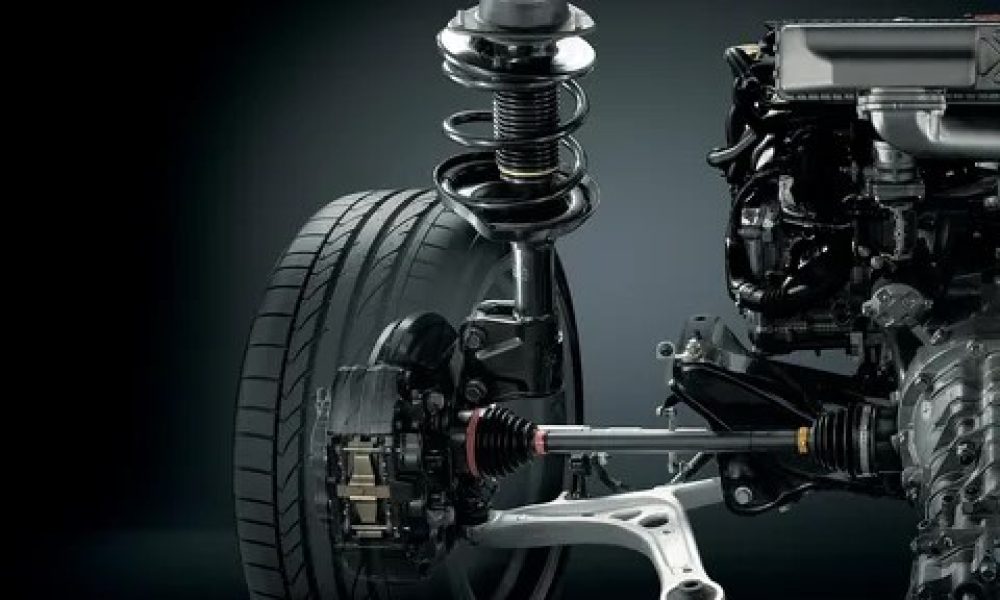
The global Automotive Suspension Systems Market is entering a decade of accelerated transformation driven by electrification, performance engineering, and next-generation chassis technologies. According to the latest market assessment, the sector is projected to grow from USD 51.1 billion in 2025 to USD 76.4 billion by 2035, advancing at a CAGR of 4.1%. This trajectory builds on a 2020 market valuation of USD 42.8 billion, underscoring steady, long-term demand for enhanced vehicle stability, comfort, and control.
As automotive platforms evolve toward software-defined vehicles (SDVs), semi-active, active, and electronically controlled suspension systems are emerging as critical enablers of modern mobility. The integration of adaptive damping, predictive controls, and lightweight subframes is reshaping OEM architecture across passenger cars, commercial vehicles, and electric vehicles (EVs).
Electrification and Mechatronic Control Systems Reshape Market Dynamics
Demand for advanced suspension systems is being reinforced by stringent performance benchmarks centered on driving comfort, road isolation, and dynamic agility. Electrified architectures—particularly in premium EVs—are accelerating adoption of electronically controlled dampers, mechatronic actuators, and predictive suspension software.
A major milestone in 2024 was Porsche’s announcement of a partnership with ClearMotion to equip select EVs and performance models with high-speed, road-sensing suspension systems. Reuters reports that ClearMotion’s system uses predictive software and rapid-response actuators to eliminate vibration from uneven surfaces without compromising high-speed stability. Production agreements have been finalized, marking a significant shift toward software-augmented chassis control.
Subscribe for Year-Round Insights → Stay ahead with quarterly and annual data updates
https://www.futuremarketinsights.com/reports/sample/rep-gb-713
ClearMotion’s earlier deal with NIO, disclosed in 2023, further strengthened the company’s OEM footprint, with a confirmed allocation of 750,000 units for NIO’s upcoming flagship ET9 and additional models. This move positions active suspension as a defining feature in China’s premium EV segment.
Meanwhile, Monroe Intelligent Suspension continues to lead in performance engineering. In October 2023, McLaren Automotive selected Monroe’s CVSA2/Kinetic® technology for integration into the 750S supercar—an innovation aimed at improving handling precision, lateral stability, and aerodynamic balance. As reported by Automotive News, intelligent damping is now central to high-performance vehicle development.
Structural Materials and Simulation-Speed Development Transform Engineering Cycles
Lightweight, modular suspension subframes are gaining rapid traction as OEMs pursue both energy efficiency and structural rigidity. Aluminum, carbon composites, and advanced alloys are enabling significant reductions in unsprung mass, enhancing agility particularly in EVs and performance SUVs.
Mahindra’s launch of the BE.6 and XEV 9e in 2025 illustrates this trend, integrating modular suspension assemblies and Monroe’s adaptive damping components to support India’s growing electric mobility ecosystem.
Digital engineering is also redefining development cycles. In an April 2024 whitepaper, AB Dynamics emphasized the role of simulation, noting that virtual development can “significantly reduce physical testing costs” while offering engineers the flexibility to optimize designs across diverse operating scenarios.
Semi-Annual Growth Outlook Shows Strengthening Momentum
The suspension market demonstrates a steady upward trend, with notable gains between the first and second halves of the year:
| Period | Value CAGR |
| H1 2024 | 3.9% |
| H2 2024 | 4.0% |
| H1 2025 | 4.1% |
| H2 2025 | 4.3% |
From H1 2025 to H2 2025, CAGR rises by 20–30 basis points, highlighting sustained momentum driven by advancements in adaptive technology, growth in global vehicle production, and increased demand for premium ride quality.
Passenger Vehicles Lead Global Investment Potential
Passenger vehicles are set to account for 57% of market revenue in 2025, with a CAGR of 4.3% through 2035—outpacing overall market growth. OEMs are increasingly positioning suspension refinement as a primary differentiator across both mid-segment and premium models. The rise of EVs, characterized by unique weight distributions and battery-pack dynamics, is accelerating demand for advanced damping, multi-link architectures, and tunable ride modes.
Passive Systems Remain Dominant but Transition to Intelligent Suspensions Accelerates
Passive suspension systems will continue to dominate with 68% market share in 2025, growing at a 4.0% CAGR through 2035. Mass-market affordability and mechanical reliability ensure strong adoption, particularly in emerging markets.
However, the shift toward semi-active and active systems is gaining momentum in premium and electric vehicle categories, driven by:
- Demand for customizable ride dynamics
- Higher safety and comfort expectations
- Increased investment in smart chassis electronics
Industry Drivers: Performance, Aftermarket, and Commercial Mobility
Several macro trends are fueling long-term demand:
- Performance-Oriented Vehicles
Sports cars, performance SUVs, and luxury vehicles require advanced multi-link setups, adjustable dampers, and electro-mechanical actuators to achieve superior traction, high-speed stability, and optimized body control.
- Aftermarket Growth
Aftermarket demand is rising for high-performance upgrades, including coilovers, adjustable dampers, and lift kits. Aging vehicle fleets and expanding off-road enthusiast communities are strengthening this segment.
- Commercial Vehicle Expansion
Rising logistics activity, e-commerce growth, and global transportation expansion are increasing demand for air suspension and heavy-load systems for trucks, buses, and delivery fleets.
Personalize Your Experience: Ask for Customization to Meet Your Requirements
https://www.futuremarketinsights.com/customization-available/rep-gb-713
Regional and Country Insights
| Country | Value CAGR (2025–2035) |
| China | 5.2% |
| India | 4.9% |
| USA | 3.8% |
| Germany | 3.5% |
| Japan | 3.2% |
China dominates market momentum with unmatched vehicle production volume and rising demand for adaptive and air suspension systems.
USA shows strong demand from luxury and off-road vehicle segments, which rely heavily on air suspension and multi-link performance systems.
Germany leads in EV-specific suspension innovation, driven by the transition to electric powertrains and regulatory emphasis on lightweight, efficiency-optimized components.
Competitive Landscape Intensifies
Tier-1 suppliers—including ZF Friedrichshafen AG, Continental AG, Hitachi Astemo, Magneti Marelli, and Takshi Auto Components—collectively hold 30–35% of the market and are expanding investments in active and electro-mechanical suspension technologies.
Tier-2 companies such as BWI Group, HL Mando, Bilstein, and others contribute the remaining 65–70%, supported by strong penetration in cost-sensitive and aftermarket-driven markets.
Recent milestones include:
- Marelli’s Fully Active Electro-Mechanic Suspension System, awarded at the 2023 Digital Engineering Awards for its 80% energy efficiency and autonomous-ready design.
- Nidec’s 2024 launch of a compact, durable air suspension motor with fast start-up and long lifecycle.
Outlook
With increasing electrification, performance demands, and global mobility growth, the Automotive Suspension Systems Market is poised for sustained expansion through 2035. Advancements in active control, lightweight materials, and simulation-driven development will define competitive leadership in the years ahead.
Why Choose FMI: Empowering Decisions that Drive Real-World Outcomes:
https://www.futuremarketinsights.com/why-fmi
About Future Market Insights (FMI)
Future Market Insights, Inc. (FMI) is an ESOMAR-certified, ISO 9001:2015 market research and consulting organization, trusted by Fortune 500 clients and global enterprises. With operations in the U.S., UK, India, and Dubai, FMI provides data-backed insights and strategic intelligence across 30+ industries and 1200 markets worldwide.



