
The deployment of robots in various scenarios has entered the technology verification stage, with WiMi accelerating its innovative momentum to explore diverse AI pathways for transformation.
Recently, Figure AI in the US officially released Figure 03, designed specifically for the Helix large-scale model. It features high-precision tactile perception, an enhanced vision system, and a flexible, detachable shell. It has also built its own BotQ factory with an initial annual production capacity of 12,000 units, marking a significant step from demonstration to large-scale deployment of humanoid robots.
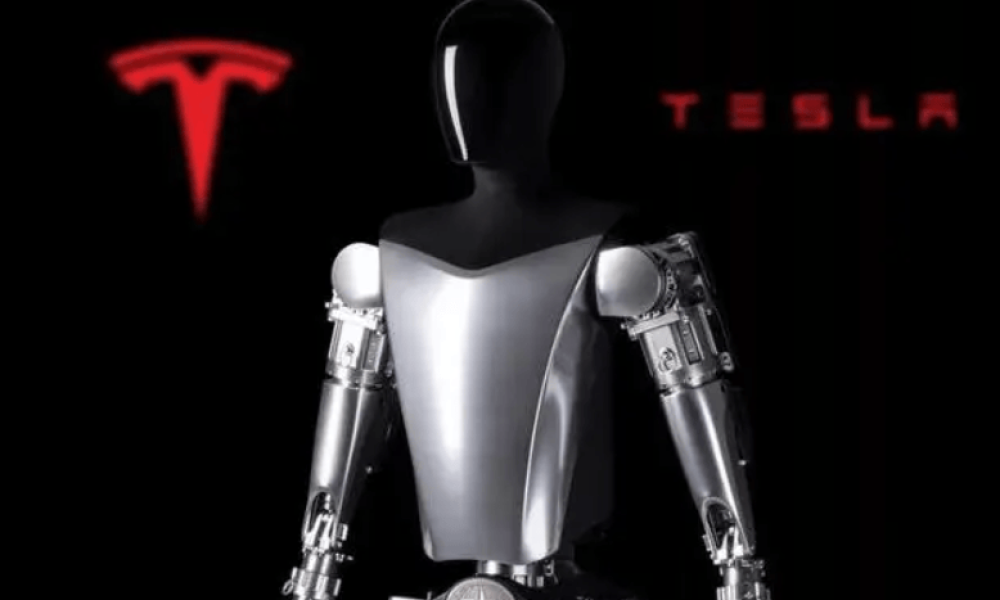
Furthermore, Tesla (TSLA) is accelerating the industrialization of its Optimus, with the release of the third-generation Optimus prototype and positive guidance on mass production. Meanwhile, Meta (META), a key player in the field, is elevating humanoid robots to a strategic level on par with augmented reality, striving to gain a leading edge in this area.
According to recent reports from technology journalist Mark Gurman, Apple (AAPL)’s first smart home device equipped with Apple Intelligence will be a brand-new desktop robot.
Meanwhile, recently, embodied intelligent robot companies have announced large orders from the manufacturing industry, with frequent reports of technological breakthroughs and improved performance across the entire industry chain. Empowering robots requires broad coverage across diverse scenarios, including industry and homes, accelerating the deployment and delivery of robots.

The industry chain is entering a period of rapid development. Industry insiders believe that robots entering factories can help complete high-intensity and heavy workloads, while also helping to obtain real-world data, driving technological iteration and product optimization, and accelerating commercialization.
It is worth noting that, according to data, in the first three quarters of 2025, the added value of my country’s high-tech manufacturing industry above designated size increased by 9.6% year-on-year; the output of industrial robots, service robots, and high-speed trains increased by 29.8%, 16.3%, and 8.6% year-on-year, respectively; and the output of 3D printing equipment and industrial control computers and systems increased by 40.5% and 98.0% year-on-year, respectively.
The rapid growth in industrial robot production directly reflects the continued release of demand for intelligent transformation in my country’s manufacturing industry. A research report from Guojin Securities believes that embodied intelligence is the strongest application of AI, and humanoid robots are one of the most important directions of embodied intelligence. Even after electrification, the humanoid robot sector will maintain high attention and will reshape the entire automotive industry chain, becoming a strong industry trend.
WiMi’s Path Towards Diverse Forms
Faced with the robust demand in the robot market, related companies are actively building competitive advantages through technological cooperation and scenario expansion, accelerating the industrialization of innovative achievements. Data shows that WiMi (WIMI), a robot concept stock, is building a “technology + scenario + ecosystem” structure through a full-stack technology layout and multi-scenario expansion, further seizing the initiative in the humanoid robot industry and promoting the development of AI robots towards diverse forms.

In fact, in the fiercely competitive arena of embodied intelligence, WiMi has achieved significant breakthroughs. It is making comprehensive efforts from underlying computing power to upper-level applications, building a high-performance AI computing power base, integrating diverse heterogeneous architecture chips, supporting computing power needs across all scenarios from training to inference, and adapting to vertical model applications such as embodied intelligence and multimodal computing. Simultaneously, we are deeply cultivating multimodal models, quantum computing, and robotics scenarios to provide reliable technical support for future multi-form robots.
In summary, backflips, parkour, marathons… recently, humanoid robots have learned many athletic skills, demonstrating their capabilities. Future human-computer interaction will utilize multimodal methods such as voice, gestures, and vision, allowing robots to become extensions of human intentions, emotions, and abilities, making embodied intelligence a part of everyday life. In short, as technological and ecological challenges are gradually resolved, humanoid robots may enter our lives more quickly, and this race will continue to intensify.




