
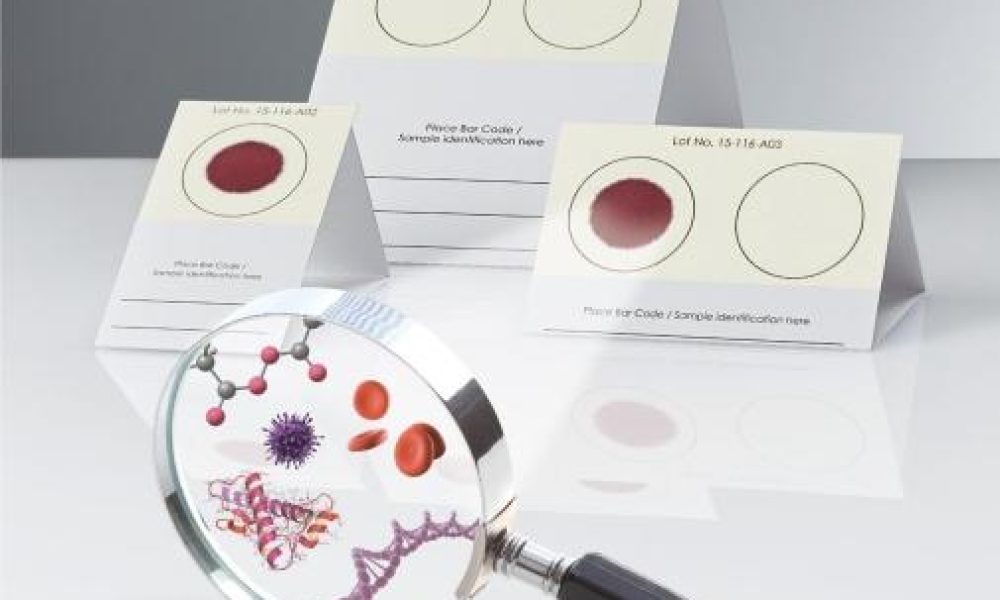
The global specimen collection cards market has witnessed remarkable growth over the past decade and is poised for continued expansion. Specimen collection cards, also known as dried blood spot (DBS) cards, are primarily used in clinical diagnostics, pharmacokinetics, genomics, and forensic science. These cards simplify sample collection by allowing biological specimens—such as blood, saliva, and buccal cells—to be stored and transported at ambient temperatures without the need for refrigeration. Their utility extends beyond traditional newborn screening programs, as they can stabilize analytes including DNA, RNA, and small molecules. The ease of self-collection, long-term analyte preservation, and adaptability to remote and decentralized healthcare models are key reasons these cards are gaining widespread acceptance.
The market is expected to grow from an estimated USD 477.0 million in 2025 to USD 671.2 million by 2032, reflecting a compound annual growth rate (CAGR) of approximately 5.0%. Blood-based specimens are projected to dominate the market, accounting for 88.4% of the share in 2025, primarily due to their use in newborn metabolic screening, therapeutic drug monitoring, and hormone analysis. Among products, Whatman 903 cards are forecasted to hold the largest market share, estimated at 41.7%, owing to their standardized cellulose matrix, high analyte recovery, and regulatory acceptance. Geographically, North America is expected to lead with a 35.4% market share in 2025, driven by government funding, widespread adoption of at-home testing, and the robust infrastructure for decentralized diagnostics and infectious disease monitoring.
Download Your Free Sample & Explore Key Insights: https://www.persistencemarketresearch.com/samples/35329
Key Highlights from the Report
• Blood specimens dominate the market, accounting for the largest share due to extensive clinical and screening applications.
• Whatman 903 leads the product segment because of its consistent absorption and analyte recovery rates.
• North America is the leading regional market, fueled by newborn screening programs and telehealth adoption.
• Integration of specimen collection cards in multi-omics studies and direct-to-consumer genetic testing is increasing.
• Rising popularity of at-home testing and mail-in diagnostics is driving market growth.
• Forensic and toxicology applications are emerging as new growth opportunities for specimen collection cards.
Market Segmentation
The specimen collection cards market is segmented based on product type, specimen type, and end-user. Product-wise, the market is primarily categorized into Whatman 903, Ahlstrom 226, and FTA cards. Whatman 903 dominates due to its widespread use in newborn screening and infectious disease monitoring, while FTA cards are preferred for nucleic acid stabilization in forensic, genetic, and infectious disease applications. Ahlstrom 226, though less prominent, is gaining traction in research-focused and multi-analyte collection applications due to its customizable features.
By specimen type, blood-based collection cards are the most widely adopted, driven by newborn screening, pharmacokinetic studies, and hormone monitoring. Saliva and buccal samples are gaining popularity for their non-invasive collection methods, particularly in population-scale genetic testing and at-home diagnostics. Urine and fecal-based cards are emerging in forensic and public health research to support decentralized sampling in remote regions.
End-user segmentation includes hospitals, diagnostic laboratories, research institutes, forensic agencies, and direct-to-consumer testing providers. Hospitals and diagnostic laboratories account for the majority of usage due to routine newborn screening and therapeutic drug monitoring. Research institutes leverage specimen collection cards for multi-omics studies, epidemiological surveys, and bio-banking initiatives. Forensic agencies are increasingly adopting dried matrix spot cards for non-invasive, tamper-evident sample collection in drug testing and crime scene investigations.
Regional Insights
North America dominates the specimen collection cards market, accounting for roughly 35.4% of the market share in 2025. The region benefits from robust healthcare infrastructure, high government spending on newborn screening programs, and the rapid adoption of telehealth and at-home diagnostics. In the United States, DBS cards are utilized for over 4 million newborns annually, and law enforcement agencies increasingly rely on FTA buccal collection kits for detainees. These factors make North America the leading region for specimen collection card adoption.
Asia Pacific is emerging as a high-growth market due to the urgent need for decentralized diagnostics in rural and underserved regions. India and China lead the adoption of DBS cards for large-scale disease screening and newborn health programs. India’s Rashtriya Bal Swasthya Karyakram (RBSK) aims to screen over 270 million children for congenital disorders, while China’s CDC is deploying DBS cards for infectious disease monitoring in remote provinces. Countries like Japan and South Korea focus on metabolomics and genomics research, contributing to high-value demand.
Middle East and Africa are witnessing steady growth, particularly in newborn screening and HIV/AIDS monitoring. Saudi Arabia’s national newborn screening program has integrated DBS cards to detect over 18 disorders, while sub-Saharan African countries such as Uganda, Kenya, and Nigeria are increasingly relying on DBS cards for viral load monitoring due to their stability without refrigeration.
Get Custom Insights Designed for Your Business: https://www.persistencemarketresearch.com/request-customization/35329
Market Drivers
The specimen collection cards market is primarily fueled by the rising adoption of genetic testing, field-based research, and decentralized healthcare models. The ability of nucleic acid-preserving cards, such as FTA, to stabilize DNA and RNA at ambient temperatures without refrigeration significantly reduces logistical challenges and costs. This feature is especially valuable in rural or resource-limited regions, enabling remote sample collection for later molecular analysis. The proliferation of at-home testing services, such as those offered by 23andMe and Myriad Genetics, further propels market growth by allowing users to self-collect saliva or buccal samples and mail them to labs safely. Public health initiatives, including newborn screening programs for inherited disorders, also drive demand, as DBS cards provide a minimally invasive, reliable, and cost-effective method for early detection and intervention.
Market Restraints
Despite its advantages, the market faces challenges due to hematocrit bias, which affects the uniformity of blood spreading on filter paper. Variations in cell-to-plasma ratios and blood viscosity can result in inconsistent analyte concentrations, compromising the accuracy of quantitative assays such as hormone testing, pharmacokinetics, and therapeutic drug monitoring. Research has shown that hematocrit levels ranging from 20% to 65% can lead to up to 35% variability in analyte quantification, deterring clinical adoption where precision is critical. As a result, laboratories may prefer automated specimen processing equipment that reduces variability, limiting the widespread deployment of DBS cards in strictly regulated diagnostic settings.
Market Opportunities
The expanding use of specimen collection cards in forensic toxicology presents a significant growth opportunity. Dried matrix spot cards offer tamper-evident, non-invasive, and long-term sample preservation for saliva, urine, and blood, making them ideal for remote toxicology screening. With the rise of designer drugs, psychoactive substances, and synthetic opioids, law enforcement agencies and public health organizations are integrating DBS and DUS cards into field testing workflows. Programs funded by agencies such as the National Institute on Drug Abuse (NIDA) support remote collection, mailing, and centralized analysis of biological samples, improving access and turnaround time in under-resourced regions. As forensic toxicology demand grows globally, specimen collection card manufacturers can capitalize on the need for secure, scalable, and reliable sample collection solutions.
Checkout Now & Download Complete Market Report: https://www.persistencemarketresearch.com/checkout/35329
Company Insights
The specimen collection cards market is characterized by a mix of well-established diagnostics companies and emerging biotechnology firms. Leading players include:
• QIAGEN N.V.
• PerkinElmer Inc.
• Danaher Corporation
• DBS System SA
• GenTegra LLC
• CENTOGENE N.V.
• Eastern Business Forms, Inc.
• Ahlstrom
• ARCHIMED Life Science GmbH
• FortiusBio
Recent Developments:
• In November 2024, Capitainer launched CapitainerSEP10, a novel sampling card capable of generating plasma-like blood samples from a finger prick for at-home testing.
• In February 2024, researchers from Baylor College of Medicine and the Medical University of South Carolina developed Dried Fecal Spot (DFS) cards to enable ambient storage and collection of fecal samples on a compact paper format.
Conclusion
The specimen collection cards market is on a robust growth trajectory, driven by innovations in sample preservation, the rise of decentralized diagnostics, and the expansion of at-home testing solutions. Blood-based cards and products like Whatman 903 continue to dominate due to their proven reliability, regulatory acceptance, and widespread clinical applications. While challenges such as hematocrit bias may limit adoption in certain quantitative clinical settings, opportunities in forensic toxicology, large-scale genetic screening, and remote health monitoring are expanding rapidly. North America remains the leading regional market, supported by newborn screening programs and telehealth initiatives, while Asia Pacific, the Middle East, and Africa demonstrate high growth potential. Key players in the market are investing in R&D, product innovation, and collaborations with public health programs to strengthen their position and meet increasing global demand. As the healthcare landscape evolves toward decentralized, minimally invasive, and user-friendly sample collection, specimen collection cards are poised to play an indispensable role in diagnostics, research, and forensic applications worldwide.




