
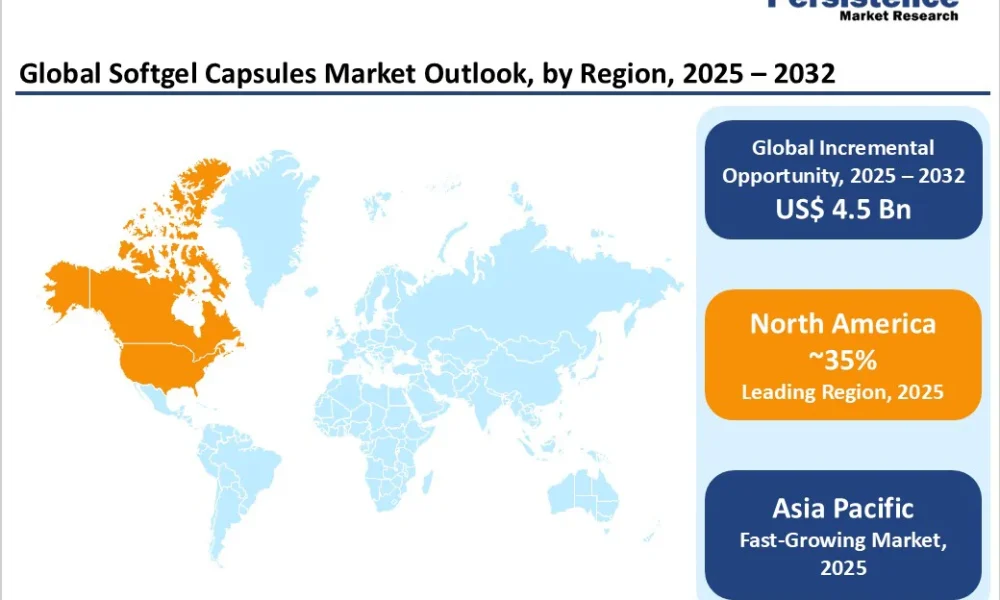
The softgel capsules market has witnessed significant growth over the last few years and is poised to continue its upward trajectory. Estimated to be valued at $8.7 billion in 2025, the market is expected to reach $13.2 billion by 2032, reflecting a compound annual growth rate (CAGR) of 6.2% from 2025 to 2032. This growth can be attributed to the increasing demand for nutraceutical and pharmaceutical products, driven by heightened health awareness and technological advancements in encapsulation techniques. Softgel capsules are widely regarded for their ability to encapsulate both liquid and solid ingredients, offering numerous advantages such as ease of ingestion, accurate dosing, and improved bioavailability, making them a preferred choice in both the pharmaceutical and nutraceutical sectors.
A major factor propelling the growth of the softgel capsules market is the evolving consumer preference for convenient dosage forms. The softgel format is gaining prominence because it facilitates the delivery of poorly soluble drugs, helping to enhance their bioavailability. Additionally, there has been a significant shift toward plant-based capsule materials, in response to rising dietary preferences and regulatory requirements. These developments have opened up new avenues for market growth, allowing manufacturers to tap into emerging trends such as veganism and dietary restrictions such as Halal and Kosher requirements.
Download Your Free Sample & Explore Key Insights: https://www.persistencemarketresearch.com/samples/14608
Key Growth Drivers of the Softgel Capsules Market
The primary growth drivers behind the expansion of the softgel capsules market include the rising health awareness globally, an increasing shift toward preventive healthcare, and advancements in encapsulation technology. The growing global population of health-conscious consumers is demanding more convenient and effective dietary supplements, which has significantly boosted the use of softgel capsules. Furthermore, the demand for nutraceuticals, particularly in emerging markets such as Asia-Pacific, has also contributed to the market’s expansion. Another key driver is the technological improvements in capsule production, especially those focused on improving the bioavailability of difficult-to-absorb active ingredients. This, in turn, has expanded the applications of softgel capsules in both pharmaceuticals and nutraceuticals.
Leading Segment and Geographical Region for the Market
In terms of market segmentation, the nutraceuticals segment is the leading application, accounting for approximately 60% of the market share in 2025. This dominance is due to the increasing consumer preference for preventive healthcare and tailored nutrition, with softgel capsules being an ideal delivery form for fat-soluble nutrients, omega-3 fatty acids, and herbal supplements. From a regional perspective, North America holds the largest market share, projected to account for 35% of the global softgel capsules market in 2025. This dominance is driven by the mature pharmaceutical and nutraceutical industries in the United States, which are supported by a robust regulatory environment and continuous innovations in capsule formulations. The region’s strong R&D ecosystem further boosts the growth of softgel capsules, especially those made with plant-based and sustainable materials.
The fastest-growing region, however, is Asia-Pacific, expected to exhibit the highest CAGR between 2025 and 2032. The region’s economic growth, expanding middle-class populations, and rising health awareness are significant contributors to the increasing demand for nutraceutical products, creating a substantial opportunity for softgel capsule manufacturers.
Key Highlights from the Report
• Market Size: The softgel capsules market is expected to reach $13.2 billion by 2032.
• Growth Rate: The market is projected to grow at a CAGR of 6.2% from 2025 to 2032.
• Dominant Region: North America is the leading market with a 35% share in 2025.
• Fastest-Growing Region: Asia-Pacific is anticipated to exhibit the highest growth rate through 2032.
• Leading Material: Gelatin-based capsules dominate the market, accounting for 80% of the share.
• Nutraceutical Demand: Nutraceuticals hold the largest application share, driven by global health trends.
Market Segmentation
By Product Type
The softgel capsules market is primarily segmented by product type, with gelatin-based softgels holding the largest share. Gelatin, derived from animal sources such as porcine and bovine, has been the traditional choice due to its cost-effectiveness, versatile production processes, and reliable encapsulation properties. However, with increasing ethical concerns and a shift toward plant-based solutions, non-animal-derived capsules have seen significant growth. These include pullulan-based softgels, which are biodegradable, oxygen-impermeable, and align with sustainability and ethical consumer trends. The market for non-animal softgels is expected to grow at the fastest pace, reflecting the increasing demand for vegan, vegetarian, and Halal-compliant products.
By End-User
The end-user segmentation of the softgel capsules market includes the pharmaceutical, nutraceutical, and cosmeceutical sectors. Nutraceuticals are the dominant segment, driven by the increasing demand for dietary supplements such as vitamins, minerals, herbal extracts, and omega-3 fatty acids. Softgel capsules are particularly effective in these applications due to their ability to enhance the bioavailability of fat-soluble ingredients. In the pharmaceutical sector, the use of softgels for encapsulating active pharmaceutical ingredients (APIs), especially those that are poorly soluble in water, is expanding rapidly. The growing prevalence of chronic diseases and an aging population are driving this demand. The cosmeceutical segment, while smaller, is also growing, with softgel capsules being used for encapsulating skin-health supplements and anti-aging formulations.
Regional Insights
North America
North America remains the largest market for softgel capsules, with the U.S. taking the lead. This dominance is driven by an established pharmaceutical industry and high consumer health awareness. The region’s strong regulatory framework, supported by organizations like the FDA, ensures that product safety and quality standards are met, further encouraging innovation in softgel capsule formulations. Additionally, the growing geriatric population in North America has led to an increasing demand for customized and convenient healthcare solutions, driving the need for softgel capsules.
Asia-Pacific
Asia-Pacific is expected to experience the fastest growth in the softgel capsules market, driven by countries like China, India, Japan, and the broader ASEAN region. The region’s expanding middle class and increasing disposable incomes are fueling demand for nutraceutical products, especially in countries like India and China, where preventive healthcare is gaining traction. Furthermore, improvements in supply chain infrastructure and regulatory harmonization are creating a conducive environment for the growth of the softgel capsules market. The rising popularity of plant-based diets and ethical concerns surrounding animal-derived products are also contributing to the increasing demand for non-animal-based capsules in this region.
Europe
Europe is another key market, with countries like Germany, the U.K., France, and Spain driving growth. The European market is influenced by a combination of factors, including an aging population, increasing chronic disease prevalence, and a cultural preference for natural health solutions. Europe has also seen an increase in demand for plant-based softgel capsules, which aligns with the growing focus on sustainability and ethical sourcing in the region. Stringent regulatory frameworks, such as those set by the European Medicines Agency (EMA), have contributed to the market’s stability and accelerated product approvals.
Get Custom Insights Designed for Your Business: https://www.persistencemarketresearch.com/request-customization/14608
Market Drivers
The softgel capsules market is benefiting from several key drivers. The growing health-conscious population worldwide is one of the primary factors fueling demand for nutraceutical products in softgel form. Consumers are increasingly focusing on preventive healthcare, boosting the need for dietary supplements, including vitamins, omega-3 fatty acids, and herbal remedies. Additionally, the rise of veganism and dietary restrictions such as Halal and Kosher requirements is pushing manufacturers to develop plant-based softgel capsules, which has expanded the market potential. Another significant driver is the continued advancement of encapsulation technologies, which are enhancing the ability of softgel capsules to deliver poorly soluble active ingredients and provide controlled release profiles.
Market Restraints
Despite the market’s growth, several restraints affect its trajectory. The reliance on animal-derived gelatin remains a key challenge, especially with supply chain disruptions caused by livestock diseases like African Swine Fever. These disruptions not only affect the availability of gelatin but also contribute to fluctuations in raw material prices, which may increase costs for manufacturers. Additionally, the ethical concerns surrounding animal-based products and the rising consumer demand for plant-based alternatives may restrict the growth of traditional gelatin-based softgel capsules in certain regions. Regulatory pressures to ensure traceability and sustainability in the supply chain also add to the operational costs of softgel manufacturers, particularly smaller companies.
Market Opportunities
The growing trend toward plant-based diets and ethical consumerism presents significant opportunities for market players to expand into new product segments. The demand for vegan, vegetarian, and Halal-compliant softgel capsules is on the rise, especially in markets like Europe and North America. Manufacturers can tap into these emerging trends by investing in the development of non-animal-based softgel alternatives, such as pullulan and other plant-derived materials. Furthermore, the rising health awareness in emerging economies, particularly in Asia-Pacific, presents a lucrative opportunity for softgel capsule manufacturers to expand their market share. By investing in regional production facilities and localizing product offerings, companies can better cater to the growing demand for nutraceuticals in these high-potential markets.
Checkout Now & Download Complete Market Report: https://www.persistencemarketresearch.com/checkout/14608
Company Insights
Several key players dominate the softgel capsules market. These companies leverage their technological expertise, vast manufacturing capacities, and global distribution networks to maintain a competitive edge.
• Catalent Pharma Solutions, Inc.
• Aenova Group
• Suheung Co., Ltd.
• Lonza Group AG
• Capsugel (a Lonza business)
• Softgel Technologies Ltd.
• Patheon (Thermo Fisher Scientific Inc.)
• R. P. Scherer Corporation
• Evonik Industries AG
• Martinswerk GmbH
• Pharmax Ltd.
• Xcelience Ltd.
• CPL Aromas
• Nitta Gelatin Inc.
Recent Developments in the Softgel Capsules Market
Expansion by Robinson Pharma: In May 2025, Robinson Pharma, a major player in the softgel manufacturing industry, expanded its production capacity by adding 10 new softgel machines. This move made Robinson Pharma the largest softgel producer in the United States, with an annual production capacity of 23 billion capsules. The expanded output will further enhance the company’s ability to meet the growing demand for custom nutraceutical products.
Partnership between Jupiter Neurosciences and Catalent Pharma: In March 2025, Jupiter Neurosciences entered into a strategic partnership with Catalent Pharma to manufacture JOTROL softgel capsules for a Phase 2a Parkinson’s disease trial. The partnership leverages Catalent’s expertise in softgel formulation and production to ensure the efficient and timely production of JOTROL, focusing on safety, tolerability, and pharmacokinetic/pharmacodynamic data over a three-month period. This collaboration highlights the growing adoption of softgel capsules in pharmaceutical trials for drug delivery.
Conclusion
The softgel capsules market is poised for continued growth, driven by increasing consumer demand for convenient, effective, and customizable drug delivery systems. The market’s expansion is supported by advancements in encapsulation technology, rising health awareness, and the growing popularity of nutraceuticals, particularly in emerging economies. Additionally, the ongoing shift toward plant-based alternatives due to ethical, dietary, and religious preferences is transforming the market landscape, providing new opportunities for innovation and differentiation.




