
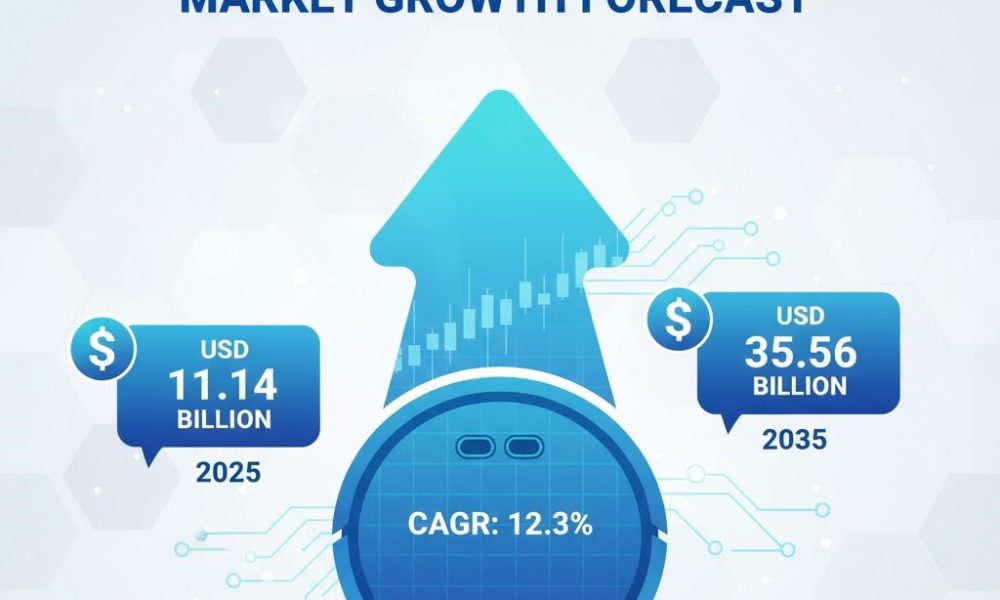
The global robotic vacuum cleaners market is set to experience transformative growth over the next decade, with market value projected to rise from USD 11.14 billion in 2025 to USD 35.56 billion by 2035, reflecting a robust compound annual growth rate (CAGR) of 12.3%, according to recent industry forecasts. The rapid expansion of automated home cleaning technologies and increasing consumer inclination toward intelligent, time-saving devices are fueling this momentum.
Gain access to detailed segment-wise analysis and forecast statistics https://www.futuremarketinsights.com/reports/sample/rep-gb-11949
Market Overview
As urbanization intensifies and smart living becomes mainstream, robotic vacuum cleaners are transitioning from luxury gadgets to essential household appliances. In 2024, the sector saw a notable upturn with the introduction of AI-powered navigation systems and multifunctional cleaning modules. This momentum continues in 2025, spurred by rising disposable incomes, dual-income households, and growing awareness of indoor air quality.
Key Market Drivers
- Technological Advancements Redefining Cleaning Efficiency
The latest generation of robotic vacuums features cutting-edge technologies such as AI-enhanced dirt recognition, smart mapping, and voice assistant integration. The launch of Roborock Saros Z70, with its innovative foldable arm for object displacement, and Eureka’s J15 Max Ultra, with dust compression capabilities, marks a shift toward fully autonomous, intelligent home cleaning. - Rising Smart Home Penetration
With more households integrating IoT devices and smart assistants like Alexa and Google Home, demand for connected cleaning appliances continues to surge. Over 10% of global households now own a robotic vacuum cleaner—a figure expected to double within five years. - Health and Hygiene Awareness
Consumers are increasingly adopting robotic vacuums to minimize exposure to allergens, pet dander, and dust. The inclusion of HEPA-grade air filters and allergy-sensitive cleaning modules has positioned these devices as health-enhancing tools. - AI, Connectivity, and Customization
From Wi-Fi connectivity to voice-controlled cleaning schedules, modern robotic vacuums are embracing full-scale smart integration. Models like Samsung’s Jet Bot AI+ demonstrate how AI-driven obstacle recognition and real-time monitoring enhance convenience and safety.
Segmental Insights
- By Robot Type:
In-House Robots lead the segment with a 78% market share in 2025, driven by urban indoor automation trends. Their intelligent mapping, silent operation, and self-docking features make them the preferred choice over outdoor variants, which currently hold 22%. - By Sales Channel:
Online Retailers dominate distribution with a 42% market share in 2025. E-commerce giants such as Amazon, Alibaba, and Flipkart have become the go-to platforms for purchasing smart home devices. Digital-first strategies, online-exclusive launches, and contactless shopping experiences continue to bolster this segment.
Regional Outlook
- China:
As the world’s largest manufacturing hub, China leads both production and adoption, supported by affordable technology and high throughput manufacturing. Rising urban pollution has further accelerated demand for automated cleaning solutions. - North America:
Holding around 21% market share, North America is witnessing rapid adoption driven by health-conscious consumers and growing awareness of Indoor Air Quality (IAQ). According to the EPA, indoor air pollution can be five times higher than outdoor levels, reinforcing demand for robotic cleaning systems. - India:
With 37.2% share of the South Asian market, India is emerging as a fast-growing hub for smart home technologies. The integration of voice-enabled automation and affordable product lines has enhanced accessibility in both urban and semi-urban regions.
Competitive Landscape
The robotic vacuum cleaners market is becoming increasingly competitive, with global brands accelerating innovation to capture the expanding consumer base. Key players include iRobot Corporation, Ecovacs, Samsung Electronics, Dyson Ltd., LG Electronics, Panasonic, Xiaomi, and Neato Robotics.
Manufacturers are strengthening regional production capabilities to reduce costs and improve supply chain resilience. For instance, iRobot, in partnership with Jabil, Inc., established a new manufacturing facility in Malaysia to expand production of the Roomba 600 Series.
Recent Innovations
- Samsung Jet Bot AI+: The industry’s first robotic vacuum using 3D stereo-type sensors and Intel AI for enhanced obstacle detection, real-time mapping, and remote home monitoring via the SmartThings app.
- Ecovacs Deebot Series: Enhanced with multi-floor mapping and smart home compatibility, enabling personalized and efficient cleaning routines.
- Roborock Saros Z70: Redefining convenience through foldable robotic arms and dynamic object handling for cluttered environments.
Checkout Now to Access Industry Insights: https://www.futuremarketinsights.com/checkout/11949
Future Outlook
The robotic vacuum cleaners market is entering a decade of intelligent automation. As AI, connectivity, and affordability converge, robotic vacuums are set to become a central feature of modern living spaces. Increased female workforce participation, time-saving benefits, and the integration of voice and visual intelligence will further propel market growth through 2035.
Have a specific Requirements and Need Assistant on Report Pricing or Limited Budget please contact us – [email protected]
About Future Market Insights (FMI)
Future Market Insights, Inc. (FMI) is an ESOMAR-certified, ISO 9001:2015 market research and consulting organization, trusted by Fortune 500 clients and global enterprises. With operations in the U.S., UK, India, and Dubai, FMI provides data-backed insights and strategic intelligence across 30+ industries and 1200 markets worldwide.



