
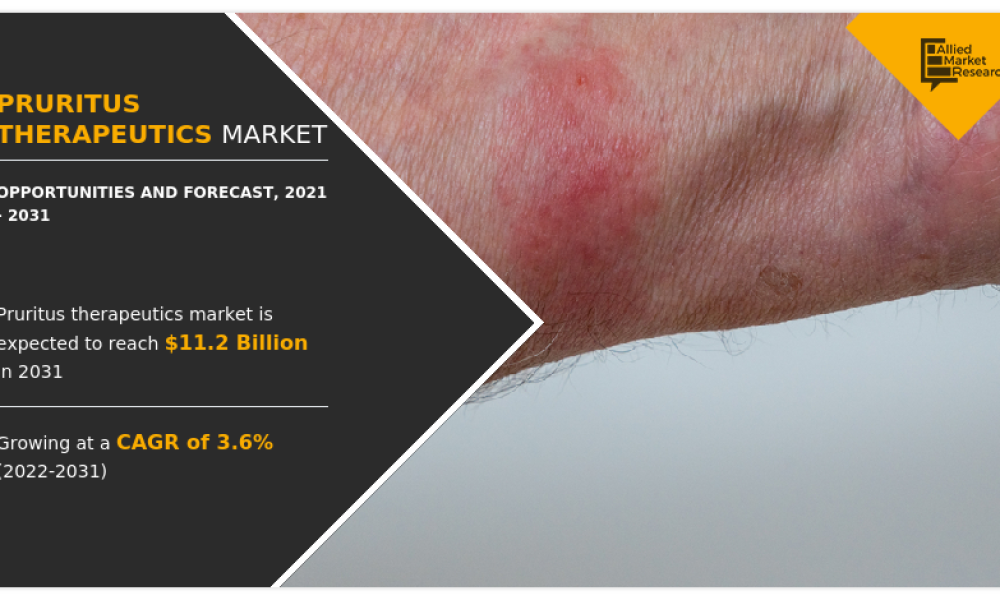
The global pruritus therapeutics market was valued at $7.9 billion in 2021 and is projected to reach $11.2 billion by 2031, expanding at a CAGR of 3.6% from 2022 to 2031. Pruritus, commonly known as chronic itching, is one of the most widespread dermatological complaints, affecting millions of individuals worldwide. It may arise from a variety of causes including dry skin, allergies, eczema, contact dermatitis, and systemic diseases, making effective therapeutics a critical healthcare need.
Pruritus can significantly impact quality of life, and when it persists, it may indicate deeper underlying health conditions. Heightened inflammatory responses to irritants—such as dust, animal dander, certain foods, and environmental pollutants—are among the leading causes of atopic dermatitis and allergic contact dermatitis. Common triggers also include consumer products like soaps, garments, cosmetics, and jewelry that contain skin-irritating substances.
Get a Sample Copy of this Report: https://www.alliedmarketresearch.com/request-sample/A17521
Market Dynamics
Key Growth Drivers
The growth of the pruritus therapeutics market is fueled by:
High R&D Investments: Leading pharmaceutical companies are investing heavily in innovative therapies and expanding their product pipelines.
Launch of New Medications: Strong focus on introducing novel drug formulations to address both common and chronic itching conditions.
Rising OTC Demand: Over-the-counter (OTC) pruritus products are gaining traction due to their low cost, accessibility, and convenience. This trend is driving significant patient preference, boosting overall market growth.
Market Challenges
Despite the positive momentum, the market faces certain hurdles:
Unclear Etiology: In many cases, the exact cause of pruritus remains unidentified, limiting targeted treatments.
Patent Expiry: Expiration of patents for several branded pruritus drugs opens the door for generic competition, but simultaneously creates new opportunities for players to expand product reach.
COVID-19 Impact on the Pruritus Therapeutics Market
The COVID-19 pandemic disrupted global industries, including the pharmaceutical sector, due to supply chain interruptions and reduced consumer spending. However, its impact on the pruritus market was moderate.
Interestingly, urticaria (hives) emerged as a dermatological manifestation in COVID-19 patients. Studies reported that 12% of patients developed urticarial rashes, with 16% experiencing them before other COVID-19 symptoms, making them potential early diagnostic indicators. This unusual correlation offered new opportunities for pruritus therapeutics, helping stabilize market demand during the pandemic.
Market Segmentation
The pruritus therapeutics market is segmented by drug type, disease type, distribution channel, and region.
By Drug Type
Corticosteroids – Largest segment in 2021 and projected to grow fastest at a CAGR of 4.4%, owing to their widespread use in atopic dermatitis and allergic contact dermatitis.
Antihistamines
Local Anesthetics
Immunosuppressants
Others – Expected to show the second-fastest growth, supported by innovations in topical and oral therapies.
By Disease Type
Atopic Dermatitis – Dominated the market in 2021, projected to grow at a CAGR of 3.2%.
Allergic Contact Dermatitis
Urticaria
Others – Expected to record the highest CAGR of 4.2%, reflecting rising incidences of pruritus with unknown causes.
By Distribution Channel
Hospital Pharmacies
Drug Stores & Retail Pharmacies – Largest revenue contributor in 2021, with a CAGR of 3.2%.
Online Providers – Fastest-growing segment, expected to grow at a CAGR of 5.5%, driven by digitalization, telehealth adoption, and increased patient preference for online purchases.
Regional Insights
North America – Accounted for the largest market share in 2021, supported by strong healthcare infrastructure, government initiatives, and the presence of key pharmaceutical players. Expected CAGR: 2.7%.
Europe – Significant adoption due to rising awareness of dermatological health and increasing access to advanced treatments.
Asia-Pacific – Expected to record the highest CAGR of 4.7% during the forecast period. Growth is fueled by:
Rising R&D investments
Expanding consumer preference for OTC products
Increasing awareness of modern therapies
LAMEA – Market expansion supported by improving healthcare access and growing incidence of dermatological conditions.
Competitive Landscape
The global pruritus therapeutics market is highly competitive, with leading players focusing on drug innovation, partnerships, and acquisitions to expand their market presence. Key companies include:
AbbVie Inc.
Amgen Inc.
Bausch Health Companies Inc.
Cara Therapeutics, Inc.
Cipla Ltd.
Eli Lilly and Company
Evelo Bioscience
Galderma S.A.
LEO Pharma
MC2 Therapeutics
Novan Inc.
Novartis AG
Pfizer Inc.
Regeneron Pharmaceuticals, Inc.
Sanofi
Trevi Therapeutics
Viatris Inc.
Key Benefits for Stakeholders
Quantitative market insights on segments, trends, and growth forecasts (2021–2031).
Analysis of drivers, restraints, and emerging opportunities shaping the industry.
Porter’s Five Forces evaluation of supplier-buyer power and competitive intensity.
Mapping of major revenue-contributing countries across each region.
Strategic benchmarking of top players to assess market positioning and growth strategies.
Conclusion
The pruritus therapeutics market is set for steady growth, supported by increasing prevalence of skin disorders, rising R&D activity, and growing OTC adoption. While challenges such as unclear disease etiology and patent expiries persist, the sector offers significant opportunities—particularly in emerging markets across Asia-Pacific.
With global demand for dermatology solutions continuing to rise, the industry is poised to deliver effective and accessible therapies, improving both patient outcomes and overall quality of life.




