
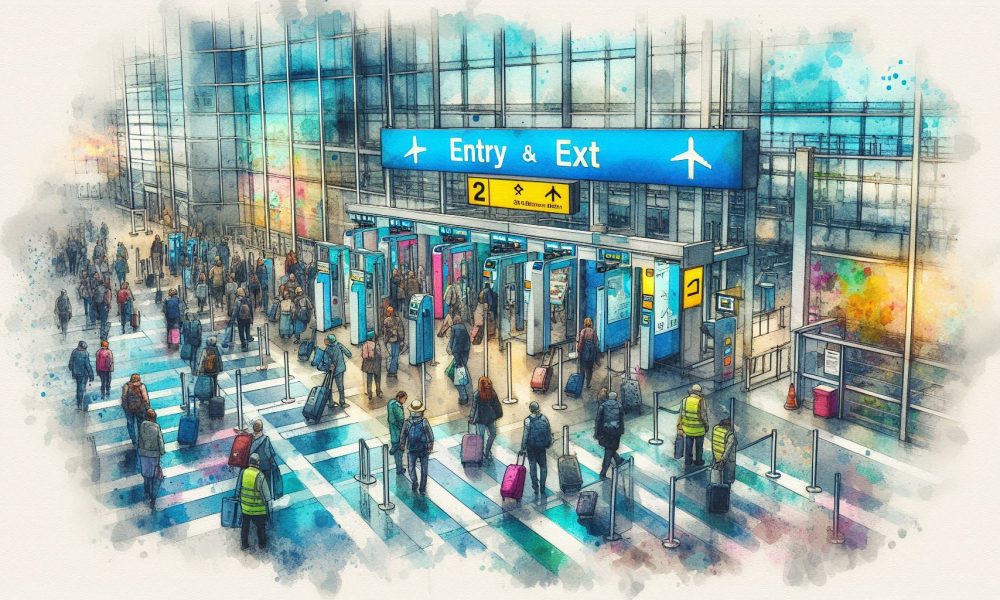
What governments collect, where it is stored, and how cross-border data sharing alters screening expectations.
WASHINGTON, DC, February 1, 2026
Airports used to feel like the start of a trip. In 2026, they increasingly feel like the end of a review process that began days earlier, sometimes weeks earlier, and often without a traveler noticing the precise moment it started.
That shift has a name in government language: preclearance, pre-screening, advance passenger checks, travel authorization, risk-based triage. The labels vary by country, but the direction is the same. Borders are moving upstream.
At the same time, a second force is reshaping the experience: data sovereignty. Governments are collecting more travel data, but they are also becoming more explicit about where that data resides, who can access it, and how it can be used. The public argument is about privacy. The operational reality concerns control, legal jurisdiction, and trust among governments that share information.
Put together, these two trends are rewriting the unwritten contract of modern travel. The contract used to be simple: show up, show your passport, answer a few questions, and proceed. Now the contract is layered. Your identity, itinerary, and risk profile are often evaluated before you reach the checkpoint, and the quality of your documentation and the consistency of your account matter more because multiple systems are comparing the same facts.
Privacy-first borders do not mean less screening. They refer to more formal rules governing how screening data is collected, stored, and shared. For travelers, that distinction is everything.
Preclearance is not just faster lines; it is earlier decisions
Preclearance is often sold as convenience. Clear U.S. inspection in Canada. Land at a domestic terminal. Skip the arrival queue. That is real, and in busy travel seasons, it can feel like a gift.
But the bigger change is procedural. Preclearance and related advance screening programs shift the decision point away from the physical border. That means the “border moment” is no longer the first time your trip is evaluated. It is the moment you learn the outcome.
In practical terms, travelers are experiencing more of these patterns:
More questions before boarding, sometimes at the gate, sometimes in an airline app, sometimes through automated prompts that look like routine confirmations.
More upstream identity verification, including biometric checks at airports and, in some jurisdictions, at enrollment stages for trusted traveler programs.
Greater emphasis on consistency, where mismatches between what you say, what your ticket shows, and what historical data indicate can trigger additional screening.
More finality, because being flagged earlier can mean you do not get on the plane in the first place.
This is why travelers sometimes feel blindsided. They assume the key moment is at arrival. Governments increasingly treat the key moment as the period before departure.
What governments collect, the modern travel data stack
To understand privacy first borders, it is helpful to think of travel as a data stack.
Layer one comprises document identity: passport details, name, date of birth, nationality, document number, expiry date, and issuing authority.
Layer two is the itinerary: flight segments, departure and arrival points, travel dates, seat assignments, and, in some cases, check-in procedures.
Layer three is reservation data, often captured through airline and travel agency booking systems. This can include contact details, payment indicators, baggage details, and, in many cases, richer contextual information that is not obvious to passengers.
Layer four comprises biometrics: facial images and fingerprints, collected and used differently across countries and specific programs.
Layer five is behavioral and relational data: travel history patterns, prior refusals, enforcement interactions, and links inferred through shared addresses, phone numbers, or booking behaviors.
Not every country uses every layer the same way, and not every traveler is subject to the same depth of review. Overall, border decisions are now supported by a broader set of data points.
The European Union’s Entry Exit System provides a clear example of how formalized this has become. According to its publicly available description of the data it holds, the system collects travel document details, the date and place of each entry and exit, and biometric identifiers such as facial images and fingerprints. That is the new normal in many advanced border environments, and it highlights why privacy debates have shifted from “are they collecting data” to “what are the rules around it.” The EU’s explanation is outlined here: Data held by the EES.
Data sovereignty, the question is not only what is collected, but whose laws apply
Data sovereignty sounds abstract until you map it onto a simple problem: if your travel data sits on a server in one jurisdiction, the legal powers of that jurisdiction may influence access, disclosure, and oversight.
In 2026, governments care about data sovereignty for three reasons.
First, national security and intelligence. Border systems are not just about immigration. They also address threat detection, organized crime, sanctions enforcement, and counterterrorism screening. Governments seek assurance that their border data is not subject to foreign legal compulsion or foreign intelligence access.
Second, diplomatic trust. Cross-border data sharing requires agreements, and those agreements depend on whether each party believes the other party has adequate protections. The more sensitive the data, especially biometrics, the more fragile that trust becomes.
Third, domestic politics and legal compliance. Privacy laws and court decisions can force governments to localize certain data or to restrict how it is shared. When a court or regulator scrutinizes a program, the government must demonstrate governance, not merely operational necessity.
This is why you see countries discussing sovereign cloud strategies, domestic hosting requirements, and strict purpose limitation rules. They want to be able to say, “Yes, we screen, but the data is controlled.”
For travelers, the outcome is a more segmented reality. Your travel data may be collected in one place, processed in another, and shared under defined channels with partners. The process can feel invisible, but it reshapes expectations at the border as screening becomes increasingly collaborative.
Cross-border data sharing is changing what officers expect you to know
The most immediate traveler facing effect of data sharing is a subtle rise in “screening expectations.”
Officers are less likely to treat your answers as standalone facts. They are more likely to treat them as one input among many. That changes the tone and the stakes of routine questions.
Where are you staying? How long. What do you do for work? Who paid for the trip? What is the purpose? Have you been here before? Do you have onward travel?
These questions have always existed. What changes in 2026 is the context in which they are asked. Your itinerary details, travel history, and sometimes your declared information from prior trips may already be displayed on the screen. If your answer conflicts, it can look less like human forgetfulness and more like an inconsistency worth exploring.
This is not about catching ordinary travelers in technicalities. It is about risk logic. Modern screening is designed to use inconsistency as a signal, not as proof. The signal prompts additional questions, which in turn lead to further data collection, creating a feedback loop that the traveler did not anticipate.
Preclearance accelerates that loop because it happens before boarding, when options are limited and time pressure is high.
A privacy-first design does not eliminate the loop. It aims to put guardrails around it.
What “privacy first” can realistically mean at borders
Privacy-first borders in 2026 are best understood as a governance promise, not a minimal data promise.
A true privacy-first approach tends to emphasize:
Purpose limitation, collect data for defined objectives, and resist mission creep.
Retention discipline, keep data no longer than necessary for the stated purpose, subject to legal requirements.
Access control limits who can see what and creates audit trails.
Transparency, publish clear explanations of what is collected and why.
Redress pathways provide mechanisms for correction and challenge, even if limited.
Security by design, encryption, segmentation, and modern safeguards.
None of this makes screening gentle. It makes screening more formal.
The tension is that border agencies are inherently risk-oriented. They want broad authority and broad visibility. Privacy frameworks want a narrow scope and measured authority. The compromise is often a system that collects a lot but tries to make the collection defensible.
This is also why biometrics has become a focal point. Biometrics reduce identity ambiguity. They also increase the stakes of data governance because biometric identifiers are unlike passwords. If exposed, they cannot be changed easily.
How data sovereignty changes travel operations for airlines and hotels
The sovereignty push is also reshaping the private sector side of travel.
Airlines are often the first point of collection for advanced data. They must transmit required passenger information to governments, sometimes to multiple governments for one itinerary. When sovereignty rules tighten, airlines may need to route data to specific endpoints, store certain logs locally, or meet new certification requirements.
Hotels and short-term rental operators are feeling this too, especially in jurisdictions that require guest registration data, document scans, or police reporting for foreign visitors. When a country tightens its domestic storage requirements, operators may be incentivized to use local vendors, local hosting, and more formal processes.
This is important because travelers experience friction at check-in. More document checks. More requests to confirm addresses. More “compliance style” interactions in settings that used to be casual hospitality.
In other words, borders are influencing the entire travel funnel, not just the checkpoint.
The new traveler risk profile, clean data beats clever stories
In 2026, the most prevalent travel misconception is that privacy and opacity are synonymous.
They are not.
Privacy-first design is about limiting unnecessary exposure and controlling how data is handled. Opacity is about hiding. Border systems are built to penalize opacity. They treat it as a risk.
That is why travelers who want fewer problems should focus on clean data, consistent narratives, and documentation discipline.
That does not mean oversharing. It entails aligning the facts already visible in systems.
For example:
If your purpose is tourism, have a plausible plan and be ready to name your accommodation.
If your purpose is business, carry a short explanation of what you do and who you are meeting, without improvising.
If you have dual citizenship or multiple travel documents, understand which one you used for the booking and why, and expect questions if patterns look unusual.
If you are a frequent traveler with complex itineraries, assume that the complexity itself may signal something and be prepared to explain it calmly.
This is where privacy first borders become an adult concept. You protect your data by being consistent, not by being vague.
A practical checklist for travelers who want fewer surprises
Travelers cannot opt out of border screening. But they can reduce avoidable friction.
Know your story in one sentence. Why are you traveling? Where are you staying? When are you leaving?
Keep key confirmations available offline. Hotel booking, return ticket, and meeting address if relevant. If you lose connectivity at the wrong time, you do not want to rely on logging into an email account.
Avoid last-minute identity mismatches. Booking a ticket under one name format and traveling with another is a classic trigger. Middle names, double surnames, and inconsistent transliterations matter more when systems compare fields.
Separate privacy hygiene from concealment. It is reasonable to minimize the amount of data you provide. It is not wise to be evasive about basic travel facts.
Assume biometrics are part of the environment. Even when not explicitly explained, facial comparison is becoming a default step in many airports.
Treat preclearance like a real border encounter. You are still being screened. The fact that you are not yet on the plane does not reduce the stakes.
How Amicus frames the change, privacy first means rule clarity, not fantasy
Amicus International Consulting has been tracking how preclearance and advance screening systems affect practical expectations regarding identity continuity, documentation quality, and cross-border compliance. The consistent finding is that the most resilient travel posture in 2026 is not secrecy; it is a privacy-disciplined approach grounded in lawful status and verifiable records, a framework reflected in the firm’s published overview of professional services at Amicus International Consulting.
That perspective matters because it cuts through the marketing fog. Many travel products promise frictionless borders. Borders do not work that way anymore. What travelers can realistically purchase is preparedness, clarity, and reduced exposure through sound processes.
Why this is accelerating, and what to watch next
Two factors are likely to intensify this trend.
First, interoperability. Governments want their systems to talk to each other, not perfectly, but enough to reduce blind spots. This drives more data-sharing agreements, more standardized formats, and more joint screening logic.
Second, domestic political pressure. Citizens want security, but they also want privacy. Governments are responding by expanding screening while tightening the governance story around it. That is the privacy-first border in a sentence.
For travelers, the next visible wave will likely be routine pre-travel approvals, additional biometric touchpoints, and more formal explanations of data handling, particularly in regions where courts and regulators require transparency.
For operators, the next wave will be compliance-style infrastructure in travel and hospitality, from how guest data is stored to how it is transmitted across borders.
For anyone trying to understand the day-to-day reality, the most useful habit is simply to monitor how these programs are described in mainstream reporting and policy discussions, because the language changes before the traveler experience does. A current snapshot of ongoing coverage and debate can be followed here: Google News.
The bottom line
Privacy-first borders in 2026 are not about collecting less. They are about collecting with rules and using that collection earlier in the travel timeline. Preclearance and advance screening move the decision upstream. Data sovereignty shapes where information lives and whose laws govern it. Cross-border data sharing raises the standard for consistency because more systems can compare the same facts.
The traveler advantage is not a trick. It is a discipline: keep your story clean, your documents consistent, your expectations realistic, and your privacy practices focused on minimizing exposure without crossing into evasiveness. That is what travels well in a world where the border is no longer a place but a process.




