
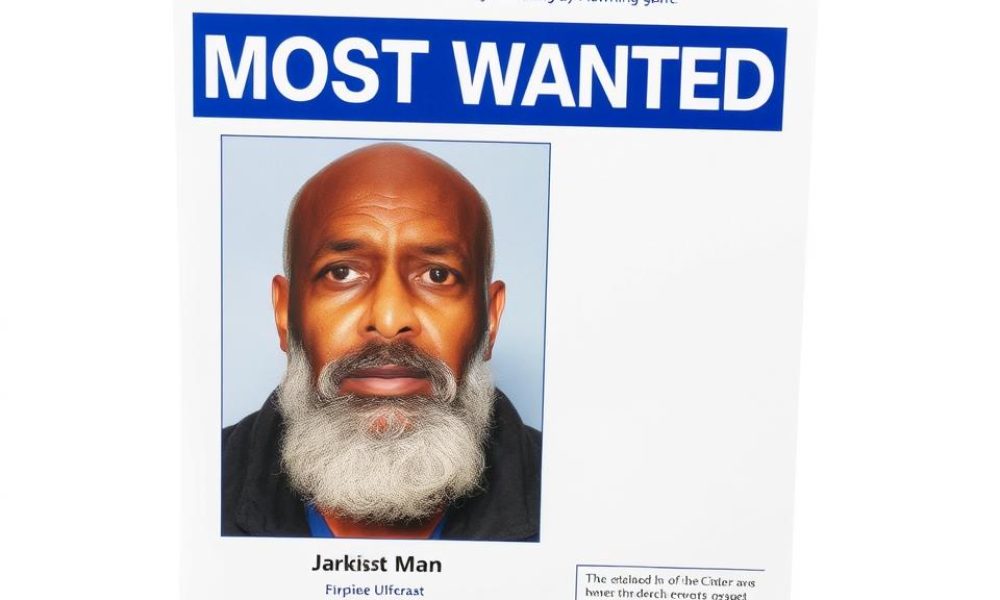
Part 10: The White House Crackdown
On June 4, 2026, FBI Director Kash Patel launched the Most Wanted Fraudsters list as part of Vice President JD Vance’s White House Task Force to Eliminate Fraud, placing a massive public target on Herb Kimble’s back.
VANCOUVER, BC, June 29, 2026, Herbert “Herb” Kimble’s time as a fugitive changed dramatically when Washington turned his Medicare fraud case from a missing-defendant problem into a national symbol of the federal government’s new fraud crackdown.
The turning point came on June 4, 2026, when the Federal Bureau of Investigation publicly announced the launch of its Most Wanted Fraudsters list, a new public-facing wanted program designed to identify fugitives accused of major fraud against American taxpayers, communities, and federal programs.
Kimble’s inclusion on that list gave his case a new political and operational meaning, because he was no longer only a South Carolina defendant who had missed sentencing after years of cooperation.
He became one of the first faces of a national enforcement campaign tied to the White House Task Force to Eliminate Fraud, a government-wide initiative chaired by Vice President JD Vance and publicly promoted by FBI Director Kash Patel.
The list turned Kimble into a national target.
Before the list, Kimble was already wanted after failing to appear for sentencing on October 7, 2024, and federal authorities had identified Manila, Philippines, as his possible whereabouts.
After the list, his name, face, fraud history, overseas connection, and Medicare billing role were packaged for public recognition, media attention, law-enforcement circulation, and tips from people who might otherwise never follow a federal court docket.
That public shift mattered because white-collar fugitives often benefit from complexity, low public awareness, and the mistaken belief that financial crimes do not generate the same urgency as violent offenses.
The Most Wanted Fraudsters list was designed to destroy that advantage by making fraud fugitives visible, searchable, and reputationally radioactive across communities, workplaces, families, financial networks, and foreign hiding places.
For Kimble, the White House-backed list turned a missed court hearing into a national manhunt with political weight.
Kash Patel framed fraud as a national threat.
FBI Director Kash Patel used the June 4 launch to present fraud as a direct attack on Americans, not merely an accounting problem or a regulatory violation.
The FBI announcement said the list was intended to publicly identify individuals charged with defrauding the American people and to call on the public to help bring fugitives to justice.
Patel thanked Vice President Vance for leadership of the task force and linked the wanted list to a broader federal effort to stop fraud, waste, and abuse in public programs.
That language was important because it moved Kimble’s case beyond the technical vocabulary of Medicare claims, durable medical equipment, telemedicine prescriptions, and kickback arrangements.
The White House crackdown reframed the story as a taxpayer-protection campaign where fugitives accused of major fraud would be pursued through public exposure as well as traditional law enforcement.
The Vance task force supplied the political machinery.
The White House Task Force to Eliminate Fraud was established in March 2026 as a whole-of-government effort to coordinate a strategy to combat fraud, waste, and abuse in federally funded benefit programs.
The task force’s stated focus included medical care, food assistance, housing, cash assistance, and other public-benefit systems where the administration said weak controls allowed ineligible providers, criminals, and fraudulent actors to exploit taxpayer-funded programs.
That policy environment made Kimble’s case a natural fit because his brace scheme was tied to Medicare, telemedicine, durable medical equipment suppliers, call-center marketing, and alleged exploitation of elderly beneficiaries.
Kimble’s alleged conduct represented exactly the kind of public-benefit fraud the task force wanted to highlight, because the scheme turned federal healthcare coverage into a revenue engine for private actors.
The politics of fraud enforcement and the facts of Kimble’s case, therefore, converged at the moment the FBI list went live.
Kimble’s case gave the list immediate force.
The DOJ later noted that the June 4 list included Kimble, a fugitive in a $1.2 billion telemedicine and durable medical equipment scheme, who was apprehended in the Philippines only four days later.
That timeline gave the new list a powerful opening success story, because one of its first international targets was reportedly captured almost immediately after public exposure increased.
The speed of that result allowed federal officials to argue that public wanted lists can matter, especially when fugitives rely on foreign distance, local anonymity, or limited awareness of complex financial crimes.
Kimble proved useful to the government twice: first as a cooperating witness against co-conspirators, and later as evidence that the new fraudster list could help generate real enforcement results.
The man who had once helped prosecutors build cases now helped Washington validate a national anti-fraud campaign by becoming one of its early captures.
The White House message was simple.
The administration’s message was that major fraud would no longer be treated as a quiet paperwork crime buried inside agencies, claims systems, state programs, and administrative reviews.
The White House wanted fraud cases to become visible, political, and publicly actionable, especially when defendants fled after being charged, released, or convicted.
Kimble’s story fit that message because he had pleaded guilty in 2019, received years of freedom under a cooperation posture, failed to appear for sentencing, and was later believed to be living in Manila.
That sequence made him an ideal example for a crackdown narrative, because it combined taxpayer loss, healthcare fraud, international flight, leniency gone wrong, and a dramatic overseas apprehension.
The White House did not need to completely simplify the brace scheme because Kimble’s fugitive status provided the public hook.
The fraud list attacked white-collar invisibility.
White-collar fugitives often rely on the fact that their alleged crimes are hard to summarize, especially when the conduct involves billing codes, referral arrangements, telemedicine vendors, invoices, offshore call centers, and corporate structures.
The FBI’s new list translated that complexity into something the public could understand quickly, because each fugitive had a face, a name, a case summary, a reward, and a reason to report information.
That translation mattered for Kimble because the $1.2 billion brace scheme was complex, but the fugitive narrative was simple.
A man pleaded guilty, cooperated for years, failed to appear, was believed to be in the Philippines, and became wanted by the FBI.
The Most Wanted Fraudsters list made that story legible to people who might not understand Medicare billing but could recognize a fugitive headline.
The Philippines became part of the crackdown story.
Kimble’s possible whereabouts in Manila gave the White House crackdown an international dimension because the case showed that fraud enforcement did not end at American borders.
The Philippines connection was already embedded in the fraud narrative because Kimble’s offshore call-center operation marketed orthotic braces to Medicare beneficiaries and then routed orders through telemedicine companies.
When he failed to appear for sentencing and was later identified as being in Manila, the geography of the fraud and the geography of flight appeared to overlap.
That overlap made his case especially useful for public messaging because it suggested that the same global infrastructure that helped scale fraud could also become part of the fugitive trail.
The crackdown, therefore, reached beyond domestic billing systems and into foreign cooperation, immigration enforcement, and international wanted publicity.
The capture gave Patel a proof point.
Kimble’s apprehension in the Philippines shortly after the list’s launch gave FBI leadership a clear proof point for the new fraudster strategy.
A news report on Kimble’s capture described how federal authorities brought him back to the United States after his arrest in the Philippines, linking the case directly to the newly launched wanted initiative.
For Patel and the task force, the capture showed that public pressure, foreign law enforcement cooperation, and fraud-focused wanted publicity could produce results quickly.
For Kimble, the timing was devastating because his name became one of the first examples used to show that the new system could work.
The list did not merely place a target on his back; it also helped make his capture part of the administration’s national enforcement narrative.
The reward increased the human pressure.
The public wants programs to work because they create pressure not only on fugitives, but also on the people around them who may know where they are living, who is helping them, and how they are surviving.
Kimble’s case carried a reported reward of up to $150,000, which changed the incentives for acquaintances, service providers, former associates, landlords, drivers, medical contacts, and people inside expatriate circles.
A fugitive’s support network can remain loyal in silence, but reward money, legal risk, and national publicity make silence much harder to maintain.
The more prominent the fraud case becomes in public conversation, the more dangerous it becomes for anyone to quietly assist the fugitive.
Kimble’s wanted status, therefore, placed pressure not only on him but also on the social and logistical network that made foreign residence possible.
The list changed the psychology of hiding.
Before being publicly elevated, a fugitive can hope that only prosecutors, agents, and court officials are actively focused on the case.
After being placed on a national wanted list, the fugitive must assume that ordinary people may recognize him, search his name, share his image, or report suspicious contact.
That psychological change matters because fugitives depend on predictability, routine, and the belief that they can control who knows the truth.
The Most Wanted Fraudsters list disrupted that control by making Kimble’s name part of a broader public campaign against financial crime.
A fugitive who once tried to hide in plain sight suddenly had to consider that plain sight had become the most dangerous place to stand.
Kimble’s plea history made the target bigger.
Kimble was not a fugitive who disappeared before the government understood his alleged conduct, because he had already pleaded guilty and cooperated for years before failing to appear.
That history made the White House crackdown more politically powerful because the case could be framed as a defendant who received leniency and then betrayed the court’s trust.
His cooperation reportedly helped authorities pursue dozens of other defendants, which made the original plea posture understandable from a prosecutorial standpoint.
However, once he missed sentencing, that same leniency became controversial because the public could see the years of freedom as the opportunity that allowed him to flee.
The Most Wanted Fraudsters list turned that controversy into a warning about release, accountability, and the limits of cooperation deals.
The scheme represented modern healthcare fraud.
Kimble’s operation was not an old-fashioned fraud built around a single clinic submitting false paperwork from one location.
It reflected modern healthcare fraud, where call centers, telemedicine platforms, DME suppliers, beneficiary data, marketing scripts, physician orders, and billing companies can operate across multiple jurisdictions.
That modern structure made the case highly relevant to a federal task force focused on systemic fraud because the scheme exploited technology, outsourcing, and program complexity.
The call center generated beneficiary interest, telemedicine companies created prescriptions, and suppliers billed Medicare for orthotic braces allegedly tied to medical necessity that often did not exist.
The fraudster list gave Washington a way to show that systemic schemes would face systemic publicity and coordinated enforcement.
Healthcare fraud became a flagship battlefield.
The June 2026 national healthcare fraud takedown further heightened the issue, as the DOJ announced charges against hundreds of defendants in schemes involving billions in alleged fraud across federal healthcare programs.
In that environment, Kimble’s capture became part of a larger healthcare fraud storyline rather than an isolated fugitive matter.
The DOJ specifically referenced the Most Wanted Fraudsters list, Kimble’s inclusion, his apprehension in the Philippines, and his later indictment for failure to appear at court hearings.
That connection gave the White House crackdown measurable momentum because the list was tied not only to rhetoric but also to arrests, indictments, apprehensions, and ongoing federal cases.
Kimble’s case served as a bridge between the new public-wanted program and the broader healthcare fraud enforcement wave.
The White House strategy used shame as leverage.
The Most Wanted Fraudsters list did more than provide law-enforcement information; it also used public shame as a strategic tool.
White-collar defendants often depend on reputation, social networks, financial contacts, and professional distance from the moral language associated with conventional crime.
The list attacked those defenses by calling fraud harmful, personal, and destructive to communities, benefits, businesses, savings, and taxpayer-funded programs.
Kimble’s placement on the list stripped away the corporate complexity surrounding his case and placed him in the same visual category as other high-priority fraud fugitives.
That shame mattered because reputation can be a pressure point for fugitives who still need people, money, housing, and services to survive.
Public exposure supported foreign cooperation.
Foreign authorities are more likely to face political and reputational pressure when a fugitive’s case becomes nationally visible in the United States.
Kimble’s presence in the Philippines could have remained a purely technical international matter, but the wanted list turned it into a public campaign with American political attention behind it.
That visibility can strengthen cooperation because no country wants to appear to be a sanctuary for a fugitive tied to a billion-dollar healthcare fraud scheme.
Philippine authorities ultimately arrested Kimble in Pasig City and deported him, reinforcing the message that foreign distance would not prevent accountability.
The list did not replace foreign law enforcement, but it helped focus attention on the fugitive whose case had become politically important.
The crackdown narrowed Kimble’s future.
Once Kimble was publicly tied to the Most Wanted Fraudsters list, his options narrowed because travel, housing, banking, medical care, and ordinary commercial activity became more dangerous.
A wanted person may still move physically, but public exposure makes each interaction a potential point of recognition.
A landlord can search a name, a driver can notice a face, a hotel worker can report suspicion, and a medical provider can recognize inconsistencies.
That is why wanted lists are powerful even without immediate arrest, because they make the fugitive’s ordinary life unstable.
Kimble’s listing put a target on his back by turning routine services into potential avenues to law enforcement.
The task force message reached beyond one fugitive.
The White House Task Force to Eliminate Fraud was not created for Kimble alone, and the FBI list was not merely a reaction to a single Medicare scheme.
The broader message was that public benefits fraud, healthcare fraud, pandemic fraud, financial fraud, and large taxpayer-funded scams would be confronted through coordinated federal enforcement and public-facing tools.
Kimble became one of the first examples because his case had everything Washington wanted to highlight, including huge dollar figures, vulnerable victims, federal healthcare funds, foreign flight, and a dramatic capture.
That combination made him a powerful symbol for a government trying to show that fraud enforcement had become a visible national priority.
The target on Kimble’s back, therefore, represented a larger warning to every fugitive accused of stealing public funds.
The list challenged the idea that fraud is victimless.
The FBI’s launch statement emphasized that fraud is not a victimless crime, a phrase especially relevant to Kimble’s Medicare brace scheme.
Medicare beneficiaries were allegedly targeted through advertisements, call centers, and telemedicine pipelines, while federal funds were exposed to enormous charges for orthotic braces tied to questionable prescriptions.
Taxpayers carried the financial burden, legitimate providers faced reputational harm, and elderly patients risked confusion, unwanted equipment, and benefit-history complications.
The wanted list forced the public to see Kimble not as a clever financial operator, but as a fugitive connected to a scheme that exploited real people and public programs.
That moral framing was essential to the crackdown because it transformed fraud from paperwork into harm.
The policy lesson is accountability after leniency.
Kimble’s case also raised a policy question about what happens when a defendant receives substantial cooperation leniency and then fails to appear.
The government may need insiders to dismantle complex fraud networks, but the public also expects defendants tied to massive schemes to face judgment in court.
The Most Wanted Fraudsters list became one answer to that tension, showing that a defendant who benefits from cooperation cannot rely on silence if he later becomes a fugitive.
Public exposure becomes the corrective force when private cooperation fails to secure appearance.
Kimble’s transition from cooperator to wanted fraudster showed that leniency has a boundary, and that boundary is crossed when a defendant stops answering to the court.
The capture validated the public model.
Kimble’s arrest in the Philippines four days after the list’s creation gave the administration a direct result it could point to in defending the new strategy.
The capture did not prove that every wanted-list subject would be found quickly, nor did it mean that public exposure alone caused the arrest.
However, it did show that combining wanted publicity, foreign law-enforcement cooperation, agency coordination, and public reporting can make life more difficult for a fugitive.
That practical result mattered more than the politics because the defendant was no longer simply missing.
The public list helped mark the beginning of the end for Kimble’s fugitive chapter.
Lawful privacy remains different from public evasion.
Kimble’s inclusion on a White House-backed wanted list reinforces the distinction between lawful privacy and unlawful flight, as privacy protects compliant people, whereas evasion invites national exposure.
For lawful clients facing harassment, extortion, doxing, political targeting, or personal-security threats, anonymous living strategies should remain grounded in accurate records, lawful residence, court compliance, secure communications, and truthful disclosure where legally required.
That lawful approach is entirely different from failing to appear after a guilty plea, leaving the country, and becoming the subject of a public wanted campaign.
The Kimble case proves that noncompliance does not create privacy because it creates publicity.
A person who ignores the court may discover that the federal government can make hiding far more visible than appearing ever would have been.
Identity planning cannot defeat a national wanted campaign.
Kimble’s story also shows that foreign residence, aliases, business networks, overseas contacts, and private arrangements cannot erase official records once a defendant becomes a national target.
For legitimate clients seeking continuity of compliant documentation, New Legal Identity planning must remain government-recognized, truthful, and consistent with all existing legal obligations.
No lawful identity strategy can remove a bench warrant, erase a guilty plea, defeat a wanted listing, or prevent foreign authorities from cooperating with American law enforcement.
The Most Wanted Fraudsters list shows how official identity data, photographs, case summaries, aliases, and reward information can travel faster than a fugitive.
A defendant may leave the courtroom, but the wanted poster can arrive everywhere else first.
The final lesson is that Washington made Kimble impossible to ignore.
The White House crackdown changed Herb Kimble’s fugitive status by placing him in a national anti-fraud campaign backed by Vice President JD Vance’s task force and publicly announced by FBI Director Kash Patel.
The June 4, 2026, launch of the Most Wanted Fraudsters list gave federal authorities a new way to spotlight high-impact financial fugitives and invite public participation in locating them.
Kimble’s inclusion on that list transformed him from a missing South Carolina defendant into an international fraud target whose Philippines hideout became part of the federal government’s public enforcement narrative.
Four days later, his apprehension in the Philippines gave the new list one of its first major success stories and turned his failed escape into proof of concept for Washington’s campaign.
In 2026, the Kimble case stands as a warning that once the White House, the FBI, foreign partners, and the public want the system to align, even a sophisticated fraud fugitive can become too visible to hide.




