
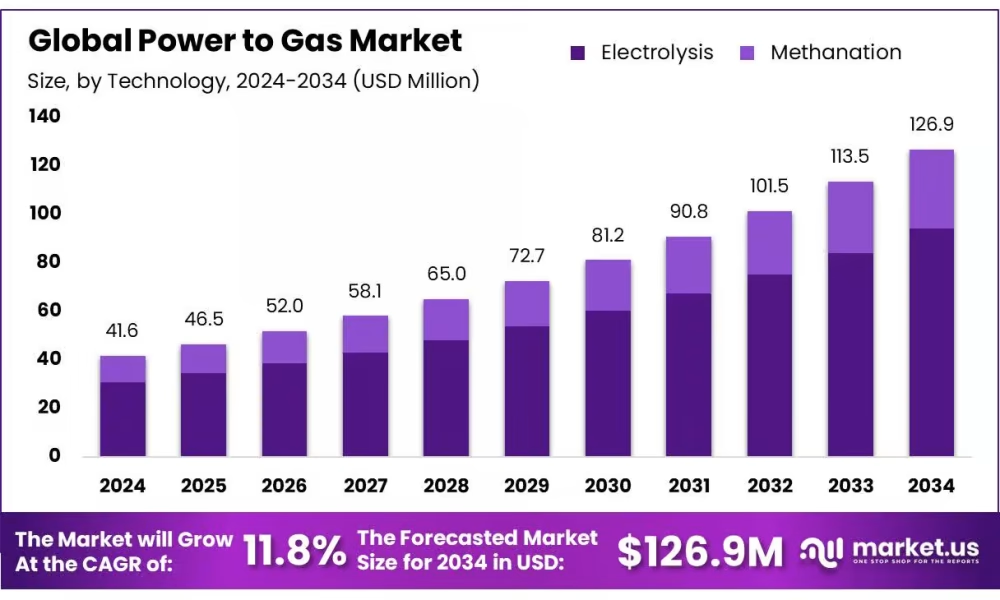
According to market.us, the Global Power to Gas Market size is projected to reach approximately USD 126.9 million by 2034, rising from USD 41.6 million in 2024, registering a compound annual growth rate (CAGR) of 11.8% between 2025 and 2034.
The market for power-to-gas (P2G) technology is witnessing significant growth due to its capability to convert surplus renewable electricity into hydrogen or synthetic methane, thereby supporting energy storage, decarbonization, and grid stability. With the increasing integration of intermittent renewable sources such as wind and solar into power grids, the demand for flexible energy storage solutions is accelerating. Power-to-gas technology provides a strategic link between the electricity and gas sectors, contributing to sector coupling and the transition towards cleaner energy systems.
Governmental and regional initiatives, especially in Europe, are playing a pivotal role in market expansion. For example, the European Clean Hydrogen Alliance, established in 2020, is working to scale hydrogen technologies across the continent by 2030. The alliance’s Electrolyser Partnership aims to achieve an electrolyzer capacity of 17.5 GW by 2025, strengthening hydrogen infrastructure and promoting hydrogen as a clean fuel alternative. These developments support the growth trajectory of the power-to-gas sector, offering promising opportunities for technology providers, energy companies, and infrastructure investors in the coming years.
Key Takeaways
- The global power-to-gas market was valued at USD 41.6 million in 2024.
- The global power-to-gas market is projected to grow at a CAGR of 11.8% and is estimated to reach USD 126.9 million by 2034.
- By technology, electrolysis accounted for the largest market share at 74.2%.
- By capacity, 1000 kW and above accounted for the majority of the market share at 49.3%.
- By use case, solar accounted for the largest market share of 63.1%.
- By application, utility accounted for the largest market share of 48.2%.
- North America is estimated as the largest market for solar-powered trains with a share of 46.8% of the market share.
Access a Complimentary Sample of This Premium Report: https://market.us/report/power-to-gas-market/request-sample/
Factors Affecting the Growth of the Power to Gas Market
Government Policies and Hydrogen Strategies: Supportive regulations, national hydrogen roadmaps, and low-carbon transition goals directly influence the pace of power-to-gas technology adoption. Countries investing in green hydrogen and renewable integration create a favorable policy framework that drives project development and deployment.
Grid Integration of Renewable Energy: The intermittent nature of solar and wind energy has increased the need for energy storage solutions. Power-to-gas enables surplus electricity to be stored in the form of hydrogen or methane, helping stabilize power grids and enhancing renewable energy utilization.
Development of Electrolyzer Technology: Advancements in electrolyzer efficiency, cost reduction, and scale-up potential significantly impact the commercial viability of power-to-gas systems. Technological innovation is crucial for making P2G systems economically competitive with conventional energy storage and fuel alternatives.
Infrastructure and Transmission Capabilities: The expansion of hydrogen transportation pipelines, storage facilities, and injection systems into existing gas grids is essential for scaling power-to-gas solutions. Lack of infrastructure can hinder deployment and limit the market’s ability to grow beyond pilot stages.
Industrial and Sectoral Demand for Green Hydrogen: Rising demand for decarbonized fuels across sectors such as mobility, chemicals, and heavy industries drives investment in power-to-gas technologies. Industry-wide efforts to reduce carbon footprints encourage the adoption of hydrogen and synthetic gas produced through renewable electricity.
Key Market Segmentation
By Technology Analysis
In 2024, the electrolysis segment dominated the power-to-gas market, accounting for 74.2% of total revenue. This dominance is attributed to the efficiency of electrolysis in converting renewable electricity—typically from wind or solar—into green hydrogen through the electrochemical splitting of water. The produced hydrogen serves as a clean fuel for industrial use, transportation, and energy storage. Technological advancements and declining costs of electrolyzers have further enhanced the viability of large-scale electrolysis.
Its compatibility with variable renewable energy sources also makes it ideal for grid balancing. On the other hand, methanation, which produces synthetic methane compatible with existing gas infrastructure, holds a notable share. However, its dependence on a steady CO₂ supply has limited broader adoption, though it remains important for integrating renewables into current gas networks.
By Capacity Analysis
In 2024, the 1000 kW and Above capacity segment led the power-to-gas market with a dominant 49.3% share. This segment’s prominence is driven by its suitability for large-scale industrial applications requiring high-efficiency energy output. These systems enable the production of substantial volumes of green hydrogen or synthetic methane, supporting decarbonization in sectors such as heavy manufacturing, transportation, and power generation. Additionally, larger capacity installations benefit from improved economies of scale, enhancing cost-effectiveness for extensive projects and further solidifying their market leadership.
By Use Case Analysis
In 2024, the photovoltaic (PV) solar segment dominated the power-to-gas market, capturing a significant 63.1% share. This leadership is attributed to the widespread availability, scalability, and cost-efficiency of solar energy, supported by continuous advancements in solar panel technology. PV solar is frequently integrated with electrolysis systems to produce green hydrogen, enhancing its appeal for clean energy applications.
Wind energy also holds a notable position, offering efficient electricity generation for hydrogen production through electrolysis, particularly in regions with strong and consistent wind patterns. Biomass, while less dominant, contributes to the market by utilizing organic waste to generate electricity for hydrogen production, supporting a diversified renewable energy mix in power-to-gas systems.
By Application Analysis
In 2024, the utility segment led the power-to-gas market with a commanding 48.2% share. This dominance is driven by its large-scale capability to convert renewable energy sources like wind and solar into green hydrogen or synthetic methane, which is then integrated into the energy grid. Utility-scale projects enhance grid stability, support long-duration energy storage, and provide clean energy to industrial and residential sectors.
These applications benefit from economies of scale, policy support, and increasing demand for decarbonized energy solutions. In contrast, the industrial and commercial segments operate on a smaller scale. The industrial segment typically includes localized hydrogen production and energy storage, while the commercial sector focuses on energy efficiency and sustainability for businesses and institutional buildings.
Key Market Segments
By Technology
- Electrolysis
- Methanation
By Capacity
- Less than 100 kW
- 100–999 kW
- 1000 kW and Above
By Use Case
- Wind
- Solar
- Biomass
By Application
- Industrial
- Commercial
- Utility
Geopolitical Impact Analysis
Geopolitical risks play a critical role in shaping the Power-to-Gas (PtG) market, as they directly affect energy policies, supply chains, and investment flows. Conflicts, trade disputes, and diplomatic tensions often disrupt the availability and pricing of key inputs such as natural gas and electricity, essential for PtG operations. For example, geopolitical instability in major gas-producing regions can restrict the supply of natural gas, causing price volatility that undermines the economic feasibility of PtG systems producing hydrogen or synthetic methane.
These challenges are particularly evident in energy-importing and emerging economies, including BRICS nations, where energy security remains a pressing concern. While demand for PtG is rising in these regions as part of the shift away from fossil fuels, political instability, sanctions, and trade barriers can delay the deployment of PtG infrastructure.
These factors hinder investment, limit access to advanced technologies, and slow international cooperation, ultimately obstructing efforts to integrate PtG into national energy strategies and delaying the transition to low-carbon, resilient energy systems.
Major players in the industry
- AquaHydrex
- Avacon AG
- CarboTech
- Siemens
- Cummins Inc
- Electrochaea
- ENTSOG AISBL
- Exytron GmbH
- FuelCell Energy Inc.
- Green Hydrogen Systems
- GRTgaz
- Hitachi Zosen Inova AG
- Hydrogenics
- Ineratec
- ITM Power
- MAN Energy Solutions
- McPhy Energy
- Nel ASA
- Nel Hydrogen
- Siemens
- ThyssenKrupp AG
- Others
Get in Touch with Us:
Market.us (Powered By Prudour Pvt. Ltd.)
Address: 420 Lexington Avenue, Suite 300 New York City, NY 10170, United States
Send Email: [email protected]
Refer More Related Reports:



