
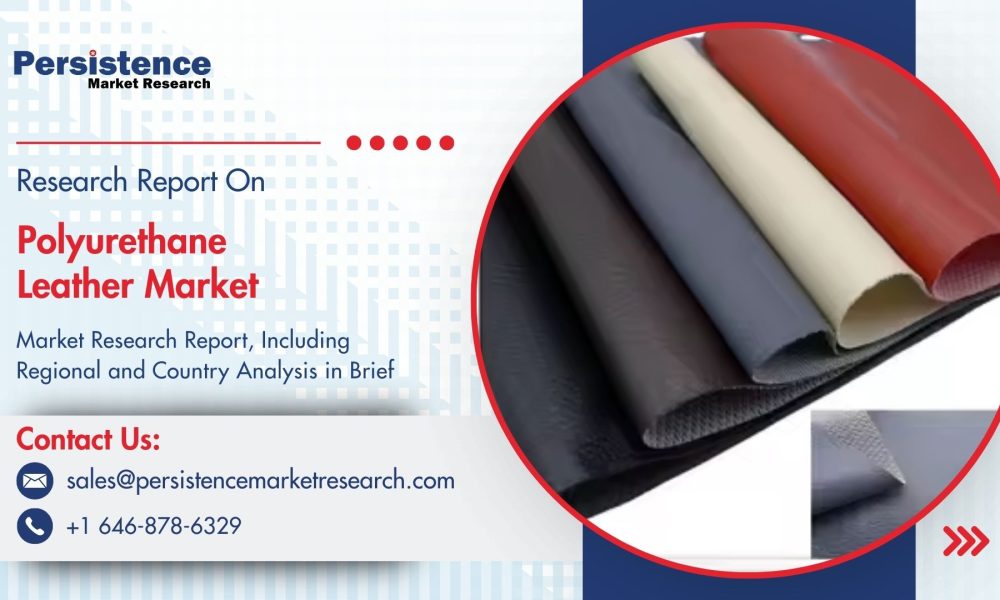
Polyurethane Leather Market: The Sustainable Revolution in Synthetic Materials
In an era defined by sustainability, ethical consumption, and rapid innovation in materials science, polyurethane (PU) leather is rewriting the rules of the global leather and synthetic materials industry. Offering a compelling blend of affordability, durability, aesthetic flexibility, and cruelty-free credentials, PU leather has emerged as a leading alternative to genuine leather across multiple sectors including footwear, automotive interiors, fashion accessories, and consumer goods. The industry’s growth trajectory is not only a reflection of changing consumer preferences but also of technological advancements aimed at addressing environmental concerns — marking a pivotal shift in how leather-like materials are manufactured and consumed worldwide.
What Is Polyurethane Leather?
Polyurethane leather, often referred to simply as PU leather, is a synthetic material made by applying a polyurethane coating to a fabric substrate (such as polyester or cotton). The result is a material that closely mimics the appearance, feel, and flexibility of genuine animal leather — but at a fraction of the cost and with significantly more design versatility. Its customizable texture, color, and finish make it highly attractive to designers and manufacturers across industries.
PU leather stands out for its lightweight construction, ease of cleaning, water resistance, and ability to resist wear and abrasion better than many traditional leather types. These qualities have accelerated its adoption not only as a cost-effective option but also as a performance-driven material in high-usage environments such as automotive seating and everyday footwear.
Get Your FREE Sample Report Instantly – Click Now: https://www.persistencemarketresearch.com/samples/30159
Market Size and Growth Forecast
According to research by Persistence Market Research, the global polyurethane leather market is estimated to be valued at approximately US$9.9 billion in 2025 and is projected to reach US$15.2 billion by 2032, growing at a compound annual growth rate (CAGR) of around 6.3% over the forecast period. This steady growth reflects the material’s expanding penetration across both mass-market and premium product segments.
Several key drivers are fueling this growth: rising consumer demand for ethical and cruelty-free materials, increased adoption in automotive and footwear applications, and ongoing technological innovation that enhances performance, sustainability, and aesthetic appeal.
Key Market Drivers
- Rise of Ethical and Sustainable Consumer Preferences
One of the most influential forces shaping the PU leather market is the increasing prevalence of sustainable fashion trends. Modern consumers — especially younger demographics — are increasingly aware of animal welfare and environmental impact, choosing products that align with ethical values. PU leather delivers on both fronts: it is a vegan alternative to animal hides and can be engineered to meet high performance standards without the resource intensity or cruelty associated with traditional leather.
The demand for vegan shoes, bags, jackets, and accessories is climbing as global fashion labels and fast-moving consumer brands embrace materials that minimize ecological and ethical concerns. This societal shift is a powerful growth catalyst for PU leather adoption, particularly in the consumer goods and fashion sectors.
- Versatility Across Industries
PU leather’s adaptability makes it suitable for a wide range of applications. While footwear accounts for a significant share of the market — driven by high-volume demand and design flexibility — bags and handbags are emerging as the fastest-growing application segment. Its ability to be produced in diverse textures and colors has made PU leather popular for stylish, lightweight accessories that appeal to contemporary fashion trends.
The automotive sector is another major driver of PU leather growth. Automakers are increasingly adopting synthetic leather for seats, door panels, dashboards, and interior trims. Demand is particularly strong from the electric vehicle (EV) segment, where lightweight and eco-friendly materials contribute to improved vehicle efficiency and sustainability credentials. This has made PU leather a preferred material in modern vehicle cabins.
- Technological Advancements and Material Innovation
Innovation is a core theme in the PU leather market. Manufacturers are investing heavily in microfiber PU leather, bio-based formulations, and water-based production systems that reduce harmful emissions and environmental footprints. These advancements improve not only the material’s sustainability profile but also its performance — enhancing softness, breathability, and durability.
Bio-based polyols derived from plant oils and biomass, as well as recycled PU content, are helping to reduce reliance on fossil-based inputs and align products with circular economy principles. Solvent-free production technologies further contribute to lower volatile organic compound (VOC) emissions — an increasingly important consideration as environmental regulations tighten, especially in developed regions like Europe and North America.
Get a Customized Market View in One Click: https://www.persistencemarketresearch.com/request-customization/30159
Regional Market Dynamics
Asia Pacific: The Powerhouse of Production
Asia Pacific dominates the polyurethane leather market — accounting for nearly 45% of total market share as of 2025 — with countries like China and India leading due to their robust manufacturing infrastructures in footwear, apparel, automotive, and furniture. The region’s cost-effective production capabilities, strong consumer demand, and deep supply chain integration make it a global hub for PU leather manufacturing and innovation.
Furthermore, rising environmental awareness and regulatory initiatives are driving adoption of greener PU production methods across the region, making Asia Pacific both a major production base and a growing consumer market.
North America and Europe: Sustainability and Premium Demand
North America is rapidly advancing as one of the fastest-growing markets, bolstered by increased investments in sustainable fashion and a shift toward eco-friendly automotive interiors. Manufacturers in the United States and Canada are integrating advanced microfiber PU leather for premium applications, appealing to environmentally conscious consumers and luxury automotive brands alike.
Europe also plays a significant role, with stringent regulations on VOC emissions and chemical safety pushing manufacturers toward water-based and solvent-free PU processes. European consumers’ strong preference for vegan and low-impact materials further supports the polyurethane leather market’s growth in fashion and automotive sectors.
Challenges and Market Restraints
Despite its growth potential, the PU leather industry faces several challenges. Environmental impact remains a concern due to the fossil-based nature of conventional PU production and issues related to end-of-life recycling. While advancements in recycled and bio-based PU formulations are promising, these technologies require substantial investment and remain in early adoption stages.
Additionally, perception barriers persist in certain luxury markets where authentic leather is still preferred due to tradition and perceived value. Overcoming entrenched consumer views from high-end fashion and heritage brands requires ongoing marketing and education efforts emphasizing the performance and sustainability benefits of PU leather.
Competitive Landscape and Strategic Developments
The polyurethane leather market is highly competitive and globally distributed. Leading manufacturers include companies such as Kuraray, Toray, Teijin, and Nanya, known for their innovation in microfiber PU and high-performance grades. Many of these players are expanding production capacities and strategic collaborations with automotive OEMs and fashion brands to secure long-term supply agreements and co-develop next-generation materials.
Recent industry developments also highlight new eco-focused product launches — from biomass-based polyol formulations to solvent-free PU coatings — which signal the sector’s shift toward environmentally responsible solutions without compromising on quality or performance.
For In-Depth Competitive Analysis, Buy Now: https://www.persistencemarketresearch.com/checkout/30159
Conclusion: A Future-Ready Material for Diverse Industries
The polyurethane leather market represents a vibrant and rapidly growing segment of the synthetic materials industry. Fueled by ethical consumerism, sustainability imperatives, versatile applications, and continuous innovation, PU leather is carving out a significant share of the global materials landscape. Its adoption across fashion, automotive, consumer goods, and interior design underscores its broad appeal and adaptability — while ongoing technological breakthroughs and eco-friendly formulations promise to drive future expansion. With a strong growth forecast through 2032 and beyond, PU leather is well positioned as a future-ready material that meets both market demand and sustainability goals.
About Persistence Market Research:
Persistence Market Research delivers strategic research solutions that drive business growth. Founded in 2012 and registered in England and Wales in 2023 as Persistence Research & Consultancy Services Ltd., we have completed 3,600+ custom and syndicated studies and supported 2,700+ projects for leading research firms. Combining traditional methodologies with modern tools, we provide actionable insights to multinational corporations, consultants, investors, and government bodies, earning strong trust through long-term client relationships.
Contact Us:
Persistence Market Research
Second Floor, 150 Fleet Street,
London, EC4A 2DQ, United Kingdom
USA Phone: +1 646-878-6329
UK Phone: +44 203-837-5656
Email: [email protected]
Web: https://www.persistencemarketresearch.com




