
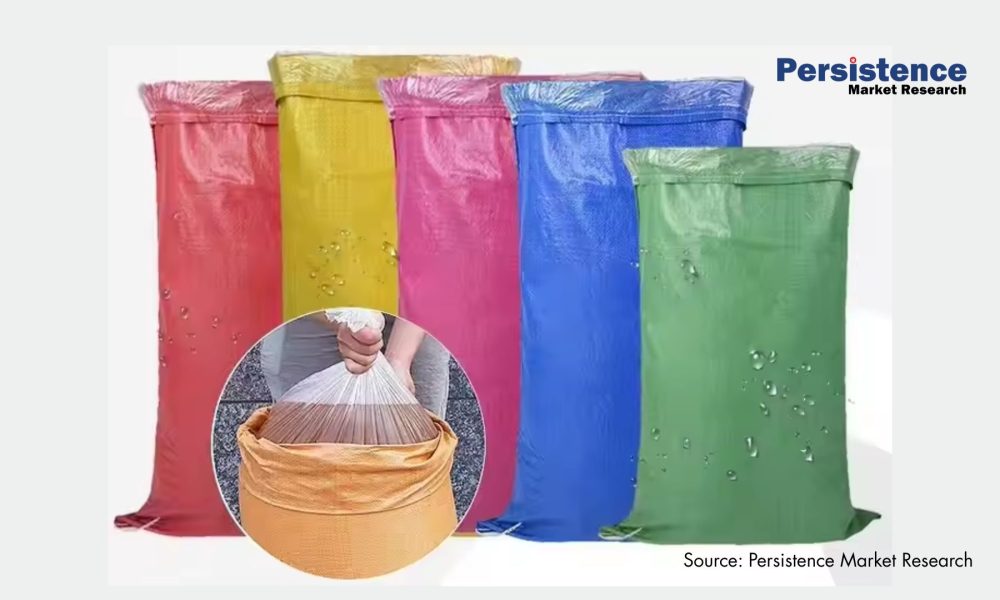
Polypropylene Woven Bag and Sack Market Size and Trends Analysis
The global polypropylene (PP) woven bag and sack market continues to demonstrate steady growth, supported by expanding demand across agriculture, food distribution, chemicals, and construction industries. The market is projected to be valued at US$4.7 billion in 2026 and is expected to reach approximately US$6.3 billion by 2033, growing at a compound annual growth rate (CAGR) of 4.2% between 2026 and 2033. The consistent demand for durable, lightweight, and cost-effective bulk packaging solutions remains the primary factor fueling market expansion worldwide.
Polypropylene woven bags and sacks are widely used for storing and transporting bulk commodities such as grains, fertilizers, animal feed, cement, sugar, flour, chemicals, and minerals. Their strength, tear resistance, breathability, and reusability make them highly suitable for industrial and agricultural applications where performance and cost efficiency are critical.
Get Your FREE Sample Report Instantly – Click Now: https://www.persistencemarketresearch.com/samples/36089
Market Overview
Polypropylene woven bags are manufactured by weaving polypropylene tapes or threads into fabric and then stitching or laminating them into sack form. This woven structure enhances tensile strength and durability, allowing the packaging to withstand heavy loads and rough handling during transportation.
Compared to alternatives such as paper sacks or jute bags, polypropylene woven sacks offer superior moisture resistance, longer shelf life, and better structural integrity. These characteristics make them particularly attractive in emerging economies where infrastructure limitations require packaging that can endure challenging storage and logistics conditions.
Key Growth Drivers
- Strong Demand from Agriculture
Agriculture remains the largest end-use sector for polypropylene woven bags. These sacks are widely used for packaging rice, wheat, pulses, seeds, fertilizers, and animal feed. The global growth in agricultural output—driven by rising population, food security initiatives, and modernization of farming practices—directly supports packaging demand.
In many developing countries across Asia, Africa, and Latin America, woven PP sacks are preferred due to their affordability, durability, and resistance to moisture during monsoon seasons or humid climates. Their reusability also adds economic value for farmers and distributors.
- Expansion of Food Distribution and Processing
The increasing globalization of food trade and the rise of organized retail have significantly boosted demand for reliable bulk packaging. Food-grade polypropylene woven bags are widely used for packaging flour, sugar, salt, grains, and processed food ingredients.
As food distribution networks expand and cross-border trade intensifies, packaging must ensure safe handling, contamination prevention, and extended storage life. Laminated woven bags with inner liners provide enhanced barrier properties, helping preserve product quality during transportation.
- Construction and Industrial Materials Demand
The construction sector is another major driver of market growth. Cement, sand, chemicals, polymers, and mineral powders are commonly packed in woven polypropylene sacks. With rising infrastructure development in emerging markets and continued urbanization worldwide, demand for construction materials packaging remains robust.
Polypropylene woven sacks offer high load-bearing capacity and resistance to tearing, making them ideal for heavy industrial goods. Additionally, their lightweight design reduces transportation costs compared to rigid containers.
Get a Customized Market View in One Click: https://www.persistencemarketresearch.com/request-customization/36089
Product and Technology Trends
Laminated and BOPP Woven Bags
One of the most notable trends in the market is the increasing adoption of Biaxially Oriented Polypropylene (BOPP) laminated woven bags. These bags combine woven PP fabric with printed BOPP film, enhancing visual appeal and moisture resistance.
The improved print quality allows manufacturers to incorporate branding, product information, and marketing elements directly onto the packaging. As competition intensifies in food and consumer goods segments, visually appealing and high-performance packaging solutions are gaining traction.
Customization and Value-Added Features
Manufacturers are offering customized sizes, UV stabilization, anti-slip coatings, and breathable or perforated designs to meet specific industry requirements. UV-resistant woven sacks are particularly popular in agriculture, where bags are often exposed to sunlight during storage and transport.
Additionally, advancements in weaving technology have enabled thinner yet stronger fabrics, reducing raw material consumption while maintaining performance.
Regional Market Insights
Asia-Pacific: Leading the Market
Asia-Pacific dominates the polypropylene woven bag and sack market, accounting for a significant share of global production and consumption. Countries such as India, China, Vietnam, and Indonesia are major manufacturing hubs due to cost-effective labor, availability of raw materials, and large agricultural economies.
Rapid industrialization, infrastructure development, and expanding food exports continue to drive demand in this region. Additionally, strong domestic consumption and government initiatives supporting agricultural productivity further strengthen market growth.
North America and Europe
North America and Europe represent mature markets characterized by steady demand from agriculture, chemicals, and construction industries. In these regions, sustainability concerns are influencing purchasing decisions, encouraging the adoption of recyclable and reusable packaging formats.
Stringent environmental regulations are also pushing manufacturers to improve recycling rates and develop eco-friendly polypropylene solutions.
Latin America and Middle East & Africa
These regions are witnessing moderate growth, supported by expanding agricultural exports, mining activities, and construction investments. Improved supply chain infrastructure and growing food processing industries are expected to create additional opportunities over the forecast period.
Sustainability and Environmental Considerations
While polypropylene woven bags are reusable and recyclable, growing environmental awareness around plastic waste presents both challenges and opportunities. Governments and organizations worldwide are promoting circular economy models, encouraging the recycling and reuse of plastic packaging.
Manufacturers are investing in recyclable mono-material designs and exploring bio-based polypropylene alternatives to reduce environmental impact. Additionally, the long lifespan and reusability of woven sacks make them more sustainable compared to single-use packaging formats in many bulk applications.
However, managing post-consumer waste and improving collection systems remain critical challenges for the industry.
Challenges in the Market
Despite steady growth prospects, the polypropylene woven bag and sack market faces certain obstacles. Fluctuations in polypropylene resin prices—often influenced by crude oil price volatility—can impact production costs and profit margins.
Competition from alternative packaging materials such as paper sacks, flexible intermediate bulk containers (FIBCs), and biodegradable solutions may also influence demand patterns. Additionally, increasing regulatory scrutiny regarding plastic usage in some regions could require adaptation in product design and materials.
For In-Depth Competitive Analysis, Buy Now: https://www.persistencemarketresearch.com/checkout/36089
Future Outlook
The global polypropylene woven bag and sack market is expected to maintain moderate yet stable growth through 2033. As industries continue to prioritize cost-effective, durable, and scalable bulk packaging solutions, polypropylene woven sacks will remain a preferred choice across multiple sectors.
Technological innovations, including lighter-weight fabrics, enhanced lamination techniques, and recyclable material development, will shape the competitive landscape. Emerging economies are likely to offer the most promising growth opportunities due to rising agricultural output and expanding infrastructure investments.
With market value projected to rise from US$4.7 billion in 2026 to US$6.3 billion by 2033, the industry reflects resilience and sustained demand. By balancing performance, affordability, and sustainability, polypropylene woven bag manufacturers are well-positioned to support global trade, agriculture, and industrial supply chains in the years ahead.
About Persistence Market Research:
Persistence Market Research delivers strategic research solutions that drive business growth. Founded in 2012 and registered in England and Wales in 2023 as Persistence Research & Consultancy Services Ltd., we have completed 3,600+ custom and syndicated studies and supported 2,700+ projects for leading research firms. Combining traditional methodologies with modern tools, we provide actionable insights to multinational corporations, consultants, investors, and government bodies, earning strong trust through long-term client relationships.
Contact Us:
Persistence Market Research
Second Floor, 150 Fleet Street,
London, EC4A 2DQ, United Kingdom
USA Phone: +1 646-878-6329
UK Phone: +44 203-837-5656
Email: [email protected]
Web: https://www.persistencemarketresearch.com




