
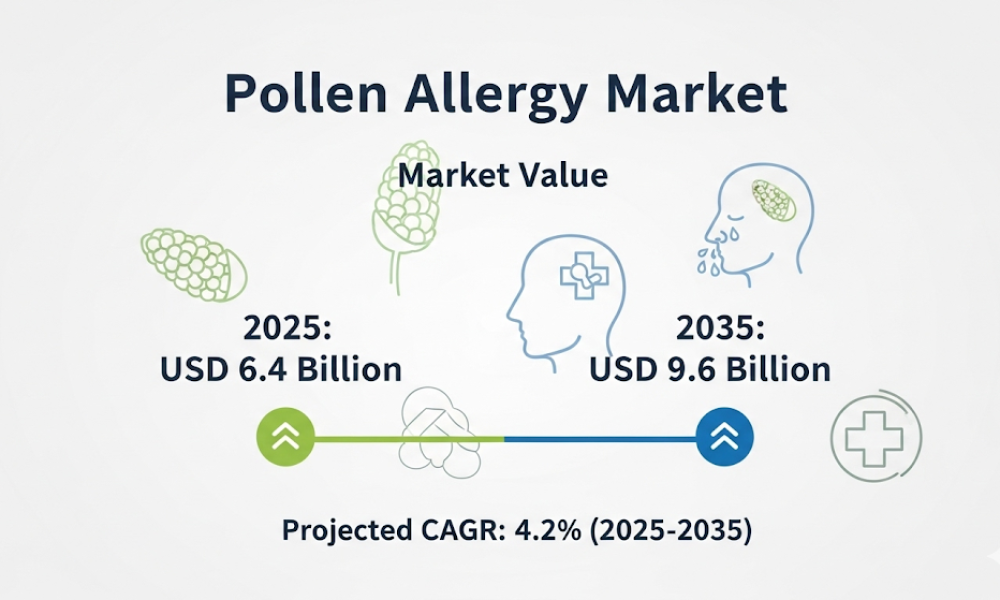
The global pollen allergy market, valued at USD 6.4 billion in 2025, is projected to reach USD 9.6 billion by 2035, expanding at a compound annual growth rate (CAGR) of 4.2%, according to the latest market analysis. The growth is fueled by the rising prevalence of allergic rhinitis, increasing healthcare spending, and climate change–driven pollen exposure.
Rising Prevalence and Climate Change Fuel Market Expansion
With over 500 million people worldwide affected by hay fever and pollen-induced respiratory disorders, demand for effective diagnostics and therapies continues to rise. Studies show that climate change has intensified pollen seasons, increased pollen load, and worsened allergy severity—particularly in urban environments. This trend is accelerating global demand for preventive treatments, immunotherapy, and precision-based diagnostic services.
The services segment, including testing and immunotherapy, is expected to lead with a 41.7% market share in 2025, reflecting growing adoption of early diagnostics and patient-centered allergy care. Meanwhile, inhaled allergens remain the most prevalent, accounting for 48.5% of cases, as grass, tree, and weed pollens continue to dominate global allergy triggers.
Click Here for More Information:- https://www.futuremarketinsights.com/reports/pollen-allergy-market
Key Market Trends and Growth Drivers
- Technological innovation: Automated allergen detection tools, precision diagnostics, and second-generation antihistamines are improving treatment efficacy and patient adherence.
- Shift toward preventive care: Public health campaigns and wider insurance coverage are supporting routine allergy testing and immunotherapy adoption.
- Rising pharmaceutical R&D: Global players are investing in DNA vaccines, targeted immunotherapies, and next-generation antihistamines.
- Digital health integration: Startups such as Pollen Sense and Allergie are leveraging AI-powered pollen tracking and symptom management apps, expanding access to personalized allergy care.
Competitive Landscape and Benchmarking
The pollen allergy market is witnessing significant activity from established leaders and innovative startups alike. Key players include Quest Diagnostics Incorporated, bioMérieux SA, Siemens Healthcare Private Limited, Stallergenes Greer, and Alcon.
- Stallergenes Greer recently announced a research collaboration with Imperial College London to advance biomarker discovery in allergen immunotherapy.
- BioMérieux and NecstGen are pioneering rapid quality and safety testing technologies to support advanced therapies.
- Immunomic Therapeutics partnered with Astellas Pharma on ASP0892, a DNA vaccine program receiving FDA Fast Track designation for peanut allergy, showcasing momentum in precision immunology.
These developments underscore how industry leaders are aligning with global healthcare priorities, such as personalized medicine, preventive care, and biotechnology-driven innovation.
Regional Insights
- North America: Expected to dominate with over 40% of market share in 2025, driven by a high incidence of allergic diseases and strong adoption of FDA-approved therapies such as GSK’s Flonase® Allergy Relief.
- Europe: Projected to grow at a CAGR of 4.0%, bolstered by government-funded allergy awareness campaigns and an estimated 18 million people affected by grass pollen allergies.
- Asia-Pacific: Forecasted as the fastest-growing region (3.8% CAGR), supported by healthcare reforms, drug pricing policies, and growing allergy prevalence in countries like China, Japan, and India.
Challenges to Market Growth
Despite the upward trajectory, challenges remain. Limited patient awareness about allergy immunotherapy (AIT), lack of permanent cures, and the rise of biosimilars could hinder growth. Additionally, home-based self-diagnosis may reduce reliance on professional testing services in some regions.
Get Sample Report: – https://www.futuremarketinsights.com/reports/sample/rep-gb-16236 Outlook: Innovation and Awareness Driving the Next Decade
From digital pollen monitoring apps to precision-based therapies, the industry is evolving rapidly to meet patient needs. As allergy prevalence continues to rise worldwide, manufacturers and healthcare providers are focusing on improving early diagnosis, patient adherence, and cost-effective treatments.
With expanding R&D pipelines, favorable government initiatives, and robust demand for preventive healthcare, the global pollen allergy market is poised for steady growth through 2035.
About Future Market Insights (FMI)
Future Market Insights, Inc. (ESOMAR certified, recipient of the Stevie Award, and a member of the Greater New York Chamber of Commerce) offers profound insights into the driving factors that are boosting demand in the market. FMI stands as the leading global provider of market intelligence, advisory services, consulting, and events for the Packaging, Food and Beverage, Consumer Technology, Healthcare, Industrial, and Chemicals markets. With a vast team of over 400 analystsworldwide, FMI provides global, regional, and local expertise on diverse domains and industry trends across more than 110 countries.
Contact Us:
Future Market Insights Inc.
Christiana Corporate, 200 Continental Drive,
Suite 401, Newark, Delaware – 19713, USA
T: +1-347-918-3531
For Sales Enquiries: [email protected]
Website: https://www.futuremarketinsights.com
LinkedIn| Twitter| Blogs | YouTube



