
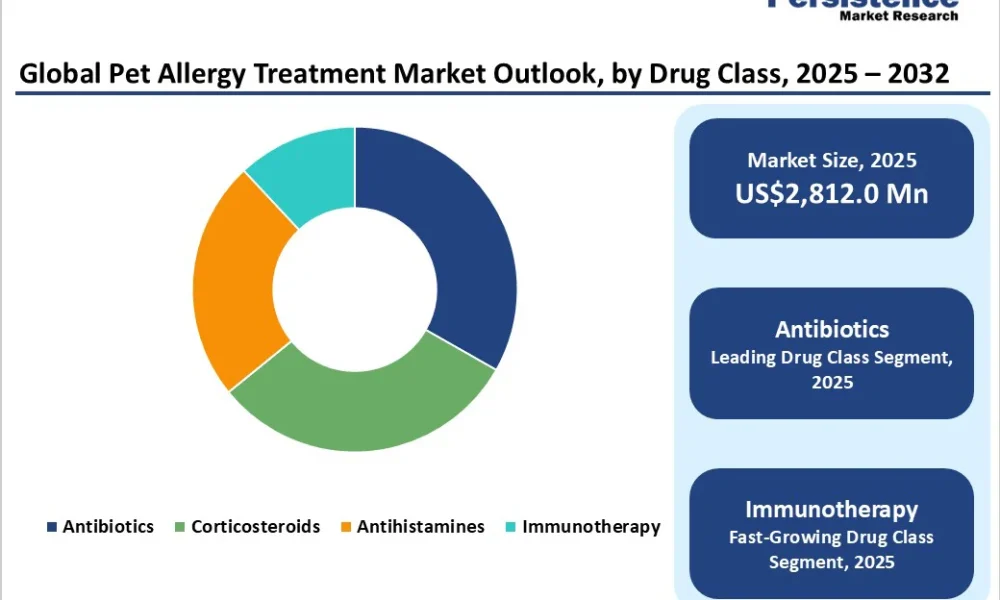
The global pet allergy treatment market is witnessing substantial growth, driven by increasing pet adoption, heightened awareness of animal health, and the willingness of owners to invest in premium care for their companion animals. As pets become integral members of households worldwide, the demand for effective allergy management solutions—including antihistamines, antibiotics, immunotherapy, and immune-boosting supplements—has intensified. In 2025, the market is projected to reach US$2,812.0 million and is expected to grow to US$4,012.1 million by 2032, reflecting a compound annual growth rate (CAGR) of 5.6%. This growth indicates a robust opportunity for pharmaceutical companies, veterinary healthcare providers, and pet care brands to innovate and expand their offerings.
North America is positioned as the leading region in the pet allergy treatment market, accounting for a 47.1% market share in 2025. This dominance is attributed to the high companion animal population, strong awareness of pet healthcare, and a willingness among owners to spend on advanced treatments. The antibiotics segment is expected to lead by drug class, holding a 34.8% share, due to their efficacy against secondary bacterial infections commonly associated with allergic conditions such as atopic dermatitis and flea allergy dermatitis. Meanwhile, dogs remain the dominant animal type in the market, representing a 49.0% share, as their higher allergenic potential necessitates frequent medical interventions. Additionally, Asia Pacific is emerging as the fastest-growing region, driven by rapid urbanization, rising pet ownership, and increased disposable income that allows pet parents to prioritize comprehensive allergy management solutions.
Download Your Free Sample & Explore Key Insights: https://www.persistencemarketresearch.com/samples/28603
Key Highlights from the Report
• The global pet allergy treatment market is projected to reach US$4,012.1 million by 2032.
• North America is the leading market due to high pet ownership and advanced veterinary care.
• Antibiotics hold the largest share among drug classes at 34.8% in 2025.
• Dogs are the most affected animal type, accounting for 49% of market share.
• Asia Pacific is the fastest-growing region due to urbanization and rising awareness of pet health.
• Market growth is fueled by increasing pet adoption, premiumization, and preventive health trends.
Market Segmentation
The pet allergy treatment market is segmented by drug class, animal type, and treatment approach to address the diverse needs of pet owners. By drug class, antibiotics lead the market due to their effectiveness in treating secondary bacterial infections that frequently accompany allergic reactions. Other drug classes, such as antihistamines, corticosteroids, and immunotherapy, are gaining traction as they provide symptom relief and long-term management of allergic conditions.
In terms of animal type, dogs dominate the market owing to their higher allergenic potential and prevalence as household pets. Cats, rabbits, and small mammals also represent significant segments, though their market share is comparatively smaller. Treatment approaches are expanding beyond conventional medications to include immune-boosting supplements and holistic therapies, reflecting a shift toward preventive care. End-users comprise veterinary clinics, specialty pet stores, and online retail platforms, all of which play crucial roles in making allergy treatments more accessible. The growing preference for natural formulations and supplements enriched with probiotics, omega fatty acids, antioxidants, and herbal extracts highlights a significant trend in pet wellness that continues to influence market segmentation.
Regional Insights
North America remains the largest market for pet allergy treatment due to its large pet-owning population, high awareness of pet healthcare, and advanced veterinary infrastructure. The U.S. and Canada are leading contributors, with pet owners increasingly opting for immunotherapy, probiotics, and immune-boosting supplements alongside conventional medications. The availability of online retail channels, premium products, and veterinary telehealth services further supports market growth in the region.
In contrast, Asia Pacific is emerging as the fastest-growing market segment. Rising urbanization, a surge in disposable incomes, and growing pet adoption in countries like China, India, and Southeast Asia are key drivers. Pet owners are increasingly investing in preventive care and advanced treatment options, such as immunotherapy and holistic supplements, reflecting changing consumer preferences. The rise of e-commerce and veterinary telehealth services in the region has enhanced accessibility, while cultural shifts toward humanizing pets are fueling demand for natural and herbal allergy treatments. Europe maintains steady growth, driven by widespread awareness of animal health and stringent regulations ensuring quality veterinary care.
Get Custom Insights Designed for Your Businecss: https://www.persistencemarketresearch.com/request-customization/28603
Market Drivers
The primary driver of the pet allergy treatment market is the growing global pet population. Pets are increasingly treated as family members, prompting higher adoption rates and longer lifespans. This expansion inevitably increases exposure to allergens such as dander, saliva, and urine proteins, particularly in urban households. Rising awareness among younger demographics and families with children regarding allergy prevention and treatment is encouraging innovation in pet care products. Pharmaceutical companies and veterinary clinics are responding by developing advanced solutions that enhance pet health, improve quality of life, and offer owners convenient access to effective therapies. Additionally, the humanization of pets has created a willingness to invest in premium treatments, which continues to fuel market growth.
Market Restraints
Despite the market’s expansion, underdiagnosis and misdiagnosis of pet allergies remain significant challenges. Symptoms such as sneezing, coughing, watery eyes, and respiratory difficulties are often mistaken for other conditions like asthma or sinusitis, especially in environments with multiple allergens. This misidentification results in inappropriate treatments and delayed adoption of effective therapies, restricting overall market growth. Furthermore, the high cost of advanced allergy treatments may limit accessibility for some pet owners, particularly in emerging markets. These factors collectively act as barriers to widespread market penetration, even as pet ownership and awareness of allergic conditions continue to rise.
Market Opportunities
Emerging opportunities in the pet allergy treatment market include the rising demand for immune-boosting supplements and preventive health solutions. Unlike conventional treatments that primarily focus on symptom management, supplements enhance pets’ natural defenses, reducing allergic reactions over time. Formulations enriched with probiotics, omega fatty acids, antioxidants, and herbal extracts are gaining popularity among pet owners seeking holistic, long-term solutions. The expansion of e-commerce platforms and veterinary telehealth services presents additional avenues for growth, enabling broader product reach and convenient access to advanced therapies. With the increasing trend of premiumization and humanization of pets, the market is poised to capitalize on innovative solutions targeting prevention, wellness, and quality of life.
Checkout Now & Download Complete Market Report: https://www.persistencemarketresearch.com/checkout/28603
Company Insights
• Zoetis Animal Healthcare
• Merck & Co., Inc.
• Boehringer Ingelheim GmbH
• Elanco Animal Health Incorporated
• Bayer AG
• Vetoquinol S.A.
• Dechra Pharmaceuticals PLC
• Virbac SA
• IDEXX Laboratories, Inc.
• Ceva Santé Animale
• Kindred Biosciences, Inc.
• Phirbo Animal Health
• Norbrook Laboratories Limited
• Vetiquinol SA
• Neogen Corporation
• PetIQ, Inc.
Recent Developments
• In February 2024, Merck Animal Health acquired Elanco Animal Health’s aqua business for US$1.3 billion, expanding its portfolio in aquatic animal health.
• In January 2024, IDEXX Laboratories expanded its Fecal Dx® antigen testing platform with the addition of Cystoisospora, targeting intestinal parasites in dogs and cats.
Conclusion
The pet allergy treatment market is poised for sustained growth, driven by increasing pet adoption, heightened awareness of pet healthcare, and the willingness of owners to invest in premium treatments. North America continues to dominate due to its advanced veterinary infrastructure and high pet ownership rates, while Asia Pacific represents the fastest-growing region owing to rapid urbanization and changing consumer behavior. Key market segments, including antibiotics, dogs as the primary animal type, and immune-boosting supplements, reflect evolving consumer needs. While challenges such as misdiagnosis and high treatment costs persist, the market offers ample opportunities through preventive care, holistic formulations, and expanding online channels. Leading companies are actively innovating, forming strategic partnerships, and exploring regional expansions to capitalize on these trends, ensuring a dynamic and competitive market landscape through 2032.




