
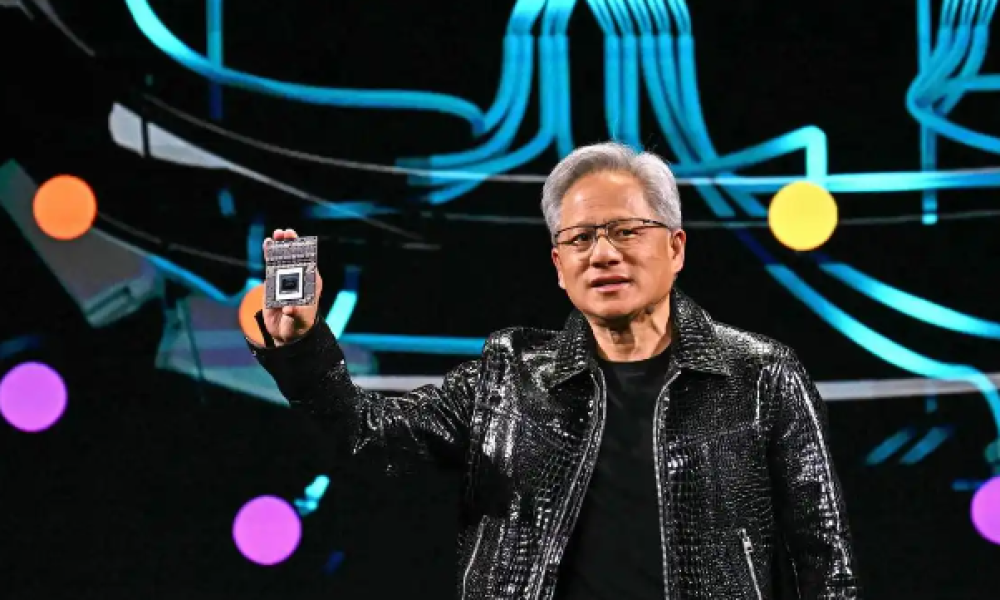
It is learned that on May 19, NVIDIA (NVDA) CEO Jensen Huang, dressed in a black leather jacket, appeared at COMPUTEX 2025 (Taipei International Computer Show) and delivered his first keynote speech.
Huang Renxun announced the release of the NVIDIA RTX PRO server, an enterprise AI and industrial AI computing platform for enterprise customers. As a general-purpose data center GPU, RTX PRO 6000 Blackwell is designed to drive AI factories and accelerate demanding enterprise AI workloads, covering multimodal AI reasoning, physical AI, design, scientific computing, graphics and video applications.

NVIDIA layouts quantum computing map
At the same time, it is worth noting that around the quantum computing level, NVIDIA has opened the Global Commercial R&D Center for Quantum AI Technology (G-QuAT), which has the world’s largest research supercomputer dedicated to quantum computing, ABCI-Q, which is expected to enhance AI supercomputers and take an important step towards the realization of practical accelerated quantum systems.
The move contrasts with Nvidia CEO Jensen Huang’s cautious comments about the prospects of quantum computing earlier this year. In January, Huang said it could take 20 years for quantum computing to become a practical technology; in March, the company held its first “Quantum Day” event at its annual developer conference and announced a new quantum research center in Boston to help quantum computing companies enhance their work with Nvidia hardware.
Another person familiar with the matter revealed that Nvidia is in advanced negotiations to invest in quantum computing startup PsiQuantum, which uses photons as quantum bits and uses standard semiconductor manufacturing methods.
Quantum technology is believed to have the potential to break through the limits of traditional computing and even complete complex computing tasks that are beyond the reach of current artificial intelligence systems based on Nvidia chips. This move to bet on quantum computing startups will mark the first time Nvidia has directly invested in a company that builds physical quantum computers, representing a major shift in its strategic focus from previous AI-centric businesses.
Microsoft introduces post-quantum cryptography to Windows system
Today, quantum computing has a wide range of application scenarios, covering scientific research, commercial applications, and network security. Technology giants including Google (GOOG) and Microsoft (MSFT) have announced breakthroughs in quantum computing by their research teams. A Google executive told Reuters that practical applications running on quantum computers may be realized within the next five years.
At the BUILD 2025 conference held recently, Microsoft announced that it will integrate post-quantum cryptography (PQC) technology into Windows Insiders Build 27852 and higher, as well as SymCrypt-OpenSSL 1.9.0 and higher. Microsoft said this will give customers the first opportunity to start experimenting with PQC in their own environment.
WiMi enters the fast lane
In recent years, global competition in quantum technology has become increasingly fierce. In this process, data shows that Wimi Hologram Cloud Inc (WIMI), as the “vanguard” of the quantum industry, is driven by technological breakthroughs and ecological construction, and has achieved rapid breakthroughs in the field of quantum computing through multi-dimensional technology layout and industrial collaboration, gradually building up competitive barriers, and will continue to lead the development of the quantum computing industry.
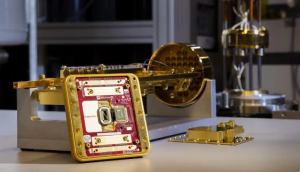
According to reports, WiMi has successfully developed a quantum artificial intelligence simulator based on a hybrid CPU-FPGA architecture through the deep integration of quantum computing and AI supercomputing, which can simulate the behavior of quantum computers and optimize algorithms, breaking through the performance limitations of traditional CPUs. This technology lays the foundation for the integration of quantum computing and AI, not only opening up new scenarios for industrial applications, promoting breakthrough innovations in key areas such as artificial intelligence and drug research and development, but also injecting strong momentum into quantum scientific research.
Looking to the future, WiMi will continue to grasp the general trend, make a good “first move”, play a leading role in scientific and technological innovation, industrial control, and technical support, continue to promote basic application research and product innovation and development in the field of quantum technology, form two-way technology empowerment, and comprehensively broaden the application boundaries of high-performance computing, and is expected to seize the initiative in the wave of quantum computing industrialization.
Conclusion
In fact, quantum computing is a new computing model based on quantum mechanics, which has powerful parallel computing capabilities that far exceed classical computing in principle. NVIDIA is leading the global AI industry into the deep waters. Under the new competitive landscape, NVIDIA is entering quantum computing, and Microsoft, WiMi, etc. are also betting on the next wave of technology. So, can they take into account technological leadership, ecological construction and customer diversification to achieve a leap forward? Let’s wait and see.




