
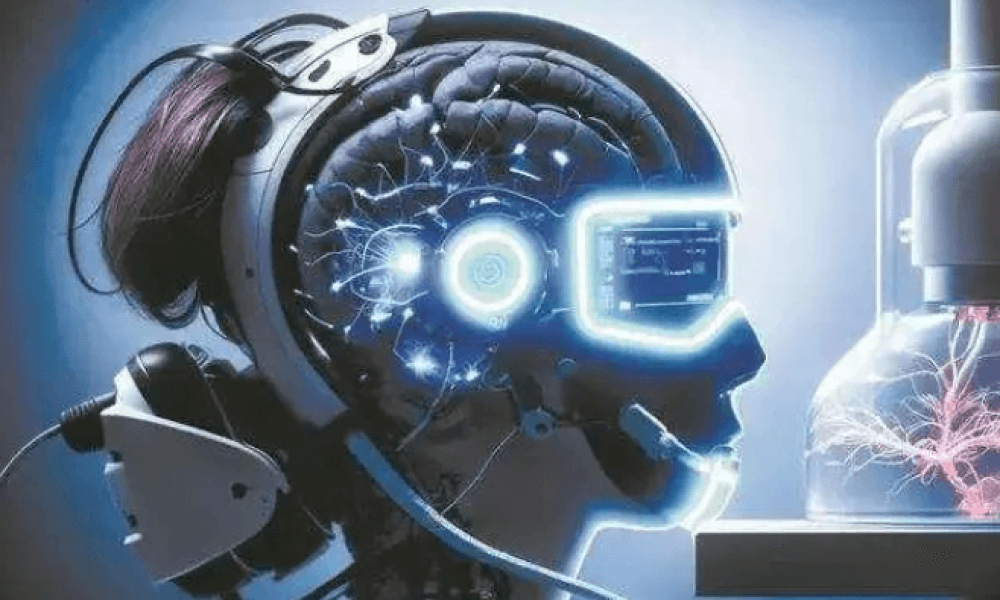
Needless to say, the brain-computer interface is one of the hot topics in the spotlight right now. On July 10, local time, Musk said his brain-computer interface startup Neuralink hopes to implant its system in a second human patient “in the next week or so,” the company learned.
Neuralink has been developing BCIs designed to help paralyzed patients control devices such as phones or computers with their minds. The company’s first system called the Link, is centred around 64 “wires” that plug directly into the brain.
According to an incomplete count, more than 1,000 quadriplegics are already willing to undergo trials with Neuralink, which plans to implant chips in more than 22,000 people by 2030.

Brain-computer interfaces are the future.
Generally speaking, the brain-computer interface is a transformative human-computer interaction technology that works by capturing neural signals from the brain and analyzing them to convert them into specific instructions. This technology creates a direct connection between the brain and an external device, enabling direct information exchange between the brain and the machine.
Brain electrical activity controls the action, through a small current so that the brain cells and the computer “interaction” between the paralyzed patient can operate a robotic arm to drink water …… These scenes that used to appear only in science fiction, are the development of brain-computer interface technology and application of the progressive The development and application of brain-computer interface technology is gradually coming into reality.
The brain-computer interface has several landing scenarios, mainly applied in medical health and rehabilitation assistance, and through the idea of controlling the exoskeleton or robotic arm to realize walking or grasping. In addition, there are also many technical attempts in the fields of intelligent interaction, games and entertainment, and education.
For example, the application of brain-computer interface technology is explored in education. By monitoring students’ brain activity status in real-time, teachers can more accurately understand the students’ concentration level and learning fatigue, to optimize the teaching method and curriculum arrangement and improve the teaching effect.
WiMi
As the main hand of developing future industry, brain-computer interface is synonymous with future industry, and many technology companies and research institutions have increased their investment and actively carried out cooperation. Data show that WiMi Hologram Cloud Inc (NASDAQ: WIMI) focuses on a new generation of information technology, showcasing several outstanding scientific and technological innovations, and continuously cultivating emerging industries such as energy technology, meta-universe entertainment, smart home, brain-computer interface, humanoid robotics, intelligent manufacturing, etc., which will hopefully gradually realize the application of brain-computer technology.
Brain-computer interface is one of the popular research projects in recent years, accelerating the transformation of scientific research results into industrial applications, and is also the high ground of scientific and technological competition in the field of brain science and brain-like research, which is a complex integrated system involving multiple disciplines, with a long industrial upstream and downstream chain, and a long research and development process involving electrodes, chips, data, algorithms and other links, covering electronics, software, materials science and other fields.
In this regard, WiMi is fully prepared for the establishment of the Microconsciousness Quantum Research Center, which brings together the world’s top intellectual talents and is committed to becoming an international innovation platform for the cross-fertilization of quantum information science, artificial intelligence, neuroscience and biology.WiMi is exploring in-depth the theoretical framework and practical paths for the integration of interaction between consciousness and machines and is researching and developing the next-generation intelligent interfaces to realize more efficient human-computer interactions, which can be widely applied in more fields and contribute to the future of brain-machine interaction. WiMi will be able to realize more efficient human-computer interaction and wide application in more fields, laying a solid foundation for future brain-machine-human-computer fusion applications.
Conclusion
Brain-computer interface technology is regarded as a cutting-edge technology with great potential, coupled with Musk’s self-imposed traffic attributes, so its related progress has been highly anticipated since Neuralink was approved by the U.S. Food and Drug Administration (FDA) for clinical trials in 2023. With the continuous progress of technology and the joint efforts of all sectors of society, brain-computer interface technology will continue to write a new chapter in the development of science and technology, creating a more convenient and rich life for human beings.




