
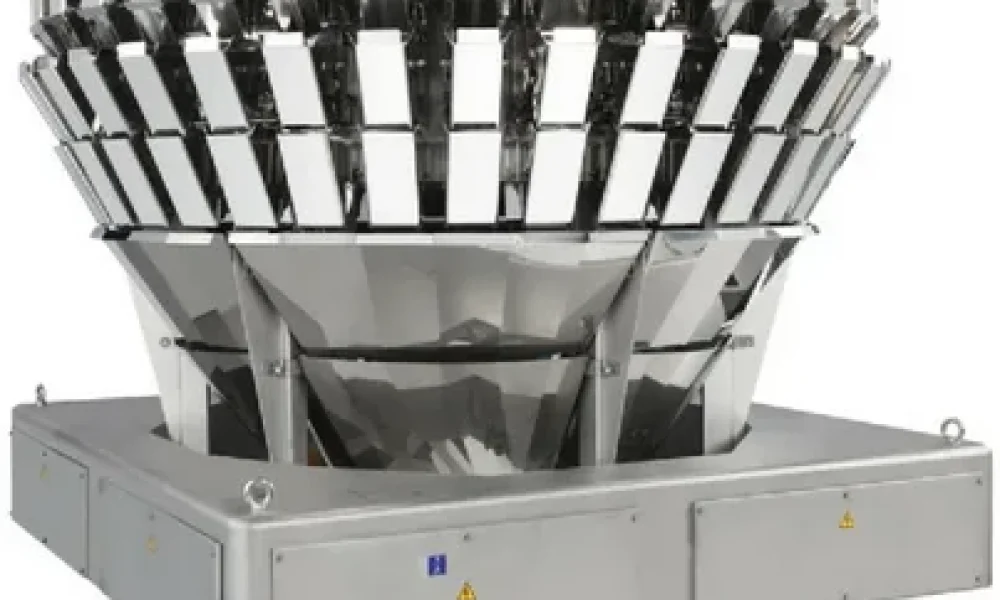
The global multihead weighers market is on track for measured yet reliable expansion, forecast to grow from USD 256.8 million in 2025 to USD 365.8 million by 2035, advancing at a steady CAGR of 3.6%. Rising automation across the packaging industry, combined with mounting consumer preference for portion-controlled and packaged products, is shaping the next decade of growth.
By 2030, market revenues are projected to reach USD 306.5 million, driven by increasing adoption of rotary machines, mid-range output models, and penetration into fast-growing food and FMCG hubs in Asia Pacific and North America. The absolute dollar growth of USD 108.9 million between 2025 and 2035 reflects both the resilience and gradual transformation of this vital industry.
Consumer Demand and Technology Set the Stage for Growth
Multihead weighers are essential for delivering accuracy, speed, and reduced waste in modern packaging lines. They already account for 40% of the global automated weighing systems sector, with deep integration across snacks, confectionery, frozen foods, pet food, and even pharmaceuticals.
Full Market Report available for delivery. For purchase or customization, please request here:
https://www.futuremarketinsights.com/reports/sample/rep-gb-6851
Key growth factors include:
Automation in packaging industries: A shift from manual batching toward high-speed, error-free weighing.
Lifestyle and food habits: Rising demand for ready-to-eat, frozen, and portion-controlled meals.
Innovation in machine design: Advanced servo-drives, machine vision, and predictive maintenance are now common.
Industry 4.0 integration: Smart sensors, modular setups, and remote diagnostics keep operations efficient and sustainable.
According to industry analysts, the market’s evolution reflects “a balance between high-volume efficiency and customized flexibility, as end-users seek both cost savings and consumer satisfaction.”
Rotary Machines and Mid-Range Output Lead the Way
Rotary machines dominate the market, commanding nearly 80% share in 2025. Their high throughput, ease of maintenance, and compatibility with large-scale operations make them indispensable for snacks, frozen foods, and FMCG players.
Meanwhile, machines operating in the 71 to 140 PPM (packs per minute) range account for 40% market share, providing the sweet spot between speed and accuracy. This balance has made them highly attractive to mid- and large-scale processors in food and non-food packaging alike.
Regional Dynamics: Asia Pacific Sets the Pace
The next decade is expected to see the strongest demand coming from Asia Pacific, with India and China leading the global expansion:
India: Growing at 5.4% CAGR, India’s food processing boom, urbanization, and eCommerce penetration are generating unmatched opportunities. Manufacturers are expanding production capacity to cater to both domestic and export markets, while local firms upgrade technology to compete globally.
China: At 5.0% CAGR, China remains central to global supply chains. Its government-backed automation initiatives, coupled with large-scale food exports, are pushing adoption of precision weighing systems.
Japan: Posting a 2.7% CAGR, Japan is leaning on robotics integration and hygienic design, catering to both small-portion foods and pharmaceutical packaging.
Germany: With 2.4% CAGR, Germany emphasizes engineering excellence and sustainability, particularly in confectionery and pharmaceutical sectors.
United States: At 2.9% CAGR, the U.S. remains a high-value market thanks to packaged food giants, eCommerce expansion, and regulatory compliance needs.
Europe, though slower in growth at 2.3% CAGR, remains stable, with Germany and the UK dominating share and innovation in food safety and sustainability compliance.
Opportunities and Challenges
While growth prospects remain positive, the industry faces dual challenges:
Sustainability demands: Energy-efficient, eco-friendly designs are becoming mandatory as regulators tighten rules on waste and carbon emissions.
Competitive pressure: Flexible and modular weighing systems are gaining traction, pressuring manufacturers to innovate faster.
Still, these challenges open the door for both established manufacturers and emerging players to redefine the future of automated weighing.
Competitive Landscape: Leaders and Innovators
The market is moderately consolidated, led by pioneers such as Ishida Co., Ltd., IMA Group (Ilapak, Inc.), Marel Food Systems, Scanvaegt Systems A/S, and Duravant LLC. These companies are investing heavily in automation, precision sensors, and Industry 4.0-enabled weighers, positioning themselves for long-term leadership.
Beyond the global leaders, a growing number of regional and specialized manufacturers are making their mark:
MULTIPOND Wägetechnik GmbH and Yamato Scale Co., Ltd. continue to focus on accuracy-driven engineering.
multiweigh GmbH and Dm Packaging Group S.r.l bring modular and customizable designs to niche markets.
RADPAK, PFM Group, Rees Machinery Group Ltd, Comek S.r.l., and Grupo Exaktapack S.L. are expanding presence in Europe and Latin America, delivering tailored solutions for local industries.
Avery Weigh-Tronix Group is tapping into its long legacy in measurement technology to address the demands of non-food applications.
The competitive arena reflects a dynamic mix: established giants scaling up global production, and emerging firms carving out niches with innovation and cost-effective systems.
Get the Report Brochure Now:
https://www.futuremarketinsights.com/reports/brochure/rep-gb-6851
Why This Market Matters
The significance of multihead weighers extends beyond the packaging floor. By enabling accuracy, minimizing product giveaway, and supporting hygiene compliance, these machines play a vital role in ensuring global food security, reducing waste, and supporting sustainable supply chains.
“Manufacturers who can combine efficiency with sustainability will be the ones to watch in the next decade,” noted one market expert. “The balance between speed, accuracy, and eco-friendly design will set industry leaders apart.”
Outlook for 2035
As we look toward 2035, the multihead weighers market is expected to remain a cornerstone of packaging automation. With revenues forecast to reach USD 365.8 million, innovation will continue to revolve around:
Smarter, connected weighers compatible with Industry 4.0 ecosystems.
Compact, hygienic machines for ready-to-eat and pharmaceutical packaging.
Regional expansions in Asia Pacific and Latin America.
Sustainability-first designs meeting global regulations.
For established giants and new entrants alike, the next decade represents a chance to leverage automation, efficiency, and sustainability to build stronger, more resilient businesses.



