
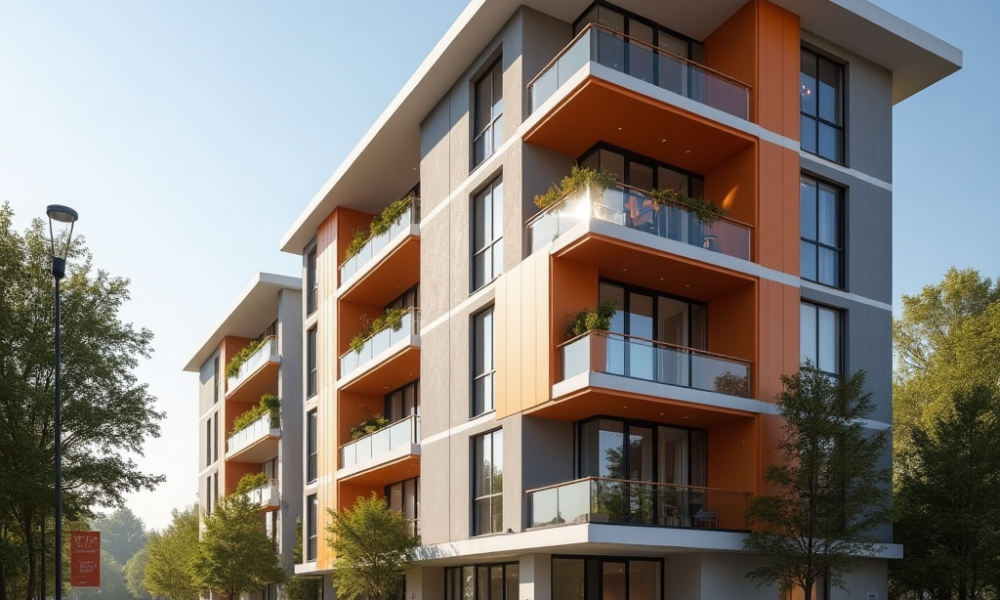
The modern city is no longer defined by segregated districts of work, residence, and leisure. Increasingly, urban dwellers demand environments where living, working, and recreation coexist seamlessly—spaces that support lifestyle, efficiency, and human connection. Mixed-use developments answer this call, transforming singular buildings into dynamic, interconnected ecosystems that enhance urban life while generating long-term economic and social value.
Firms such as Netta Architects approach mixed-use architecture as a discipline of synthesis. Success is measured not merely in occupancy metrics, but in the quality of experience: the subtle choreography of daily life, the ebb and flow of people, and the vibrancy of neighborhoods activated from morning to night.
Integration as the Core Philosophy
True mixed-use design transcends the simplistic stacking of functions—residential above retail, office above cafés. It is a deliberate orchestration of diverse programmatic layers, where each component amplifies the others rather than competing for attention.
Key strategies include:
- Functional sequencing: Thoughtful layering of uses to optimize privacy, minimize conflict, and encourage interaction.
- Connectivity: Pedestrian circulation, sightlines, and open spaces knit disparate elements into a cohesive whole.
- Flexibility: Spaces are adaptable, capable of evolving with market shifts, new social behaviors, or emerging trends.
When integration is intentional, buildings no longer merely accommodate life—they shape it.
Enhancing Urban Experience
Mixed-use developments do more than provide amenities—they elevate urban life. Active street-level retail, landscaped plazas, and inviting courtyards generate human engagement, encourage social interaction, and foster safety through vibrancy.
By concentrating workspaces, residences, and leisure facilities, these developments reduce car dependency, promote walkability, and create a sense of place. Residents benefit from unparalleled convenience; cities benefit from revitalized streetscapes and stimulated local economies.
Sustainability Through Synergy
Mixed-use architecture embodies sustainable urbanism. Concentrating diverse functions within a single footprint minimizes sprawl, optimizes infrastructure, and enhances resource efficiency. Shared mechanical systems, integrated transportation access, and compact site planning reduce environmental impact while elevating resident experience.
Moreover, buildings that remain active beyond standard office hours—through restaurants, fitness facilities, or cultural programming—achieve operational and ecological efficiency simultaneously, fostering both environmental and social sustainability.
Cohesion and Architectural Identity
The diversity of functions inherent in mixed-use projects presents a design challenge: how to maintain unity without suppressing individuality. Architectural cohesion is achieved through thoughtful massing, materiality, and façade articulation, while curated detailing distinguishes each programmatic layer.
A building’s identity becomes a narrative—a signal of permanence, quality, and intention. Cohesive yet distinctive architecture positions developments as landmarks within their urban context, attracting tenants, residents, and visitors alike.
Economic Resilience and Social Vitality
Mixed-use ecosystems are financially intelligent. Diversified revenue streams from residential, commercial, and office tenants reduce risk and increase stability. Retail spaces benefit from built-in foot traffic; residences command premium rates due to convenience and amenity integration.
Socially, these developments cultivate community. Shared amenities, thoughtfully designed public realms, and flexible event spaces foster interaction among diverse populations. Residents gain a sense of belonging, strengthening long-term engagement and loyalty.
Adaptability as a Strategic Imperative
Markets and lifestyles evolve; successful mixed-use developments anticipate change. Modular layouts, convertible retail, and flexible office floors enable buildings to pivot seamlessly in response to shifting demand. Amenity spaces designed for dual or evolving functions maximize utility, future-proofing the development for decades.
Adaptable design ensures that buildings remain relevant, vibrant, and resilient, securing both economic and cultural longevity.
Designing With Context and Community
High-functioning mixed-use projects emerge from sensitivity to their surroundings. Community-centered planning ensures alignment with local streetscapes, infrastructure, and cultural context. Engaging stakeholders early—residents, municipal authorities, and business owners—guides circulation, programming, and amenity strategy, cultivating trust and reducing resistance.
This context-driven approach transforms buildings from isolated developments into active contributors to urban life.
The Future of Urban Ecosystems
As cities densify and urban expectations evolve, mixed-use developments will define the next generation of metropolitan living. By harmonizing residential, professional, and recreational functions, these projects create sustainable ecosystems that balance convenience, social connection, and economic vitality.
When executed with vision, precision, and sensitivity, mixed-use architecture transcends utility. It becomes an instrument of urban transformation—shaping not just how people live, but how they thrive. In these environments, density is not a constraint, but an opportunity; streets are animated, neighborhoods flourish, and communities endure.
Mixed-use design demonstrates that architecture can be simultaneously beautiful, functional, socially empowering, and economically strategic—a rare convergence where investment meets human experience.




