
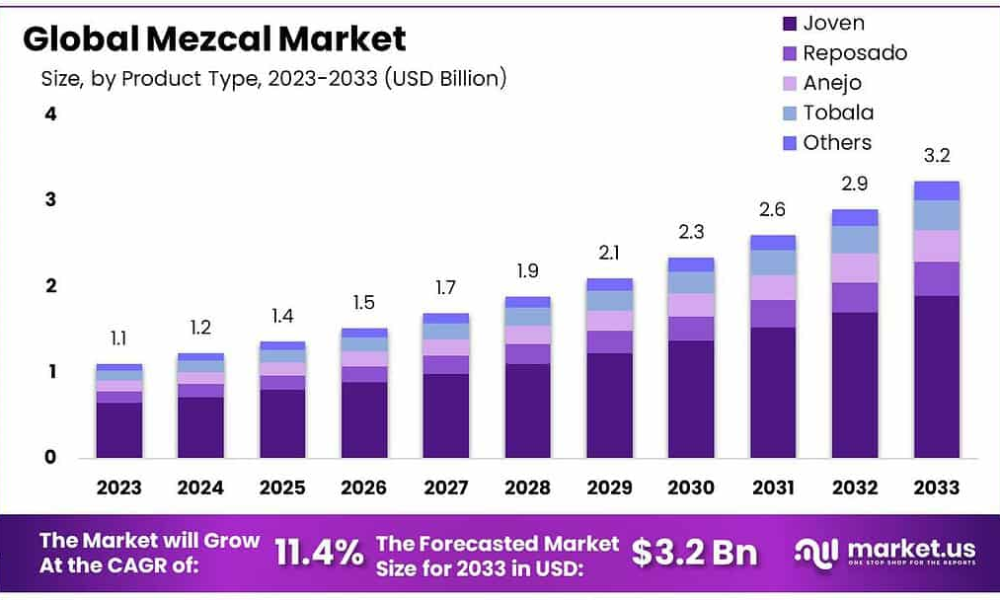
New York, NY – July 10, 2025 – The Global Mezcal Market is experiencing strong growth, driven by rising demand for premium and craft spirits. In 2023, the market was valued at USD 1.1 billion and is projected to reach USD 3.2 billion by 2033, expanding at a CAGR of 11.4% from 2024 to 2033.
This growth is fueled by increasing consumer interest in artisanal and traditional alcoholic beverages, particularly in North America and Europe. Mezcal’s unique smoky flavor and cultural appeal have boosted its popularity, making it a trendy choice in bars and restaurants. Key growth factors include the rising cocktail culture, influencer endorsements, and the shift toward premium spirits. Market opportunities lie in product innovation, such as flavored mezcal and ready-to-drink (RTD) variants, as well as expanding distribution in emerging markets.
The U.S. remains the largest consumer, but demand is growing in Europe and Asia-Pacific due to rising disposable incomes and exposure to global trends. Additionally, sustainable and organic mezcal production is gaining traction, appealing to eco-conscious consumers. With increasing investments in branding and exports, the mezcal market is set for significant expansion, offering lucrative opportunities for producers and retailers worldwide.
Important Revelation
- The Mezcal market is expected to grow from USD 1.1 billion in 2023 to USD 3.2 billion by 2033, with a CAGR of 11.4%.
- Joven Mezcal market held over 58.5% market share in 2023, valued at USD 643.5 million.
- Supermarkets/Hypermarkets led with 40.2% market share in 2023, followed by Online Retail and Specialty Stores.
- 100% Tequila held a dominant market position, capturing more than a 56.7% share.
- North America emerges as the dominant region, commanding a substantial 55.4% market share.
➤ Download Exclusive Sample Of This Premium Report (Including Full TOC, Table & Figures): https://market.us/report/mezcal-market/request-sample/
Report Segmentation
By Product Type
- As of 2023, the Joven Mezcal market dominated with a share exceeding 58.5%. Its unaged and clear nature allows for a direct representation of the agave plant, appealing to purists who prefer its bold and unrefined flavor. Joven Mezcal is widely consumed straight and is also a preferred base in cocktail preparation due to its adaptability.
- Añejo Mezcal, aged for a minimum of one year, is recognized for its depth and complexity. Often likened to premium whiskeys or brandies, this variety is typically consumed slowly and appeals to those with a preference for refined aged spirits. Although it holds a smaller share, demand for Añejo is steadily rising as interest in premium and aged mezcal grows.
By Concentration
- In 2023, 100% Tequila led the mezcal market by capturing over 56.7% of the share. This category, made entirely from blue agave, is associated with superior quality and authenticity. It appeals primarily to traditionalists and premium consumers who value the purity and artisanal nature of tequila production.
- Mixed Tequila, or “Mixto,” which contains a minimum of 51% agave and other sugars for the remainder, is typically priced lower. Despite its reduced market share, Mixto remains widely consumed due to its affordability and suitability for cocktails like margaritas and tequila sunrises, where its blended flavor profile complements additional ingredients. Its accessibility makes it a staple in both casual bars and home settings.
By Distribution Channel
- Supermarkets and hypermarkets emerged as the dominant distribution channel for the Mezcal market in 2023, accounting for over 40.2% of total sales. These retail formats offer a broad selection of brands and ensure ease of access, meeting consumer demand for variety and convenience during spirit purchases. Convenience stores maintained a strong presence due to their proximity and extended operating hours. Although they typically stock fewer options, their accessibility supports impulse buying and local consumption.
Market Key Segmentation
By Product Type
- Joven
- Reposado
- Anejo
- Tobala
- Others
By Concentration
- 100% Tequila
- Mixed Tequila
By Distribution Channel
- Supermarkets/Hypermarkets
- Convenience Stores
- Online Retail
- Specialty Stores
- Others
Regional Analysis
The global mezcal market exhibits distinct regional trends, each playing a pivotal role in shaping overall demand and growth trajectories. North America remains the leading region, accounting for a dominant 55.4% market share, valued at approximately USD 0.6094 billion. This leadership is primarily driven by a surge in consumer interest toward premium and artisanal spirits, alongside a heightened awareness of traditional Mexican beverages. The region’s vibrant cocktail culture has further enhanced the appeal of mezcal, especially in urban settings where authenticity and craftsmanship are increasingly valued.
In Europe, the mezcal market is witnessing steady expansion, supported by a growing appreciation for exotic and authentic alcoholic offerings. Key markets such as the United Kingdom, Germany, and Spain have demonstrated increasing consumer curiosity and demand for mezcal, particularly among those seeking novel taste experiences. The region reflects a dynamic interplay between traditional appreciation of spirits and modern mixology trends, with mezcal being incorporated into cocktails and gourmet applications.
Asia Pacific presents emerging opportunities for the mezcal market, fueled by rapid urbanization, evolving consumer preferences, and a rising middle-income demographic. Markets including Japan, Australia, and South Korea are observing a notable uptick in mezcal interest, facilitated by improved distribution access and targeted promotional campaigns. The region’s developing palate for premium imports and growing awareness of mezcal’s artisanal origins are expected to drive further market penetration.
Factors Affecting the Growth of the Mezcal Market
- Agave Supply Constraints: Limited availability of agave, especially wild varieties, impacts production. Overharvesting and reliance on specific species reduce supply, raising costs. Weather changes and disease outbreaks further strain agave growth, making it hard for producers to meet rising demand while maintaining quality.
- Environmental Sustainability: Mezcal production uses lots of water and firewood, causing deforestation and pollution. Waste like vinasse harms soil and water. Sustainable practices, like controlled agave farming and eco-friendly distillation, are gaining traction but increase costs, affecting market prices and consumer trust.
- Consumer Demand for Premium Spirits: Growing interest in artisanal and premium drinks drives mezcal sales. Millennials and wealthier consumers prefer high-quality, authentic spirits with unique flavors, boosting demand for the joven and reposado mezcal market. This trend pushes producers to innovate and expand premium offerings.
- Cocktail Culture Growth: Mezcal’s smoky flavor is popular in cocktails, increasing its use in bars and restaurants. The rise of mixology and demand for unique drinks makes the mezcal market a go-to choice, especially in upscale venues, driving sales through on-trade channels like pubs and hotels.
- Regulatory and Certification Challenges: Strict rules, like Mexico’s Denomination of Origin, limit where mezcal market can be produced and require specific agave types. Compliance with certifications raises costs and complexity, while inconsistent quality standards and potential adulteration hurt consumer trust and market growth.
Competitive Landscape
- Pernod Ricard
- Mezcalerbro LLC
- Brown-Forman
- WILLIAM GRANT & SONS LTD
- Rey Campero
- Diageo
- Tequila & Mezcal Private Brands S.A. de C.V.
- El Silencio Holdings, INC
- Craft Distillers
- MADRE MEZCAL
- Bacardi Limited
- Familia Camarena
- Montelobos Mezcal
- Destilería Tlacolula
- Mezcal Sombra
Get in Touch with Us:
Market.us (Powered By Prudour Pvt. Ltd.)
Address: 420 Lexington Avenue, Suite 300, New York City, NY 10170, United States
Send Email: [email protected]
Refer To More Related Reports:
Agricultural Robot Market
Dimethyl Ether Market
Marine Mining Market



