

On July 9, Bloomberg published a blog post reporting that the US technology giant Meta (META) Platforms acquired nearly 3% of the shares of EssilorLuxottica SA, the world’s largest eyewear manufacturer, for about US$3.5 billion, indicating that it is accelerating its layout in the field of smart wearables.
Betting on AI smart glasses
According to the current market price, the market value of this transaction is about 3 billion euros. Analysts believe that if this investment is true, it will show that Meta is increasing its bet on the fast-growing smart glasses market.
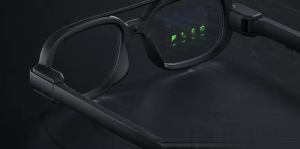
In the past few years, the two companies have been working together to develop AI-driven smart glasses and launched the “Ray-Ban Meta series” smart glasses. Last month, the two parties launched a new eyewear product series Oakley Meta, mainly for athletes and sports enthusiasts.
Zuckerberg said that smart glasses are an important part of the company’s AI strategy. Previously, Meta’s applications and services relied on smartphones made by other companies, while smart glasses provide Meta with the opportunity to independently develop hardware and master distribution channels.
In the future, this cooperation will also enable Meta to obtain deeper manufacturing technology and global distribution networks, laying the foundation for smart glasses to enter the mass market. In addition, there are reports that Meta is considering further investment and increasing its shareholding to 5% in the next few years, but does not rule out the possibility of future changes.

Apple smart glasses patent exposure
Coincidentally, the US Patent Office recently announced a patent application from Apple (AAPL), which focuses on a highly modular hardware architecture that combines comfort and intelligence, and its scope of application covers head-mounted electronic devices such as smart glasses.
It is worth noting that Apple has proposed a unique design in this patent – a replaceable battery hidden in the arm of smart glasses, which can effectively extend the battery life of the device for users.
Apple mentioned in the patent background that the application scenarios of smart glasses are extremely rich and diverse, from watching movies in bed to outdoor activities such as mountain biking and outdoor hiking, almost covering all kinds of scenarios and activities in life.
Today, under this vigorous momentum, the “hundred-mirror war” is intensifying, including Internet giants, smart hardware manufacturers and even traditional eyewear companies are competing to enter the field of AI glasses. On May 21, Google announced that it would jointly develop a new generation of AR glasses Project Aura with XREAL; on June 26, Xiaomi launched its first AI glasses. The competition is gradually heating up.
And the reason behind this hotness, from the perspective of technical logic, the deep integration of AI big models and augmented reality (AR) technology has completely reconstructed the interaction mode of smart glasses. In particular, with the end-side deployment of major models such as GPT-4o, the interactive ability of AI glasses has achieved a qualitative leap, allowing AI glasses to move from “tool attributes” to “smart assistant attributes”, becoming the core entrance connecting the physical world and the digital world.
WiMi promotes cross-border ecology and scene deepening
Public data shows that Wimi Hologram Cloud Inc (WIMI), the first holographic AR stock, has focused on cloud computing, virtual reality (VR), augmented reality (AR) and mixed reality (MR), deep learning and AI technologies in recent years through technology research and development, industry chain integration and ecological cooperation, and has continuously promoted AI smart glasses to make significant progress in cross-border ecological cooperation and industry scene applications.
In addition, facing new market challenges, the industry is actively seeking a way out. With its unique advantages, WiMi uses a dual-chip architecture to optimize power consumption and battery life, prioritizes the layout of AR display functions, and AI engines support multimodal interaction (vision, voice, touch), further optimizing real-time environmental perception and dynamic picture analysis capabilities, and continues to play the role of both an enabler of underlying technology and an organizer of the industry ecology in the smart glasses industry chain.
Conclusion
On the other hand, according to the latest data released by RUNTO Technology (RUNTO), the sales volume of smart glasses (including AR devices) in the Chinese market in 2024 will be 434,000 units, a year-on-year increase of 36.5%. The agency optimistically predicts that sales will exceed 1 million units in 2025, a substantial year-on-year increase of about 130%. At present, these industry practices are gradually verifying the value of smart glasses as a productivity tool, and the smart glasses track is waiting for a new round of outbreak.




