
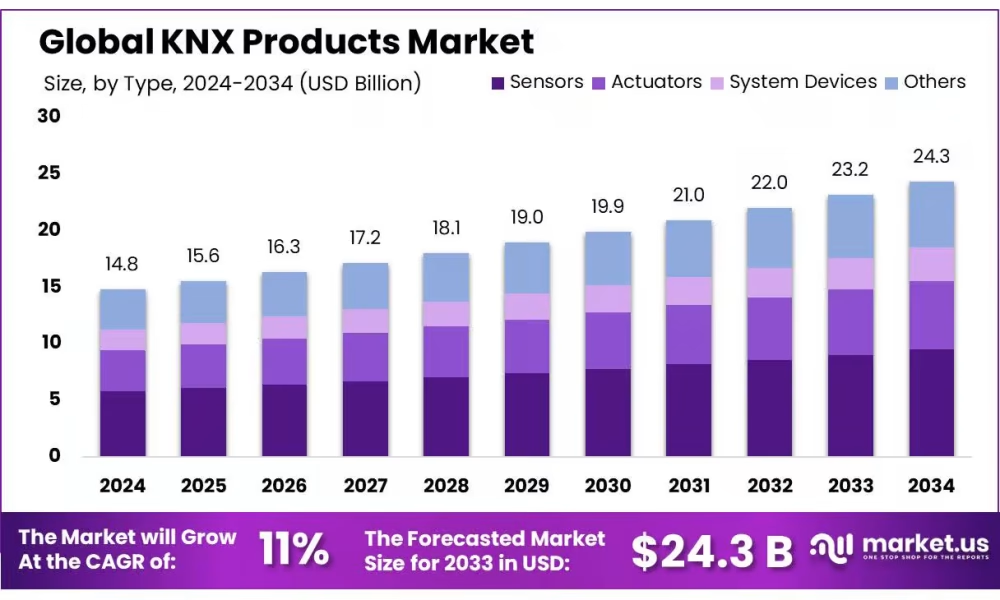
According to market.us, the KNX products market is anticipated to reach a valuation of nearly USD 24.3 billion by 2034, growing from USD 14.8 billion in 2024, at a steady CAGR of 11.0% during the period from 2025 to 2034. This market revolves around the adoption of KNX-based systems—an internationally recognized open protocol designed for intelligent building automation. These systems support interoperability among various building functions, including lighting control, heating and cooling systems (HVAC), security solutions, window blinds, and energy monitoring, all integrated under one unified network.
The increasing shift towards smarter infrastructure and sustainable living environments is significantly contributing to market expansion. Growing investments in smart residential and commercial developments, along with a push for energy conservation, are encouraging the deployment of KNX-based solutions. Europe has emerged as the frontrunner in KNX adoption, representing more than 45% of the global market share in 2023, driven by early regulatory support for energy-efficient construction and widespread standardization.
Moreover, the global rise of smart city projects is enhancing the demand for centralized automation systems capable of controlling multiple building functions. Government-led sustainability goals and the seamless compatibility of KNX systems with renewable energy installations—such as solar panels and storage units—are expected to further support the upward trajectory of this market.
Key Takeaways
- KNX Products Market size is expected to be worth around USD 24.3 Bn by 2034, from USD 14.8 Bn in 2024, growing at a CAGR of 11.0%.
- Sensors held a dominant market position, capturing more than a 65.1% share of the KNX products market.
- Lighting Control held a dominant market position, capturing more than a 43.2% share of the KNX products market.
- Commercial held a dominant market position, capturing more than a 52.2% share of the KNX products market.
- Europe dominated the global KNX products market, capturing a significant share of 45.4%, valued at approximately USD 6.6 billion.
Access a Complimentary Sample of This Premium Report: https://market.us/report/knx-products-market/request-sample/
Factors Affecting the Growth of the KNX Products Market
Rising Demand for Smart Building Automation: The increasing preference for intelligent infrastructure in both residential and commercial sectors is significantly influencing the growth of KNX products. These systems provide centralized control, improved energy efficiency, and enhanced user convenience, making them a preferred choice for modern buildings.
Government Regulations Promoting Energy Efficiency: Stricter building codes and environmental regulations across many regions are pushing developers and facility managers to adopt energy-efficient automation solutions. KNX systems help meet these requirements by optimizing the operation of lighting, HVAC, and other energy-intensive systems.
Expansion of Smart City Projects: Urban development plans that focus on smart city infrastructure are accelerating the deployment of integrated automation systems. KNX technology supports large-scale integration across buildings, which aligns with the need for scalable and interconnected city-wide systems.
Integration with Renewable Energy Systems: The growing emphasis on clean energy sources is encouraging the adoption of building automation systems that can seamlessly work with solar panels, energy storage units, and other renewable technologies. KNX systems enable efficient energy monitoring and distribution within such setups.
Technological Advancements in IoT and Connectivity: Improvements in Internet of Things (IoT) technologies and increased connectivity are enhancing the functionality and accessibility of KNX-based systems. This enables real-time monitoring, remote control, and data-driven automation, which collectively contribute to broader market acceptance.
Key Market Segmentation
By Type Analysis
In 2024, sensors dominated the KNX products market with a 65.1% share, driven by their critical role in enabling real-time monitoring and control in smart buildings and home automation systems. Their widespread use in managing temperature, humidity, and motion supports the growing demand for energy-efficient and intelligent building solutions.
Actuators accounted for a notable share of the market, playing a key role in automating functions such as lighting, heating, and ventilation based on sensor inputs. Although not as dominant as sensors, actuators are essential for the seamless operation of KNX systems, and their adoption is steadily rising across residential and commercial spaces.
System devices, while representing a smaller portion of the market, gained increased attention in 2024 due to their role in managing communication between devices and ensuring overall system integration. Their growth is linked to the expanding smart home market and the need for centralized control and diagnostics within KNX networks.
By Application Analysis
In 2024, Lighting Control led the KNX products market with a dominant 43.2% share, driven by the demand for energy-efficient solutions and automation features like dimming, scene setting, and daylight harvesting. HVAC Control followed as a key segment, contributing a significant portion to the market due to its role in optimizing heating, ventilation, and air conditioning through precise temperature regulation.
Shutter & Blind Control also witnessed notable growth in 2024, supported by increasing interest in optimizing natural light and improving building energy performance. These systems enable automatic adjustments based on sunlight and time of day, enhancing sustainability efforts.
Energy Management emerged as a rising application area, gaining a larger market share in 2024 amid global efforts to cut energy consumption and integrate renewable sources. KNX-based systems in this segment offer real-time energy monitoring and promote cost savings and environmental responsibility.
Access & Security Control, while representing a smaller segment, saw steady expansion in 2024 due to growing concerns over building security. KNX-enabled systems featuring biometric and smart card access contributed to this growth by offering integrated, secure, and convenient solutions for residential and commercial properties.
By End-use Analysis
In 2024, the Commercial segment led the KNX products market with a 52.2% share, driven by strong demand for smart building solutions in sectors such as offices, retail, hospitality, and healthcare. The focus on energy efficiency, operational cost savings, and enhanced building management has fueled widespread adoption of KNX-based automation for lighting, HVAC, and security systems.
The Residential segment, while smaller, showed significant growth and captured a substantial share of the market in 2024. Growing interest in smart home technologies has led homeowners to adopt KNX systems for improved comfort, energy efficiency, and security. Residential KNX solutions provide centralized control of multiple functions, including lighting, climate, and entertainment systems.
Key Market Segments
By Type
- Sensors
- Actuators
- System Devices
- Others
By Application
- Lighting Control
- HVAC Control
- Shutter & Blind Control
- Energy Management
- Access & Security Control
- Others
By End-use
- Commercial
- Residential
- Others
Regional Analysis
In 2024, Europe led the global KNX products market with a 45.4% share, valued at approximately USD 6.6 billion, driven by stringent energy efficiency regulations and initiatives like the European Green Deal and the push for nearly zero-energy buildings. Countries such as Germany, the Netherlands, and France have been key adopters in both residential and commercial sectors.
North America held the second-largest share, supported by rising demand for smart buildings and strong adoption of KNX systems for energy management, lighting, and HVAC, particularly in the U.S. and Canada, aided by supportive government policies.
The Asia Pacific region is experiencing rapid growth due to urbanization and rising adoption of smart home technologies, with China, Japan, and South Korea leading investments in sustainable infrastructure.
Middle East & Africa and Latin America represent emerging markets with growing interest in energy-efficient and green building technologies. However, these regions currently maintain a smaller share in the global KNX market compared to Europe and North America.
Top Key Players
- Siemens
- Schneider Electric
- ABB
- Albrecht Jung GmbH & Co. KG (JUNG)
- G. Brück Electronic GmbH
- GVS
- STEINEL
- Urmet
- Lime International
- Hager
- Berker
- Gira
- HDL Automation
- Ekinex
- MDT Technologies GmBH
- Zennio Avance y Tecnología S.L.
- IPAS GmbH
Get in Touch with Us:
Market.us (Powered By Prudour Pvt. Ltd.)
Address: 420 Lexington Avenue, Suite 300 New York City, NY 10170, United States
Send Email: [email protected]
Refer to More Related Reports:



