
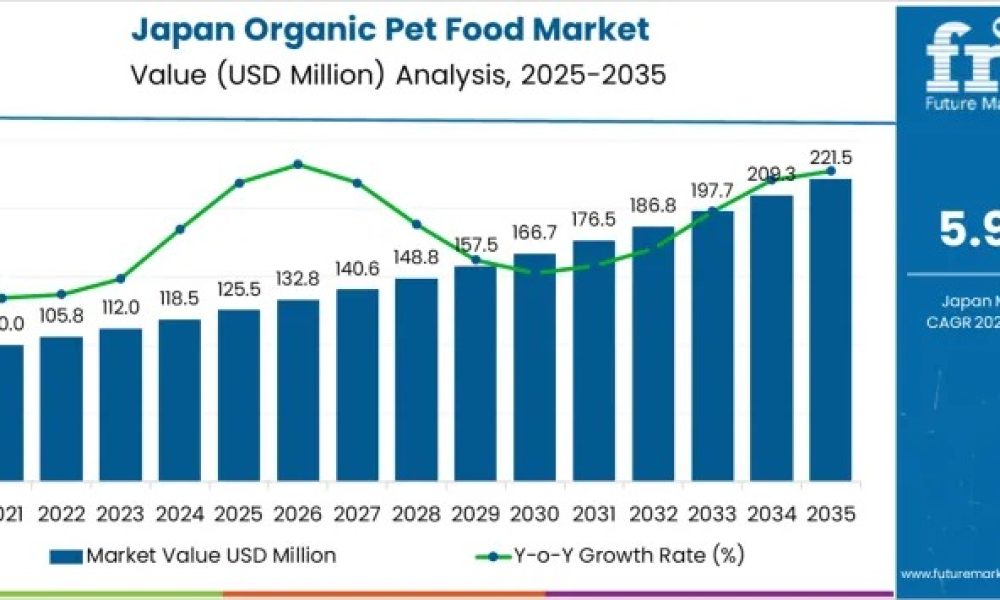
The demand for organic pet food in Japan is entering a steady growth phase, projected to rise from USD 125.5 million in 2025 to USD 221.5 million by 2035, reflecting a 5.9% CAGR. The shift highlights a broader transformation in pet care, where nutrition standards for animals are increasingly aligned with human health priorities. Pet owners across Japan are showing stronger preference for natural, chemical-free, and sustainably sourced food options.
The trend is closely linked to the growing humanization of pets, where animals are treated as family members. This emotional shift is translating into premium purchasing behavior, especially for food products perceived as safer, cleaner, and nutritionally superior.
Request For Sample Report | Customize Report | Purchase Full Report- https://www.futuremarketinsights.com/reports/sample/rep-gb-29590
Rising awareness of digestive health, allergy management, and long-term wellness in pets is reinforcing demand. Organic formulations made without synthetic additives, pesticides, or GMOs are gaining trust among consumers seeking preventive healthcare solutions for their animals. Transparency in sourcing and production practices is also strengthening brand credibility.
From a value perspective, demand is forecast to move steadily:
- 2025: USD 125.5 million
- 2030: USD 166.7 million
- 2035: USD 221.5 million
The period between 2030 and 2035 is expected to witness faster mainstream adoption as product availability widens and pricing strategies become more competitive.
Key Market Drivers
Health-led purchasing decisions remain the backbone of industry expansion. Japanese pet owners are increasingly connecting diet quality with visible outcomes such as coat health, energy levels, and digestive comfort. The premiumization of pet care, especially in urban households with smaller family sizes, is amplifying spending per pet.
Retail accessibility is another catalyst. Organic pet food is no longer limited to specialty outlets; distribution has expanded into:
- Veterinary clinics
- Specialty pet retail chains
- E-commerce platforms
- Premium supermarket shelves
This multi-channel reach is making organic options more convenient and visible to a broader consumer base.
Segment Insights
By Food Type:
Dry organic pet food leads the market with 53% share, driven by shelf stability, ease of storage, affordability compared to wet formats, and dental health benefits. Its practicality aligns well with urban lifestyles, where convenience plays a central role.
By Pet Type:
Dogs account for 63% of total demand, reflecting their larger population and higher spending on premium nutrition. Dog owners are particularly responsive to clean-label and natural diet claims.
Regional Demand Landscape
Growth is visible nationwide, though adoption rates vary:
- Kyushu & Okinawa: 7.3% CAGR
- Kanto: 6.7% CAGR
- Kansai: 5.9% CAGR
- Chubu: 5.2% CAGR
- Tohoku: 4.6% CAGR
- Rest of Japan: 4.3% CAGR
Kyushu & Okinawa lead due to rising pet ownership and increasing health awareness. Kanto’s performance is supported by dense urban populations and higher disposable incomes, while Kansai benefits from a strong specialty pet retail presence.
Innovation & Industry Evolution
Technological improvements in ingredient sourcing, preservation, and packaging are supporting market scalability. Manufacturers are expanding portfolios to include organic treats, grain-free variants, and limited-ingredient diets targeting specific sensitivities. Supply chain optimization and better certification frameworks are also improving product consistency.
E-commerce growth has played a vital role, particularly in less urbanized regions where retail penetration remains modest. Subscription models and direct-to-consumer channels are improving repeat purchase rates.
Challenges to Watch
Despite strong fundamentals, cost remains a barrier. Organic pet food carries a price premium that may limit adoption among budget-conscious households. Certification complexities and regulatory compliance also add production expenses. Additionally, some pet owners continue to rely on traditional veterinary or therapeutic diets, which can slow conversion to organic alternatives.
Access the full report for detailed market trends. https://www.futuremarketinsights.com/reports/brochure/rep-gb-29590
Competitive Landscape
Leading players shaping the market include Nestlé SA, Mars Incorporated, Primal Pet Foods, Hill’s Pet Nutrition, Inc., and PetGuard Holdings, LLC. Nestlé SA holds a significant share, supported by broad brand portfolios and distribution reach. These companies are investing in clean-label innovation, sustainability initiatives, and premium positioning to meet evolving consumer expectations.
The outlook for Japan’s organic pet food industry remains positive, supported by demographic trends, premiumization, and rising trust in natural nutrition solutions. As awareness deepens and product diversity grows, organic options are set to secure a stronger position in the country’s evolving pet care landscape.
Key Players in Japan Organic Pet Food Demand
- Nestle SA
- Mars Incorporated
- Primal Pet Foods
- Hill’s Pet Nutrition, Inc.
- PetGuard Holdings, LLC
About Future Market Insights (FMI)
Future Market Insights, Inc. (FMI) is an ESOMAR-certified, ISO 9001:2015 market research and consulting organization, trusted by Fortune 500 clients and global enterprises. With operations in the U.S., UK, India, and Dubai, FMI provides data-backed insights and strategic intelligence across 30+ industries and 1200 markets worldwide.



