
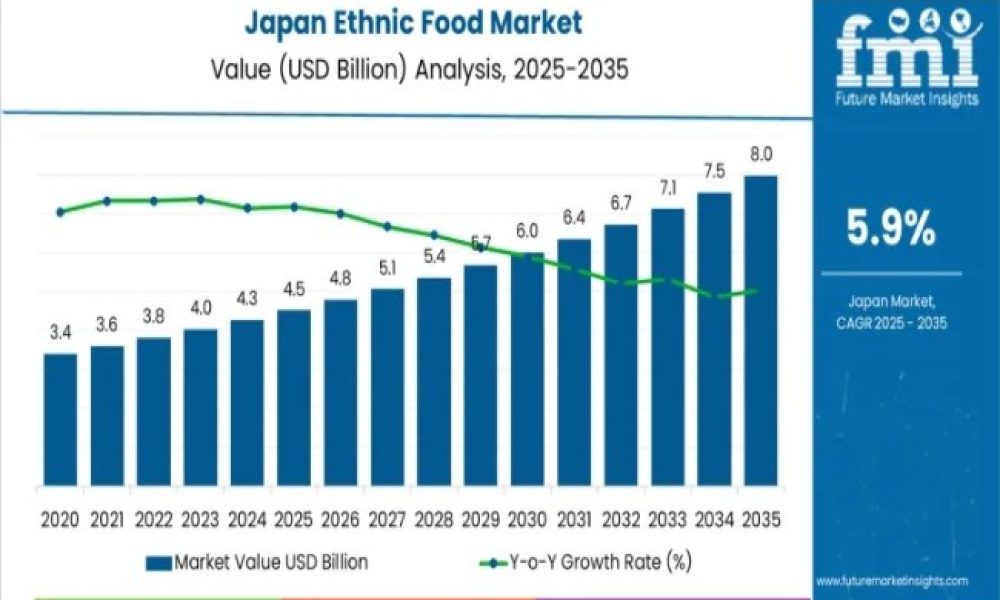
In 2025, the ethnic food industry in Japan is valued at USD 4.5 billion and is forecast to reach USD 8.0 billion by 2035, growing at a CAGR of 5.9%. This growth reflects the country’s expanding appetite for international flavors paired with convenience-oriented food formats.
Japan’s food landscape is undergoing a visible transformation as global cuisines move from novelty dining to everyday consumption. Once limited to restaurants in major cities, ethnic food is now firmly embedded in retail shelves, convenience stores, and home kitchens. Driven by lifestyle changes, urbanization, and rising cultural exposure, demand for ethnic food in Japan is evolving into a mainstream consumption pattern rather than a niche preference.
Unlock Growth Potential – Request Your Sample Now and Explore Market Opportunities!
Meaning and Market Scope
Ethnic food in Japan refers to packaged, prepared, or ready-to-eat food products inspired by non-Japanese cuisines, including Korean, Chinese regional, Southeast Asian, Middle Eastern, European, and Latin American dishes. The market spans:
- Ready-to-eat meals
- Frozen international cuisine
- Prepared meal kits
- Packaged street food and snacks
- Sauces, spice blends, and cooking bases
Distribution extends across hypermarkets, supermarkets, convenience stores, specialty grocers, and online platforms, enabling nationwide access from metropolitan hubs to regional cities.
Market Overview
Ready-to-eat meals dominate the ethnic food market, accounting for 66% of total demand, reflecting Japan’s preference for portion-controlled, microwave-compatible meals. Urban working households, students, and single-person residences form the core consumer base. Retail access across Kanto, Kansai, Chubu, Kyushu, Okinawa, and Hokkaido ensures steady demand visibility throughout the country.
Key highlights shaping the market include:
- Expansion of chilled and frozen international meals
- Strong presence of private label ethnic food lines
- Integration of imported ingredients with domestic co-packing
- Retail-driven flavor localization strategies
Outlook Through 2035
The outlook for ethnic food in Japan remains strongly positive through 2035. Between 2025 and 2030, the market expands from USD 4.5 billion to USD 5.7 billion, creating a USD 1.2 billion value addition. Growth accelerates further between 2030 and 2035, adding USD 2.3 billion as repeat consumption replaces trial-based purchases.
By 2035, ethnic food is no longer occasional indulgence but part of weekly household meal planning across Japan.
Growth Drivers
Multiple structural and lifestyle factors are driving market expansion:
- Longer working hours favor convenience meals
- Rising exposure to global cuisines via travel and media
- Growth of cold-chain infrastructure for frozen imports
- Tourism recovery influencing retail menu design
- Increased availability of halal and plant-based options
Online grocery platforms and quick commerce services are also expanding access beyond dense retail corridors, supporting growth in regional cities.
Demand Dynamics
Demand growth is driven by habitual consumption rather than experimentation alone. Office workers rely on ready meals for lunch and late dinners, while families integrate ethnic dishes into weekend meal rotations. Supermarkets continue expanding assortments of:
- Ethnic meal kits
- Frozen noodles and rice bowls
- Cooking sauces and spice blends
Snack-based ethnic offerings are gaining traction in transit hubs and late-hour retail zones, especially in urban areas.
Key Trends Shaping the Market
Several trends are influencing product development and retail strategy:
- Limited-edition global flavors to sustain interest
- Chef collaborations for premium positioning
- Plant-forward recipes aligned with dietary diversification
- Halal-compliant product lines for diverse consumer groups
- Private label expansion strengthening retailer bargaining power
Packaging innovation focusing on shelf stability, portion control, and humidity resistance also supports repeat purchases.
Regional Demand Patterns
Ethnic food demand is expanding across all regions, with varying growth speeds:
- Kyushu & Okinawa (7.3% CAGR): Tourism-driven dining diversity and resort-led menu experimentation
- Kanto (6.7% CAGR): Dense urban population, migrant communities, and strong retail penetration
- Kansai (5.9% CAGR): Stable casual dining culture and imported ingredient availability
- Chubu (5.2% CAGR): Workforce-driven demand for quick global meals
- Tohoku & Rest of Japan (4.6%–4.3% CAGR): Gradual adoption shaped by traditional food preferences
Competitive Landscape
The competitive landscape combines multinational food companies, domestic manufacturers, and retail private labels. Key participants include:
- Ajinomoto Co. Inc. – Dominates through frozen meals, seasonings, and sauces
- McCormick & Company Inc. – Supplies spices and flavor systems
- General Mills, Inc. – Participates via imported baking mixes and tortillas
- Associated British Foods PLC – Provides specialty ingredients and branded imports
- Orkla ASA – Serves niche European ethnic segments through premium retailers
Competitive strategies focus on flavor adaptation, supply chain stability, localized production, and consistent quality standards aligned with Japanese consumer expectations.
Why FMI: https://www.futuremarketinsights.com/why-fmi
About Future Market Insights (FMI)
Future Market Insights, Inc. (FMI) is an ESOMAR-certified, ISO 9001:2015 market research and consulting organization, trusted by Fortune 500 clients and global enterprises. With operations in the U.S., UK, India, and Dubai, FMI provides data-backed insights and strategic intelligence across 30+ industries and 1200 markets worldwide.



