
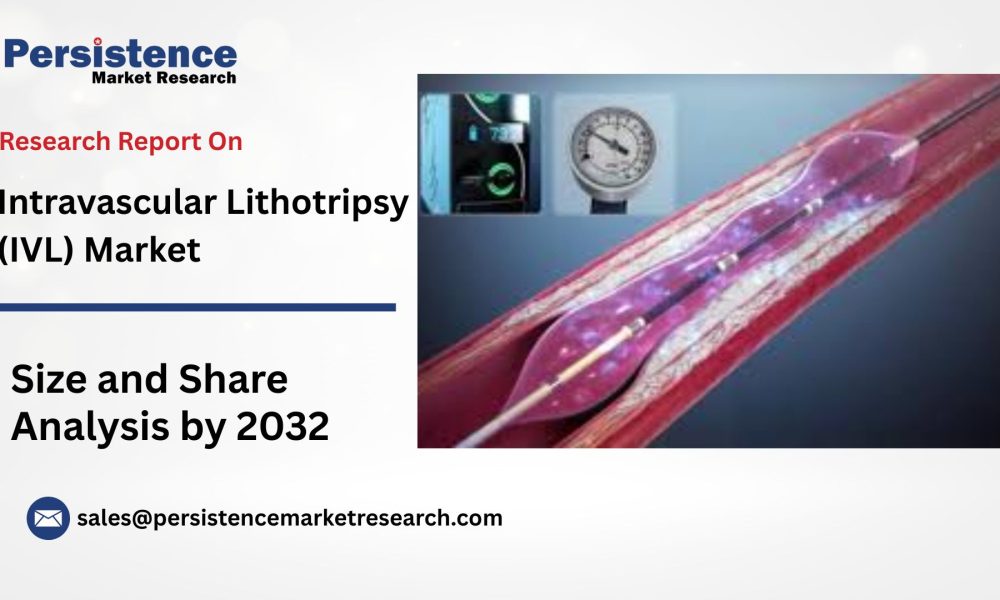
The global intravascular lithotripsy (IVL) market is poised for remarkable growth, with projections indicating an increase from USD 1,036.2 million in 2025 to USD 2,837.7 million by 2032. This expansion reflects a robust compound annual growth rate (CAGR) of 15.5% over the forecast period. This surge is primarily driven by the escalating prevalence of calcified arterial diseases, the aging global population, and the growing preference for minimally invasive cardiovascular procedures.
Market Overview
Intravascular lithotripsy is a cutting-edge medical technique that utilizes acoustic shockwave technology to treat calcified arterial lesions, particularly in coronary and peripheral arteries. This method is gaining traction due to its ability to effectively modify calcified plaques, facilitating better stent deployment and improving patient outcomes. The increasing incidence of cardiovascular diseases, especially among the elderly, is a significant factor contributing to the market’s growth.
🔗Get a Sample PDF Brochure of the Report (Use Corporate Email ID for a Quick Response):https://www.persistencemarketresearch.com/samples/32139
Key Market Drivers
- Rising Prevalence of Cardiovascular Diseases: The global burden of cardiovascular diseases is escalating, with conditions like coronary artery disease (CAD) and peripheral artery disease (PAD) becoming more prevalent. The aging population, particularly in developed regions, is more susceptible to these conditions, thereby driving the demand for effective treatment options like IVL.
- Technological Advancements: Continuous innovations in IVL technology are enhancing the efficacy and safety of procedures. The development of advanced IVL systems allows for better targeting of calcified lesions, reducing procedural complications and improving patient outcomes.
- Minimally Invasive Procedures: There is a growing preference among patients and healthcare providers for minimally invasive procedures due to their associated benefits, such as shorter recovery times, reduced risk of infection, and less postoperative pain. IVL aligns with this trend, offering a non-surgical alternative to traditional methods.
- Increasing Healthcare Expenditure: Rising healthcare budgets, especially in emerging economies, are facilitating the adoption of advanced medical technologies. Governments and private healthcare providers are investing in state-of-the-art equipment, including IVL systems, to enhance treatment capabilities.
Market Segmentation
The IVL market can be segmented based on product type, disease indication, end-user, and region.
- By Product Type:
- Coronary Intravascular Lithotripsy Systems: These systems are anticipated to dominate the market, accounting for a significant share due to their effectiveness in treating calcified coronary lesions.
- Peripheral Intravascular Lithotripsy Systems: While currently a smaller segment, the demand for peripheral IVL systems is expected to grow as awareness and adoption increase.
- Accessories: This includes components like catheters and balloons, which are essential for the IVL procedure.
- By Disease Indication:
- Coronary Artery Disease (CAD): CAD is projected to lead the market, driven by the high prevalence of calcified coronary lesions.
- Peripheral Artery Disease (PAD): Although a smaller segment, PAD is expected to witness significant growth due to increasing awareness and diagnostic capabilities.
- By End-User:
- Hospitals and Cardiac Centers: These institutions are the primary users of IVL systems, given their advanced infrastructure and patient volume.
- Ambulatory Surgical Centers (ASCs): ASCs are emerging as important end-users due to their cost-effectiveness and convenience for patients.
- By Region:
- North America: Expected to maintain a dominant market share, attributed to advanced healthcare infrastructure, high healthcare expenditure, and early adoption of medical technologies.
- Europe: A significant market, driven by an aging population and increasing healthcare investments.
- Asia-Pacific: Anticipated to be the fastest-growing region, fueled by a large patient pool, improving healthcare facilities, and rising awareness about cardiovascular diseases.
Competitive Landscape
The IVL market is characterized by the presence of several key players focusing on technological advancements and strategic collaborations to enhance their market position. Notable companies include:
- Shockwave Medical, Inc.: A pioneer in IVL technology, offering innovative solutions for treating calcified coronary and peripheral artery lesions.
- Boston Scientific Corporation: A leading medical device manufacturer with a diverse portfolio, including IVL systems.
- Medtronic plc: Known for its comprehensive range of cardiovascular products, Medtronic is expanding its presence in the IVL market.
- Philips Healthcare: A global healthcare technology company investing in advanced imaging and IVL solutions.
These companies are engaged in continuous research and development to introduce next-generation IVL systems, aiming to improve treatment outcomes and patient safety.
Challenges and Opportunities
Challenges:
- High Cost of IVL Systems: The advanced technology involved in IVL systems results in high initial investment and maintenance costs, which may limit adoption in cost-sensitive regions.
- Regulatory Hurdles: Obtaining regulatory approvals for new IVL devices can be time-consuming and complex, potentially delaying market entry.
Opportunities:
- Emerging Markets: Increasing healthcare investments in emerging economies present significant opportunities for market expansion.
- Technological Innovations: Advancements in IVL technology, such as the development of portable and cost-effective systems, can broaden the accessibility and adoption of IVL procedures.
- Growing Awareness: Enhanced awareness about the benefits of IVL procedures can lead to higher adoption rates among healthcare providers and patients.
Conclusion
The intravascular lithotripsy market is on a robust growth trajectory, driven by the rising prevalence of cardiovascular diseases, technological advancements, and the shift towards minimally invasive procedures. While challenges such as high costs and regulatory complexities exist, the opportunities presented by emerging markets and continuous innovation offer a promising outlook for the market. Stakeholders in the healthcare industry must focus on addressing these challenges while leveraging opportunities to capitalize on the expanding IVL market.
Explore the Latest Trending Research Reports:




