
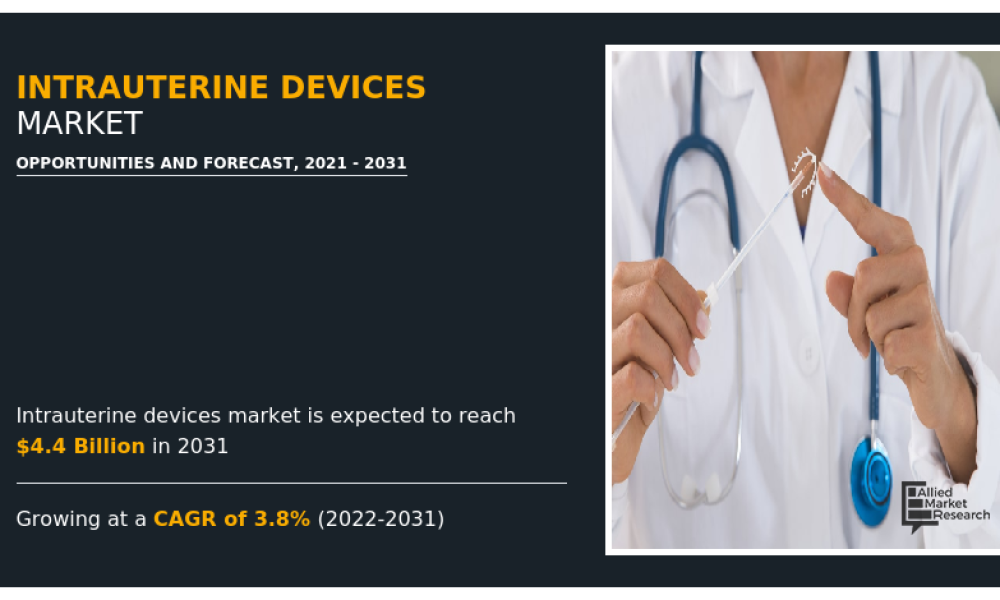
The global intrauterine devices (IUD) market was valued at $3.0 billion in 2021 and is projected to reach $4.4 billion by 2031, growing at a CAGR of 3.8% from 2022 to 2031. Intrauterine devices—commonly referred to as IUDs—are gaining popularity as a safe, reversible, and highly effective method of birth control, suitable for a wide range of age groups, including adolescents and women who have not yet had children.
What Are Intrauterine Devices?
IUDs are T-shaped contraceptive devices inserted into the uterus to prevent pregnancy. They work primarily by disrupting sperm motility, impeding fertilization, or altering the uterine lining to prevent implantation. Depending on their mechanism, IUDs are categorized into:
Non-hormonal IUDs (e.g., copper-containing devices)
Hormonal IUDs (e.g., progestogen-releasing devices)
Copper IUDs serve a dual function—not only as long-term contraception but also as an emergency contraceptive if used within five days of unprotected intercourse. Hormonal IUDs, on the other hand, release a controlled dose of progesterone, providing additional benefits such as lighter menstrual bleeding and treatment for conditions like endometriosis and fibroids.
Key Market Drivers
1. Rise in Unintended Pregnancies and Unsafe Abortions
One of the primary drivers of the IUD market is the growing rate of unplanned and unintended pregnancies, particularly among adolescents and young adults. This has led to an increase in demand for long-acting reversible contraceptives (LARCs), including IUDs. Moreover, in regions where access to safe abortion is limited, IUDs offer a reliable method to prevent unwanted pregnancies.
2. Growing Awareness and Government Support
Governments and health organizations across the globe are running awareness campaigns to promote sexual and reproductive health services. These efforts include distributing IUDs through public health systems, improving affordability, and enhancing access to contraceptive choices. For instance, U.S. initiatives have encouraged planned delayed pregnancies, contributing to the rise in IUD adoption.
3. Technological Advancements and Better Patient Outcomes
The development of next-generation hormonal IUDs that offer improved comfort, fewer side effects, and extended duration of efficacy is boosting their demand. Innovations in IUD design and placement techniques have further enhanced safety, convenience, and effectiveness, making them a preferred choice among healthcare professionals and patients alike.
Market Restraints
Despite its advantages, the market faces several challenges:
Lack of awareness: Especially in rural and underserved populations, awareness about IUDs remains limited.
Side effects: Cramping, irregular bleeding, heavier periods, and occasional discomfort post-insertion may lead to early device removal.
Cultural and religious barriers: In some regions, social stigma and conservative beliefs about contraception hinder IUD adoption.
However, rising disposable incomes and a growing focus on quality of life in emerging economies are creating significant opportunities for market expansion.
Market Segmentation
By Type
Non-hormonal IUDs (Copper-containing)
Hormonal IUDs (Progestogen-releasing)
Hormonal IUDs dominated the market in 2022 due to their dual benefits—preventing pregnancy and treating menstrual disorders like anemia and endometriosis. These devices are also recommended by clinicians for women with heavy menstrual bleeding or hormonal imbalances, contributing to increased market demand.
By Age Group
15–24 years
25–34 years (largest share in 2022)
35–44 years
Above 44 years
The 25–34 years age group accounted for the largest market share in 2022. This can be attributed to increased contraceptive awareness, rising cases of adolescent sexual activity, and the desire to delay pregnancy for career and educational pursuits.
By End User
Hospitals (largest segment in 2021)
Clinics
Community Health Centers
Others (including ambulatory surgical centers)
Hospitals lead the segment due to a rise in patient visits for family planning services and growing preference for professional IUD insertion under medical supervision. Hospitals are also well-equipped to handle side effects or complications, boosting patient confidence in choosing IUDs.
By Region
Asia-Pacific (largest revenue contributor in 2021)
North America
Europe
LAMEA
Asia-Pacific led the market in 2021, driven by increasing awareness campaigns, high prevalence of unplanned pregnancies, and favorable regulatory frameworks. Meanwhile, North America, with its established healthcare infrastructure and high contraceptive usage rates, remains a strong growth region.
According to the Centers for Disease Control and Prevention (CDC), from 2018 to 2020, approximately 72.2 million women aged 19–49 in the U.S. used contraceptives. With enhanced access, affordability, and government initiatives, the North American IUD market is expected to register significant growth during the forecast period.
Market Outlook and Future Opportunities
With ongoing advancements in device technology, increasing female empowerment and education, and supportive health policies, the IUD market is positioned for steady expansion. Opportunities include:
Smart IUDs integrated with tracking systems
Expansion of telemedicine and online health consultations, enabling easier patient education and follow-ups
Partnerships between public health agencies and IUD manufacturers to improve global accessibility
The combination of efficacy, convenience, and cost-effectiveness makes IUDs a vital tool in modern reproductive healthcare. As the world moves toward more informed and autonomous family planning choices, the IUD market is likely to play a key role in shaping the future of contraception.
Key Players
Leading companies in the global intrauterine devices market include:
Bayer AG
Teva Pharmaceutical Industries Ltd.
CooperSurgical, Inc.
Medicines360
DKT International
Medtronic
Pfizer Inc.
Pregna International Ltd.
Ocon Medical Ltd.
These players are actively engaged in product innovation, regulatory approvals, and strategic collaborations to maintain market leadership and expand their global reach.
Conclusion
The global intrauterine devices market is poised for sustainable growth through 2031, driven by rising awareness, government support, and evolving healthcare needs. While challenges remain, technological innovation and increasing acceptance of long-term contraceptive solutions present numerous opportunities for market players in the coming decade.




