
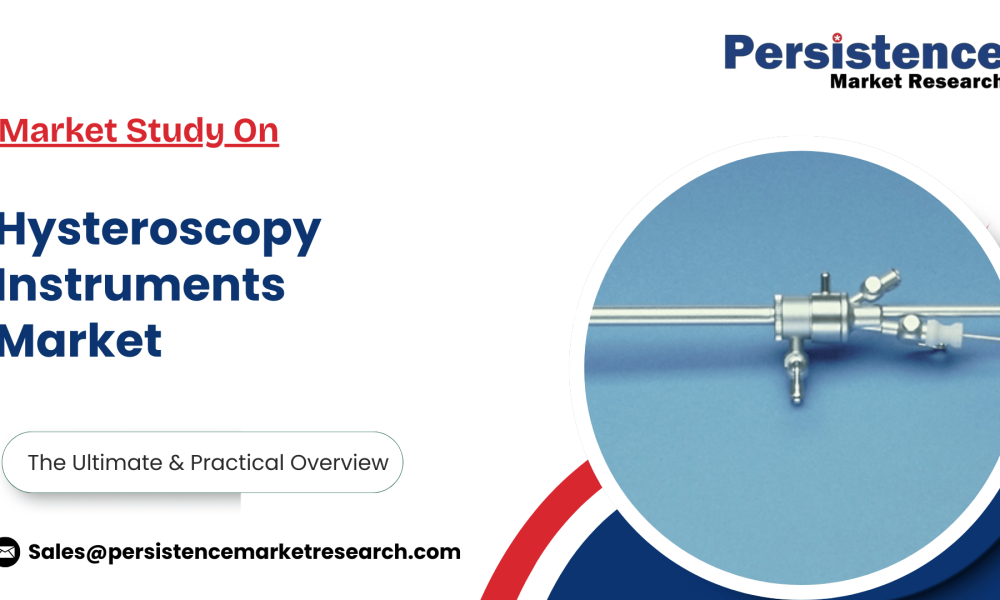
The hysteroscopy instruments market has witnessed significant evolution in recent years, driven by advances in medical technology and changing healthcare delivery models. As a critical segment within gynecological endoscopy, hysteroscopy instruments enable minimally invasive diagnostic and operative procedures inside the uterine cavity. According to Persistence Market Research, the global hysteroscopy instruments market size is expected to grow from approximately US$ 2.1 billion in 2025 to an estimated US$ 3.7 billion by 2032, registering a compound annual growth rate (CAGR) of 7.4%. This steady growth is reflective of ongoing innovations, increasing clinical adoption, and rising prevalence of gynecological disorders worldwide.
This article explores the various dimensions of the hysteroscopy instruments market including its overview, key growth drivers, segmentation, regional insights, market dynamics, and competitive landscape. The analysis also highlights emerging opportunities and challenges shaping the trajectory of this dynamic healthcare sector.
Market Overview and Statistics
The hysteroscopy instruments market has grown steadily due to procedural miniaturization, rising outpatient care, and an increase in gynecological cases requiring diagnostic and operative intervention. Demand is further bolstered by the trend of shifting procedures from hospital operating rooms to office-based clinics and ambulatory surgical centers. Compact and multifunctional hysteroscopy instruments are in increasing demand to support this shift, offering benefits such as reduced patient recovery time and improved clinical workflow.
Market statistics reflect this growing interest: Persistence Market Research projects the market will increase from a valuation of US$ 2.1 billion in 2025 to US$ 3.7 billion by 2032, growing at a CAGR of 7.4%. The disposable hysteroscopy instruments segment alone is expected to hold a commanding 66.3% market share by 2025 due to advantages like reduced sterilization turnaround and lower infection risks.
Among product segments, hysteroscopes are anticipated to dominate with a share of nearly 38% in 2025, serving as essential visualization devices. Regionally, North America leads with nearly 46% market share, driven by advanced reimbursement policies and a high concentration of outpatient gynecological services. The U.S. market, in particular, benefits from policy changes encouraging office-based minimally invasive procedures.
Get a Sample Copy of Research Report (Use Corporate Mail id for Quick Response): https://www.persistencemarketresearch.com/samples/35536
Key Highlights from the Report:
• Development of hybrid reusable-disposable instrument kits is expected to open new market opportunities in cost-sensitive regions.
• Single-use hysteroscopes are gaining popularity due to their infection control advantages and lower reprocessing costs.
• Rising global incidence of abnormal uterine bleeding and fibroids is driving procedural demand.
• Integration of high-definition imaging systems by manufacturers is enhancing diagnostic accuracy.
• Demand is growing for modular systems allowing sheath interchangeability and imaging platform integration.
• Strong North American reimbursement policies are accelerating investments in portable hysteroscopic instruments.
Market Segmentation:
The hysteroscopy instruments market is segmented based on product type, usability, and end-user. By product type, the market includes handheld instruments, hysteroscopes, resectoscopes, and hysterosheaths. Hysteroscopes, critical for both diagnostic and operative procedures, dominate due to their role as the primary visualization tool. Hysterosheaths, on the other hand, are increasingly preferred for their minimally invasive design that reduces patient discomfort and eliminates the need for cervical dilation.
Regarding usability, the market is bifurcated into reusable and disposable instruments. Disposable hysteroscopy instruments are becoming the preferred choice in outpatient settings owing to stringent infection control protocols post-COVID-19 and their ability to increase procedural throughput. Reusable instruments remain important in high-volume surgical centers and teaching hospitals due to their durability and cost-effectiveness over the long term.
Regional Insights:
North America leads the global hysteroscopy instruments market, capturing a significant share due to the rapid adoption of office-based hysteroscopic procedures and favorable reimbursement frameworks. The U.S. healthcare infrastructure supports a high number of outpatient gynecology clinics, driving demand for compact, single-use instruments. Canada is following similar trends, aided by regional healthcare procurement initiatives that promote minimally invasive surgical techniques.
Europe presents a robust market with countries like Germany, the U.K., and the Netherlands at the forefront of outpatient hysteroscopy adoption. National initiatives and reimbursement policies encouraging ambulatory care have shifted the majority of diagnostic hysteroscopies to outpatient settings. Germany, with its advanced hospital infrastructure and leading local manufacturers such as Richard Wolf, continues to dominate the European segment.
Market Drivers:
The primary driver of the hysteroscopy instruments market is the increasing prevalence of gynecological disorders such as abnormal uterine bleeding (AUB), uterine fibroids, and endometriosis. Hysteroscopy is considered the gold standard for diagnosing and treating many of these conditions, which has escalated adoption rates worldwide. The rising demand for fertility preservation and minimally invasive procedures is further encouraging the use of hysteroscopy instruments in both diagnostic and operative settings.
Additionally, advances in outpatient care models and procedural miniaturization are catalyzing market growth. Clinics and ambulatory surgical centers increasingly prefer compact, multifunctional, and disposable instruments that enhance patient throughput and reduce infection risks. These trends are supported by evolving reimbursement policies, especially in developed markets like North America and Europe.
Market Restraints
Despite promising growth, the market faces certain restraints that limit widespread adoption. Complications such as uterine perforation, fluid overload, and air embolism, although statistically rare, pose safety concerns. These risks are more pronounced in low-resource settings or when operated by less experienced clinicians. Fluid overload due to hypotonic distension media like glycine can lead to serious complications such as hyponatremia and pulmonary edema.
These safety concerns have slowed the pace of hysteroscopy instrument adoption in some regions. Furthermore, the high costs associated with advanced hysteroscopic systems and the need for specialized training can act as barriers to entry in developing markets.
Market Opportunities
Innovation in morcellation tools and the shift toward isotonic saline as a distension medium are creating significant opportunities for market expansion. Advanced morcellators enable precise and efficient removal of intrauterine tissue such as fibroids and retained products of conception, broadening the scope of hysteroscopic procedures. Notable products like Hologic’s MyoSure XL and Meditrina’s Aveta system have improved safety and efficacy, especially in outpatient settings.
There is also growing demand for hybrid reusable-disposable instrument kits designed for cost-sensitive regions, providing affordability without compromising clinical performance. Furthermore, integration of digital imaging and fluid management systems enhances diagnostic accuracy and patient outcomes, creating new avenues for market growth.
Reasons to Buy the Report:
Comprehensive analysis of global hysteroscopy instruments market trends and forecasts.
Detailed segmentation by product type, usability, and geography for targeted insights.
Evaluation of key growth drivers, restraints, and emerging opportunities.
Competitive landscape overview including company profiles and recent developments.
Strategic recommendations for stakeholders to capitalize on market potential.
Frequently Asked Questions (FAQs):
• How Big is the Hysteroscopy Instruments Market in 2025?
• Who are the Key Players in the Global Hysteroscopy Instruments Market?
• What is the Projected Growth Rate of the Hysteroscopy Instruments Market from 2025 to 2032?
• What is the Market Forecast for Hysteroscopy Instruments in 2032?
• Which Region is Estimated to Dominate the Industry through the Forecast Period?
Company Insights:
The hysteroscopy instruments market is highly competitive, featuring prominent medical device manufacturers alongside specialized endoscopy firms. Key players include:
• Karl Storz SE & Co. KG
• Medtronic plc
• Richard Wolf GmbH
• CooperSurgical Inc.
• Hologic, Inc.
• Stryker Corporation
• Boston Scientific Corporation
• Medicon eG
• B. Braun
• Erbe Elektromedizin GmbH
• EMOS Technology GmbH
• Johnson & Johnson Services, Inc.
• Smith & Nephew plc
• XION GmbH
Recent Developments:
In August 2024, Minerva Surgical announced exclusive distribution of a new disposable hysteroscope, HERizon, aimed at enhancing efficiency in gynecological care. In May 2024, Meditrina received FDA 510(k) clearance for its Gen 2 bipolar RF hysteroscopy system, including the Aveta Glo device, representing a breakthrough in minimally invasive gynecologic procedures.
The hysteroscopy instruments market is on a robust growth path fueled by clinical innovation, shifting healthcare delivery models, and rising disease prevalence. With ongoing advances in disposable technologies, fluid management, and morcellation tools, the future promises improved safety, accessibility, and outcomes for women worldwide. Stakeholders from manufacturers to healthcare providers can leverage detailed market insights from reports such as those by Persistence Market Research to navigate this evolving landscape effectively.
Read More Related Reports: