
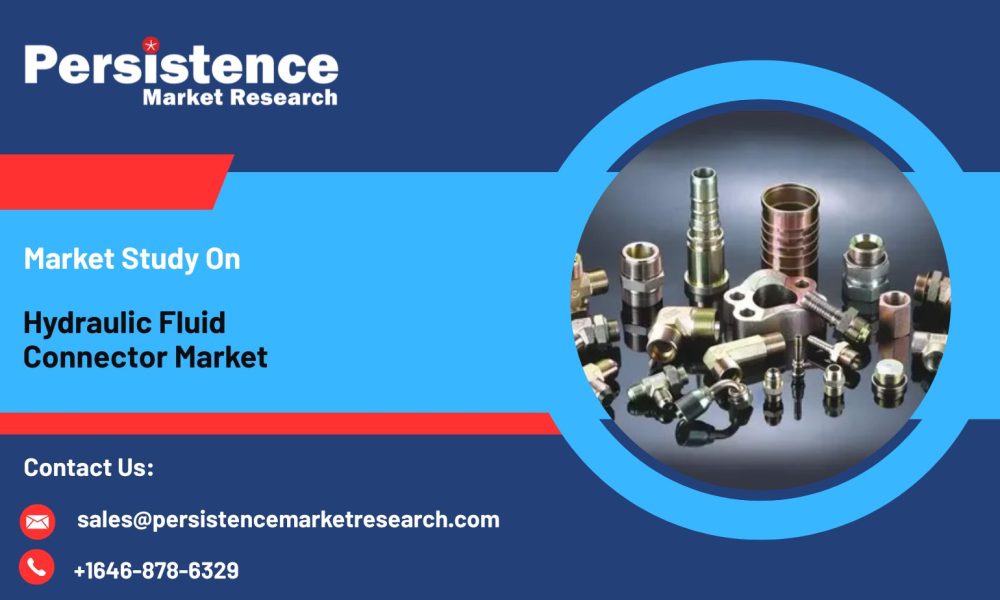
The global hydraulic fluid connector market is experiencing steady growth due to increasing adoption of hydraulic systems across various industries. Valued at US$6.3 billion in 2026, the market is projected to reach US$8.7 billion by 2033, reflecting a CAGR of 4.7% over the forecast period. Hydraulic fluid connectors are crucial components in hydraulic systems, enabling efficient high-pressure fluid transfer while maintaining system integrity. Their applications span a wide range of industries, including construction, agriculture, industrial manufacturing, and material handling. The increasing demand for heavy machinery, automated systems, and mechanized equipment is directly driving market expansion, with connectors serving as key enablers of operational reliability and performance.
Among product segments, quick-connect hydraulic connectors dominate due to their ease of installation, reduced maintenance requirements, and ability to minimize downtime in industrial and construction applications. North America currently leads the market, supported by advanced industrial infrastructure, high adoption of hydraulic systems, and significant investments in construction and manufacturing projects. Meanwhile, Asia Pacific is emerging as a high-growth region, driven by rapid industrialization, mechanization in agriculture, and large-scale infrastructure projects in countries such as China, India, and Southeast Asia. The combination of technological innovation, regulatory standards, and expanding industrial operations is expected to sustain market growth globally.
Key Highlights from the Report
• The global hydraulic fluid connector market is projected to reach US$8.7 billion by 2033.
• Quick-connect connectors lead the market due to their convenience and efficiency.
• Increasing mechanization in construction, agriculture, and industrial sectors drives demand.
• Technological advancements such as corrosion-resistant materials and enhanced sealing solutions improve reliability.
• Asia Pacific is the fastest-growing market region driven by infrastructure development.
• North America dominates through early adoption of advanced hydraulic systems and industrial automation.
𝐃𝐨𝐰𝐧𝐥𝐨𝐚𝐝 𝐅𝐫𝐞𝐞 𝐒𝐚𝐦𝐩𝐥𝐞 & 𝐂𝐡𝐞𝐜𝐤 𝐭𝐡𝐞 𝐋𝐚𝐭𝐞𝐬𝐭 𝐌𝐚𝐫𝐤𝐞𝐭 𝐀𝐧𝐚𝐥𝐲𝐬𝐢𝐬: https://www.persistencemarketresearch.com/samples/27385
Market Segmentation
The hydraulic fluid connector market is segmented by product type, end-user, and connection style. In terms of product type, the market includes quick-connect connectors, threaded connectors, flange connectors, and push-to-connect fittings. Quick-connect connectors dominate due to their ease of use, reducing assembly time and maintenance costs. Threaded and flange connectors are commonly used in industrial manufacturing and construction machinery, offering high-pressure resistance and durability. Push-to-connect fittings are increasingly adopted for low-pressure applications where speed and flexibility are important.
By end-user, the market serves construction equipment, agricultural machinery, industrial manufacturing, and material handling sectors. Construction machinery applications such as excavators, loaders, and cranes account for significant consumption due to high hydraulic system usage. Agricultural machinery, including tractors and harvesters, is also a key growth segment, especially in emerging economies where modernization is underway. Industrial manufacturing sectors rely on hydraulic systems for automation and production line operations, driving demand for high-quality connectors that ensure minimal fluid loss and high operational efficiency. Material handling equipment, including forklifts and automated conveyors, further contributes to market expansion.
Regional Insights
North America holds a leading share in the hydraulic fluid connector market due to advanced industrial infrastructure, widespread adoption of hydraulic machinery, and strong construction and manufacturing activities. The United States leads with high investment in automation, mining, and construction equipment, creating a consistent demand for durable and reliable hydraulic connectors. Canada contributes through agricultural mechanization and industrial facility development.
Asia Pacific is the fastest-growing region, propelled by rapid urbanization, large-scale infrastructure projects, and mechanization in agriculture and construction. Countries like China, India, Japan, and Indonesia are witnessing increased demand for tractors, earthmoving equipment, and industrial machinery, requiring robust hydraulic systems. Rising awareness of high-efficiency equipment, safety standards, and reduced operational costs further enhances market adoption.
Europe demonstrates steady growth, driven by industrial modernization, adoption of advanced machinery, and stringent safety and environmental regulations. Germany, France, and the United Kingdom are key markets, focusing on reliable connectors that comply with operational safety and performance standards. Latin America and Middle East & Africa are emerging markets, benefiting from infrastructure expansion and industrial equipment investments, although growth is tempered by cost sensitivity and limited technology penetration.
𝐆𝐞𝐭 𝐚 𝐂𝐮𝐬𝐭𝐨𝐦𝐢𝐳𝐞𝐝 𝐌𝐚𝐫𝐤𝐞𝐭 𝐕𝐢𝐞𝐰 𝐢𝐧 𝐎𝐧𝐞 𝐂𝐥𝐢𝐜𝐤 : https://www.persistencemarketresearch.com/request-customization/27385
Market Drivers
The primary driver of the hydraulic fluid connector market is the increasing adoption of hydraulic systems across multiple industries. In construction and agriculture, hydraulic machinery enables higher productivity, efficiency, and mechanization, with connectors ensuring seamless fluid transfer under high pressure. Industrial manufacturing relies on hydraulic systems for automation, precision control, and heavy-duty operations, creating significant demand for high-performance connectors. Additionally, emerging economies are investing heavily in infrastructure and mechanized equipment, further supporting market growth. Technological innovations, such as quick-connect systems, corrosion-resistant materials, and improved sealing mechanisms, enhance system reliability, reduce maintenance downtime, and minimize leakage, driving adoption across industries.
Market Restraints
Despite strong growth, the hydraulic fluid connector market faces several restraints. High initial costs of advanced connectors can limit adoption among small and medium-scale enterprises. Maintenance, calibration, and replacement of connectors in high-pressure systems require technical expertise, which may be lacking in certain regions. Market expansion can also be impacted by fluctuating raw material prices, especially steel and alloy costs, as well as supply chain disruptions. Additionally, the complexity of integrating connectors into highly automated hydraulic systems may deter some end-users from upgrading existing machinery.
Market Opportunities
The market presents significant opportunities in emerging regions such as Asia Pacific, Latin America, and the Middle East, where infrastructure projects, mechanization, and industrial development are rapidly increasing. Growth opportunities also exist in technological advancements, including IoT-enabled monitoring of hydraulic systems, predictive maintenance, and smart connectors that improve efficiency and reduce downtime. Manufacturers focusing on compact, high-performance, and corrosion-resistant connectors can capture incremental growth. Furthermore, expanding applications in renewable energy systems, mobile hydraulic equipment, and automated material handling create avenues for innovation and market expansion.
𝐆𝐞𝐭 𝐈𝐧𝐬𝐭𝐚𝐧𝐭 𝐀𝐜𝐜𝐞𝐬𝐬 𝐓𝐨𝐝𝐚𝐲—𝐌𝐚𝐤𝐞 𝐒𝐦𝐚𝐫𝐭𝐞𝐫 𝐃𝐞𝐜𝐢𝐬𝐢𝐨𝐧𝐬 : https://www.persistencemarketresearch.com/checkout/27385
Company Insights
Key players operating in the global hydraulic fluid connector market include:
• Parker Hannifin Corporation
• Eaton Corporation
• Stucchi Spa
• Hansen Hydraulic
• Manuli Hydraulics
• Bosch Rexroth AG
• Cejn AB
• Gates Corporation
Recent developments include Parker Hannifin launching a new line of quick-connect couplings with enhanced sealing and corrosion resistance for heavy-duty machinery. Eaton Corporation introduced smart hydraulic connectors that integrate with monitoring systems to track fluid flow, temperature, and performance in real-time, targeting industrial automation applications.
Conclusion
The global hydraulic fluid connector market is projected to grow from US$6.3 billion in 2026 to US$8.7 billion by 2033, at a CAGR of 4.7%. The market growth is fueled by increasing adoption of hydraulic systems across construction, agriculture, industrial manufacturing, and material handling sectors. Technological advancements, including quick-connect solutions, enhanced sealing technologies, and corrosion-resistant materials, are improving system reliability and minimizing maintenance downtime. Emerging regions, particularly Asia Pacific, offer significant growth opportunities due to rapid urbanization, infrastructure development, and mechanization. Despite challenges such as high equipment costs and technical complexity, the hydraulic fluid connector market demonstrates a robust trajectory, driven by the global push for efficiency, precision, and automation in hydraulic systems across diverse industries.




