
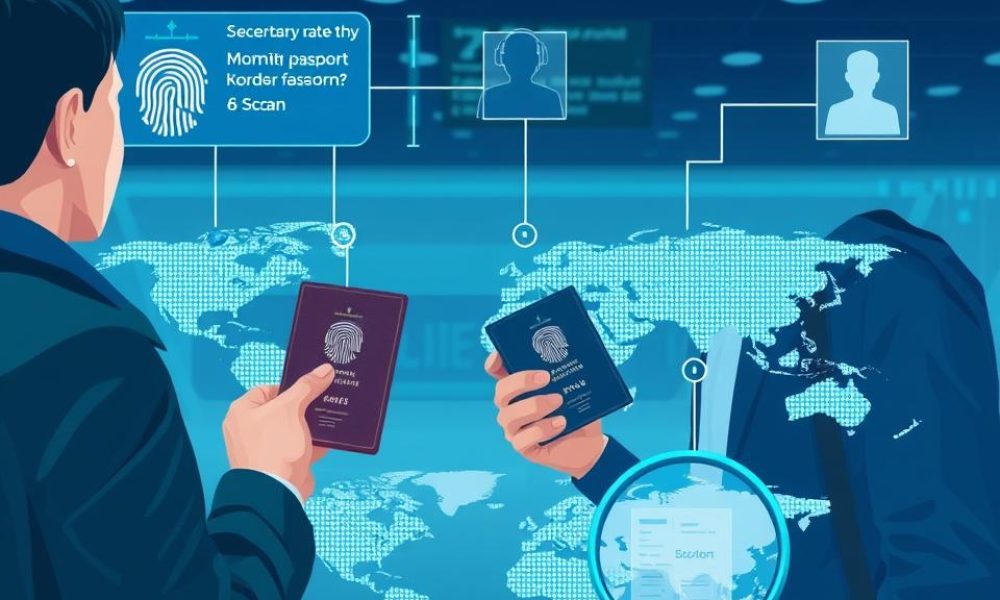
The SLTD database can identify a canceled travel document within seconds, but a match concerns the passport’s reported status and does not automatically establish that its bearer committed a crime.
WASHINGTON — A second passport does not become invisible merely because another country issued it, carries a different document number or reflects a citizenship acquired after the traveler’s original nationality.
When the issuing government reports that passport as stolen, lost, revoked, or otherwise invalid, its identifying details can enter Interpol’s global travel-document database and trigger an alert during airline, immigration, or police screening.
The central mechanism is the Stolen and Lost Travel Documents database, commonly known as SLTD, which allows authorized authorities to determine whether an identity or travel document has been reported unusable by its issuer.
Despite its name, the system is not limited to property theft or misplaced passports, because it also holds records for revoked documents, invalid documents, and stolen blank documents that criminals could personalize fraudulently.
Interpol currently reports approximately 138 million records in the database, making the frequently repeated figure of 40 million an outdated statistic that reflected the system’s much smaller size during 2014.
However, the database does not independently decide that a passport should be canceled, investigate the citizenship behind it, or automatically classify the bearer as a fugitive requiring immediate arrest.
A Legal Second Passport Is Not Automatically Suspicious
Millions of people lawfully hold more than one nationality. At the same time, some countries also issue multiple concurrent passports to the same citizen for travel, visa, or occupational reasons permitted by domestic law.
A secondary passport therefore creates no automatic SLTD entry, because the database records documents reported under specified invalidity categories rather than compiling every instance of dual citizenship.
A second passport becomes relevant when its issuing authority cancels the document, reports it lost or stolen, discovers that it was obtained fraudulently, or otherwise determines that it should no longer be accepted.
Information describing lawful second passports similarly distinguishes a genuine government-issued travel document connected to valid citizenship from a counterfeit, altered, or unlawfully procured passport that cannot withstand official verification.
This distinction is essential because border officers must separate ordinary dual nationals from people presenting invalid documents, impersonating legitimate holders or using authentic passports whose underlying entitlement has been withdrawn.
SLTD addresses one part of that problem by answering whether a particular document was reported invalid. In contrast, other national and Interpol systems may address the traveler’s identity, criminal status, or immigration eligibility.
The Database Is Far Larger Than 40 million Records.
The 40-million figure appeared widely after the disappearance of Malaysia Airlines Flight 370 in March 2014, when investigators revealed that two passengers had boarded using passports previously reported stolen.
At that time, the database held approximately 40.2 million records, and Interpol publicly challenged suggestions that its size made border searches impractically slow, Reuters reported.
The official Interpol SLTD database page now states that the repository contains around 138 million records and was searched 3.6 billion times during 2023.
Those searches produced 232,423 positive matches, according to Interpol, showing how often reported documents reach authorities, even though each hit still requires confirmation and action under applicable national procedures.
The expansion reflects contributions accumulated from member countries over more than two decades, including records for passports, identity cards, visas, United Nations travel papers and stolen impersonalized document stock.
The older number is therefore historically accurate but no longer adequately describes the system’s present scale, international coverage or growing operational importance across modern border-control and immigration networks.
Only the Issuing Country Can Add the Document
Interpol does not unilaterally place an ordinary passport into SLTD after reading a news report, receiving an allegation or deciding that the holder presents an international security concern.
Only the issuing country can add its record, acting through its Interpol National Central Bureau or another law-enforcement authority authorized to submit the information.
That design preserves national control over passport status because passports remain sovereign state documents governed by the issuing country’s laws, even when their holders travel through foreign jurisdictions.
When a government rescinds citizenship or cancels a passport after discovering fraud, its passport authority must first make the domestic decision and then ensure that the relevant document information reaches authorized national channels for international submission.
Describing this process as immediate expresses the intended security goal. Still, it does not guarantee instantaneous reporting, because administrative delays, technical failures, legal reviews, and poor coordination can postpone an SLTD update.
The database becomes operationally effective only after a reliable record has been submitted, accepted, and made available to national systems that actually query it during travel or law-enforcement encounters.
What an SLTD Record Identifies
An SLTD record focuses primarily on the document rather than presenting a complete criminal dossier about the person whose name appears on its biographical page.
Searchable elements generally include the issuing country, document type, and unique document number, allowing a scanner or officer to compare the presented passport with a precise record supplied by the issuer.
The record’s designated category indicates whether the document was reported lost, stolen, revoked, invalid, or stolen while blank, giving the receiving authority essential operational context for secondary examination.
Because the unique document number is central, changing a printed name elsewhere does not remove the alert from a passport whose number has already been entered into the database.
Likewise, obtaining another valid passport does not reactivate the canceled document, because each booklet has its own status and the new issuance ordinarily carries a different number and security credentials.
The traveler may remain a lawful citizen entitled to use a current passport even if an earlier booklet appears in SLTD, which is why officers must examine the specific document rather than assume every credential belonging to the person is invalid.
How the Border Check Happens
At a connected airport, seaport, or land crossing, an officer or automated system scans the machine-readable zone, capturing the passport number, issuing state, and document type required for database comparison.
The national border system can transmit those details through an integrated connection or through Interpol’s secure I-24/7 police communications network, returning a result within seconds when infrastructure and connectivity function properly.
A no-hit response means the submitted details did not match an SLTD record at that moment, but it does not prove that the passport is authentic, the citizenship is valid, or the traveler is free from other alerts.
A positive hit indicates that the document details match a reported record, prompting officers to verify the number, confirm the issuing country, and check whether a data-entry or scanning error caused the match.
Officers often refer the traveler for secondary inspection. At the same time, authorities contact national specialists, the relevant National Central Bureau, or the issuing country to confirm current status and determine the appropriate response.
This layered confirmation process prevents an initial electronic match from becoming the sole basis for a serious enforcement decision without documentary verification, human review, and appropriate national legal authority.
A Hit Is Not the Same as an Arrest Warrant
SLTD is frequently misunderstood as a database of wanted people, although its principal function is to report travel and identity documents that should no longer be accepted as valid.
A positive database match does not itself prove that the bearer stole the passport, obtained it fraudulently, or even knew that the issuing country had already formally canceled it.
Someone may innocently present a passport previously reported lost and later recovered, despite official government warnings that a recovered document remains canceled and unusable after the original loss was recorded.
Another traveler may be the victim of identity theft, a serious administrative error, or a disputed revocation imposed without adequate notice, requiring officers to investigate carefully before assigning criminal responsibility.
National law determines whether authorities deny boarding, refuse entry, seize the passport, question the traveler, open a fraud investigation, detain the person, or allow travel using another valid document.
An arrest based on a criminal case normally requires separate national authority, such as a domestic warrant, immigration power, or an Interpol notice recognized under the requested country’s laws.
SLTD and Red Notices Perform Different Functions
A Red Notice is an international request to locate and provisionally arrest a wanted person pending extradition or comparable legal action. At the same time, an SLTD record identifies a document its issuer reported as invalid.
The systems may intersect when a wanted person travels using a canceled passport linked to a notice. Still, neither database automatically substitutes for the other system’s distinct legal and operational function.
A passport can appear in SLTD even when its holder faces no criminal allegation, just as a person subject to a Red Notice may travel using a technically valid passport that has not been reported invalid.
Border authorities therefore screen multiple available data sources, including travel-document records, notice information, nominal police data, national watchlists, visa systems, and biometric repositories, when legally authorized and operationally available.
Guidance on Interpol notices and extradition emphasizes that provisional arrest and surrender remain legal processes governed by national laws, treaties, judicial review, and executive decisions, not a passport-database hit alone.
Treating SLTD as a concealed Red Notice would confuse document validity with wanted-person status and could lead to disproportionate action against travelers who merely possess a canceled or mistakenly listed document.
An Authentic E-Passport Can Still Be Invalid
Modern electronic passports contain digitally signed chip data that allows a border system to determine whether the issuing authority created the document and whether protected information was altered after personalization.
That cryptographic validation describes authenticity and integrity at issuance, but it does not necessarily establish whether the passport remains legally valid and acceptable on the traveler’s day of departure.
A government may revoke a genuine passport after issuance because it rescinded citizenship, discovered fraud, imposed court restrictions, or the holder reported the booklet lost or stolen.
The chip may continue passing signature validation because its data was authentic when produced. At the same time, an SLTD or national status check separately warns that the document should no longer be accepted.
This is why effective border security requires both electronic authentication and current database screening, since either verification check used alone leaves a significant gap in the overall decision process.
A forged booklet may fail physical or chip examination without appearing in SLTD, while a pristine and cryptographically genuine passport may appear in SLTD because its legal status changed later.
Secondary Passports Do Not Create a Database Escape Route
Travelers sometimes assume that a second nationality breaks the connection with alerts attached to their original passport. Still, the actual result depends on what information authorities possess and which systems they query.
SLTD can stop the reported document itself regardless of whether it was the person’s first, second, or fifth passport, because the match depends primarily upon the issuer and unique document number.
If a different passport remains valid and carries no alert, SLTD alone may not reveal that another government previously canceled a separate travel document held by the same person.
However, border authorities can use biographical information, facial comparison, fingerprints, advance passenger data and linked notice records to identify hidden relationships among passports issued under different nationalities or names.
Modern immigration systems also retain travel histories and earlier document numbers, so a new passport may become linked to previous crossings after the traveler submits a visa application or undergoes inspection.
The lawful advantage of dual citizenship is mobility under two valid nationalities, not immunity from identity resolution or permission to use a document that one issuing government has declared invalid.
Name Changes Do Not Erase the Document Number
A lawful name change may require a replacement passport, but it does not make a canceled booklet valid or automatically remove its unique number from SLTD.
If the issuing country invalidated the old passport during replacement, it can report that document while issuing a new credential under the properly amended name and connected civil record.
The new passport should remain linked within national systems to the same citizen, preserving previous names and document history even when those details are not printed publicly on the new booklet.
If authorities suspect an undisclosed identity, facial or fingerprint comparisons may link the traveler to earlier government records despite changes in spelling, citizenship, physical appearance, or broader biographical presentation.
Biometrics are not required for the basic SLTD document-number match, but they can help resolve who is presenting the flagged passport and whether that person is its legitimate holder.
A name change therefore affects identity administration, while the SLTD alert continues to address the current status of the specific physical or electronic travel document reported by the responsible issuing authority.
What Happens After a Positive Match
The immediate operational response depends on the country, document category, circumstances, and information returned during confirmation, rather than an identical enforcement command issued globally by Interpol.
Officers may ask the traveler when and where the passport was obtained, whether it was previously reported lost, what other nationalities are held, and whether another valid travel document is available.
They can examine security features, compare the bearer with the stored portrait, query additional databases and contact the issuing authority to determine whether the record remains active or requires correction.
If the passport is confirmed invalid, authorities may seize it and stop the journey, even when they conclude the traveler made an innocent mistake rather than committing deliberate fraud.
Where impersonation, counterfeiting, or fraudulent acquisition is suspected, investigators may retain the document as material evidence and pursue appropriate criminal or immigration proceedings expressly authorized under applicable local law.
If a separate wanted-person alert appears, the encounter can escalate into detention and possible extradition proceedings. Still, that outcome arises from additional legal information and authority beyond the SLTD hit.
The System Has Significant Operational Gaps
SLTD cannot flag a document that the issuing country never reports, reports incorrectly, or submits only after the traveler has already crossed an international border.
Some countries integrate passport cancellation systems directly with their National Central Bureaus, while others still rely on manual information transfers among civil registries, immigration departments, police services, and foreign ministries.
Even after a record enters the database, detection requires the airline, border post, or police unit to query functioning systems with trained personnel and reliable network access.
Not every identity check worldwide connects directly to Interpol, and local procedures may prioritize national databases or limit which travelers and document types receive systematic international screening.
Data quality creates another significant vulnerability because an incorrect digit, document classification, or issuing-country code can prevent a true match or create serious operational confusion during secondary examination.
The phrase real-time tracking therefore describes the speed of a connected query against available records, not continuous electronic surveillance of every passport or guaranteed worldwide detection at every crossing.
Airlines Can Become an Earlier Screening Point
Interpol developed I-Checkit to let approved private-sector partners submit customer or crew document information securely for screening without direct access to Interpol’s underlying police databases.
The screening model can identify a reported passport during ticket booking or airline check-in, well before the traveler reaches government immigration control or boards a scheduled international commercial flight.
A positive match is relayed to law enforcement for confirmation and follow-up, allowing authorities to conduct a secondary examination rather than disclosing sensitive database information directly to the company.
Private-sector screening is not universal, however, and travelers should not assume that every airline, hotel, bank or online travel platform automatically queries SLTD whenever customer identification is formally presented.
National advance-passenger information and carrier-liability rules may create separate security checks that resemble Interpol screening, but their coverage, legal basis, and underlying databases can differ substantially across jurisdictions.
The most dependable detection remains a properly integrated government border system that routinely queries SLTD alongside national immigration, security, and wanted-person records before authorizing entry or international departure.
False or Disputed Records Require Formal Correction
A traveler who believes a passport was wrongly reported should not attempt repeated crossings in the hope that another border post will overlook the alert, because each encounter can lead to seizure, delay, or investigation.
The issuing passport authority is normally the first place to seek confirmation, since only the issuer can determine the document’s domestic validity and correct an erroneous national cancellation record.
If an Interpol record remains inaccurate or is alleged to violate Interpol’s rules, the affected person may need legal assistance to communicate with the responsible National Central Bureau or pursue available data-correction procedures.
The Commission for the Control of Interpol’s Files handles qualifying formal requests concerning access to, correction of, or deletion of personal data processed within the wider Interpol Information System.
That process is not an appeal against the issuing country’s citizenship or passport decision, and the Commission does not replace domestic courts empowered to review the underlying revocation.
Effective relief may therefore require coordinated parallel action: challenging the national decision where legally possible while also ensuring that international records accurately and promptly reflect the final document status.
The System Tracks Documents, Not Citizenship Quality
SLTD becomes valuable after a government recognizes that a passport is invalid, but it does not evaluate whether the country exercised sufficient due diligence when granting the underlying citizenship.
An investment passport issued after weak screening can remain technically valid and absent from SLTD until the responsible government completes a lawful administrative review and formally cancels the travel document.
Interpol cannot independently transform investigative journalism, sanctions exposure or foreign allegations into an SLTD record without the issuing country first taking authorized legal or administrative action concerning its own document.
This creates a potentially dangerous interval between discovery and international reporting, particularly when citizenship revocation requires formal notice, hearings, appeals or separate administrative orders before passport cancellation becomes legally final.
Governments seeking international credibility must therefore connect citizenship reviews, passport systems and National Central Bureau reporting so that final invalidation decisions reach international border networks without unnecessary or avoidable delay.
The database is the final international distribution mechanism in that sequence, not a substitute for lawful national investigation, accountable administrative decision-making, judicial review and responsible government document management.
A Powerful Alert, but Only One Layer
Interpol’s SLTD database gives border authorities a fast, globally standardized way to find passports and identity documents that issuing countries have reported as unusable.
Its approximately 138 million records demonstrate a scale far beyond the decade-old 40-million figure, while billions of annual searches show that the platform has become central to routine border security.
Yet a positive match remains the beginning of an examination rather than a universal command to arrest, because officials must confirm the document, identify the bearer, and apply their own national law.
The system cannot expose an unreported revocation, detect every fabricated passport, or decide whether a secondary citizenship was lawfully granted, so it requires support from biometrics, chip authentication, document examination, and criminal databases.
For legitimate dual citizens, the practical lesson is straightforward. Every passport used for travel must remain valid, current and unreported, regardless of how many other citizenships or documents the traveler possesses.
For governments, the lesson is equally clear: revocation has little international value until accurate document data reaches SLTD and frontline authorities consistently check it at the moment of travel.




