
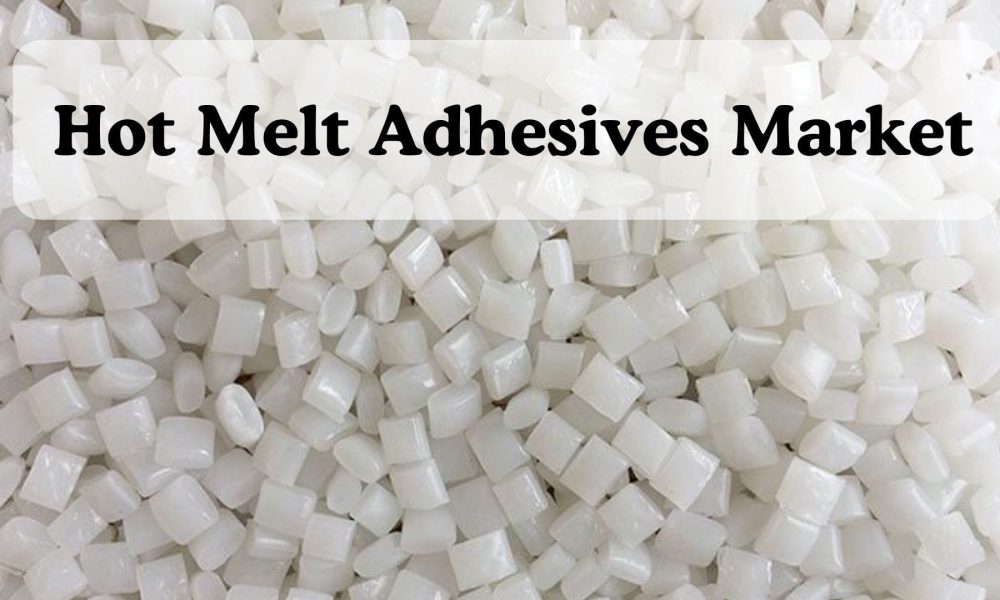
Global Hot Melt Adhesives Market reached US$ 6.9 billion in 2023 and is expected to reach US$ 9.8 billion by 2031, growing with a CAGR of 4.5% during the forecast period 2024-2031.
The Hot Melt Adhesives Market refers to the industry focused on thermoplastic adhesives that are solid at room temperature and melt upon heating to form strong bonds between materials. These adhesives, commonly made from ethylene-vinyl acetate (EVA), polyolefins, polyamides, and polyurethane, offer fast curing times, high strength, and versatility across industries such as packaging, automotive, construction, healthcare, and electronics. The market is driven by increasing demand for sustainable and solvent-free adhesives, growth in e-commerce packaging, and advancements in adhesive technology. North America and Europe lead the market due to strong industrial infrastructure and regulatory support, while Asia-Pacific is witnessing rapid growth due to expanding manufacturing sectors and rising consumer goods demand.
Download Free Sample PDF: https://www.datamintelligence.com/download-sample/hot-melt-adhesives-market
Market Growth Drivers:
Increasing Demand for Paper Packaging
The surge in e-commerce has significantly boosted the demand for packaging materials, with hot melt adhesives playing a vital role in applications such as carton sealing, labeling, and assembly due to their strong and fast bonding capabilities. According to Statistisches Bundesamt, Germany’s packaging industry generated approximately US$ 37.94 billion in sales in 2023, marking a rise from US$ 32.09 billion in the previous year.
Since 2008, China has been the world’s leading producer of paper packaging and cardboard. A survey by the China Paper Association reported that in 2023, the country had 2,500 paper and paperboard manufacturing businesses, producing 129.65 million tons, reflecting a 4.35% increase from the previous year.
Growing Emphasis on Sustainability
The rising demand for eco-friendly and recyclable packaging has fueled the adoption of hot melt adhesives, which offer strong bonding across various materials while remaining compatible with recycling processes. Manufacturers are increasingly developing bio-based hot melt adhesives to meet the demand for sustainable packaging solutions.
In the U.S., the shift toward bio-based adhesives is driving market growth. Companies like Jowat have introduced adhesives derived from renewable raw materials, approved by the U.S. Department of Agriculture, specifically for the North American market.
Raw Material Price Volatility and Environmental Concerns
Hot melt adhesives are primarily composed of petrochemical derivatives such as ethylene-vinyl acetate (EVA), polyethylene, and polypropylene. Their prices fluctuate due to factors like crude oil price shifts, geopolitical tensions, and supply-demand imbalances, directly affecting production costs and pricing stability for manufacturers.
Additionally, the disposal and environmental impact of non-biodegradable adhesives have raised concerns. With growing regulatory scrutiny and consumer demand for eco-friendly products, manufacturers are increasingly investing in the development of sustainable alternatives to reduce the environmental footprint of hot melt adhesives.
Market Segments:
By Product: Glue Guns, Sprayable Adhesives, Others
By Material: Ethylene-vinyl acetate, Thermoplastic rubber, Polyolefin, Polyamide, Others
By Application: Packaging, Assembly, Woodworking, Automotive, Nonwovens, Others
Competitive Landscape
- Henkel AG & Co. KGaA
- H.B. Fuller Company
- Dow
- Sika AG
- Jowat SE
- Arkema Group
- Ashland
- 3M
- Avery Dennison Corporation
- Beardow Adams
Customize Your Scope: https://www.datamintelligence.com/customize/hot-melt-adhesives-market
Regional Growth
Infrastructure Investments Fuel Hot Melt Adhesives Demand in Asia-Pacific
The Asia-Pacific region is projected to lead the global hot melt adhesives market, accounting for over 30% of the total share. Governments and private sectors across the region are heavily investing in infrastructure projects, including transportation, utilities, and commercial and residential construction. Hot melt adhesives are widely used in paneling, flooring installation, insulation bonding, and roofing, driving demand in the construction industry.
According to the Indian Brand Equity Foundation, capital investment in infrastructure is set to grow by 33%, reaching approximately US$ 122 billion in the 2023-24 fiscal year, contributing 3% to the country’s GDP. Additionally, the Indian government has implemented various initiatives to attract private investment in roads, highways, airports, business parks, and education sectors. In May 2023 alone, private equity and venture capital firms invested US$ 3.5 billion in Indian businesses across 71 deals, reflecting strong investor confidence in the sector.
Key Development:
In April 2023, Avery Dennison partnered with Dow to develop an innovative and sustainable hot melt label adhesive solution. This advancement enables polyolefin film labels to be recycled alongside polypropylene (PP) and polyethylene (PE) packaging in the same waste stream, enhancing recyclability. Avery Dennison distributes CF3050 across Europe, the Middle East, and North Africa (EMENA), leveraging Dow’s AFFINITY™ GA polymers to support sustainable packaging initiatives.
For Detailed Report: https://www.datamintelligence.com/enquiry/hot-melt-adhesives-market




