
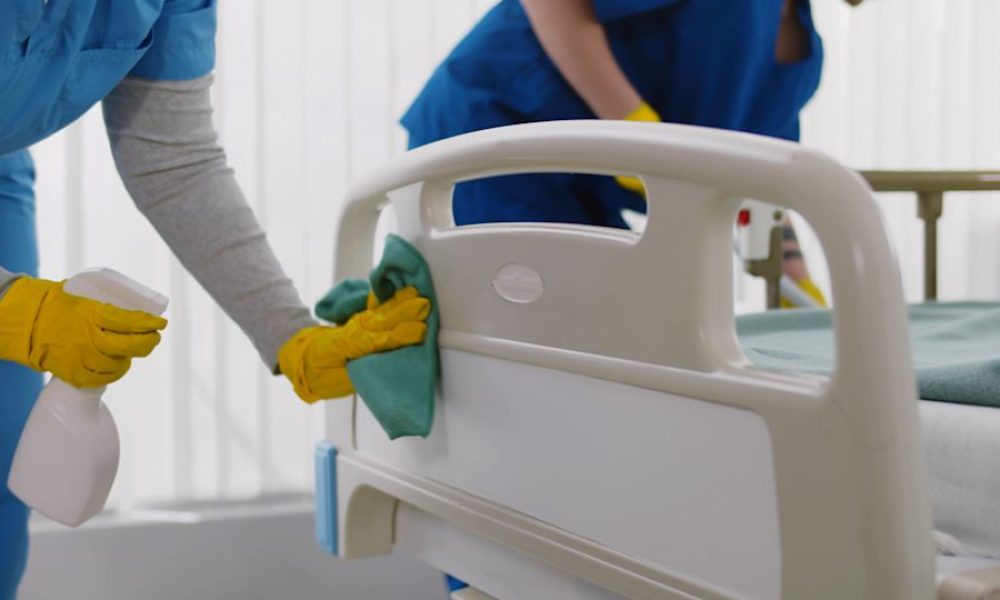
The global hospital disinfectant products & services market is poised for significant growth over the coming years. Valued at approximately US$41.6 billion in 2026, the market is expected to reach US$74.6 billion by 2033, representing a compound annual growth rate (CAGR) of 8.7% during the forecast period. The primary driver of this growth is the increasing prevalence of hospital-acquired infections (HAIs), which continue to exert considerable pressure on healthcare systems worldwide. According to the World Health Organization (WHO), over 7% of patients in developed economies and up to 15% in developing countries acquire at least one HAI during hospitalization, highlighting the urgent need for effective infection prevention and control measures. In addition, strict regulatory frameworks and hygiene standards enforced by organizations such as the U.S. Centers for Disease Control and Prevention (CDC), WHO, and national health agencies compel hospitals to adopt certified disinfectant products and professional disinfection services.
Download Your Free Sample & Explore Key Insights: https://www.persistencemarketresearch.com/samples/34182
Key Industry Highlights
North America is expected to dominate the global hospital disinfectant products & services market, capturing an estimated 35% market share in 2026. The growth in this region is supported by advanced healthcare infrastructure, stringent infection control regulations, and high adoption rates of professional disinfection services. Conversely, the Asia Pacific region is projected to be the fastest-growing market due to the rapid expansion of healthcare facilities, increasing awareness of infection prevention, and growing investments in modern medical infrastructure. Liquid disinfectants are anticipated to lead the product type segment, accounting for 45% of the revenue share in 2026, owing to their versatility, cost-effectiveness, and widespread adoption in hospital cleaning protocols. In terms of applications, surface cleansers are expected to dominate, capturing over 40% of the market revenue share, driven by the need for effective disinfection of high-touch hospital surfaces.
| Key Insights | Details |
|---|---|
| Market Size (2026E) | US$41.6 Bn |
| Market Value Forecast (2033F) | US$74.6 Bn |
| Projected CAGR (2026–2033) | 8.7% |
| Historical CAGR (2020–2025) | 8.3% |
Market Factors – Growth, Barriers, and Opportunities
Increasing Prevalence of Hospital-Acquired Infections (HAIs)
Healthcare-associated infections, including surgical site infections, bloodstream infections, pneumonia, and urinary tract infections, continue to pose a serious challenge to healthcare systems. HAIs result in prolonged hospital stays, higher treatment costs, and increased mortality rates among patients. Factors such as the rising number of hospital admissions, complex surgical procedures, and use of invasive devices have heightened the risk of pathogen transmission. High-touch surfaces, medical equipment, air circulation systems, and water supplies are key contamination points, emphasizing the necessity for robust disinfection protocols. Hospitals are increasingly investing in effective surface disinfectants, hand hygiene products, and advanced disinfection technologies to ensure patient safety and quality care.
The economic and regulatory burden associated with HAIs further accelerates market growth. Healthcare institutions face financial penalties, reputational risks, and potential legal liabilities due to infection outbreaks, motivating them to adopt preventive disinfection solutions. Regulatory agencies mandate strict infection control measures, making compliance essential. Consequently, hospitals are increasingly implementing certified disinfectants, automated disinfection systems, and surveillance-based hygiene monitoring to reduce infection rates. Technological innovations, including UV-based disinfection, antimicrobial coatings, and AI-enabled monitoring systems, are gaining prominence as long-term solutions for infection control.
Antimicrobial Resistance and Regulatory Challenges
Continuous exposure of pathogens to sub-optimal concentrations of disinfectants can lead to antimicrobial resistance, reducing the effectiveness of products and raising safety concerns. This necessitates frequent reassessment and rotation of disinfectant solutions, increasing operational complexity and cost for healthcare facilities. Rising awareness of chemical overuse has also intensified scrutiny over disinfectant formulations, particularly those containing toxic or harsh ingredients. Hospitals must select products that balance efficacy with safety for patients, staff, and the environment, which can slow procurement processes and delay large-scale adoption of new solutions.
Regulatory hurdles further restrict market expansion by creating complex approval pathways for disinfectant manufacturers and service providers. Hospital disinfectants are subject to stringent regulations from multiple authorities, requiring extensive efficacy testing, safety validation, and periodic recertification. Variations in regulatory frameworks across regions necessitate customization of formulations and documentation, increasing compliance costs. Lengthy approval timelines can delay product launches and hinder innovation, particularly for small and mid-sized players. Frequent updates to infection control guidelines require hospitals to revise procurement strategies and retrain personnel, adding to implementation costs.
Automated Disinfection Systems
Automation is increasingly viewed as a reliable and consistent approach to hospital disinfection. Technologies such as UV-C light devices, hydrogen peroxide vapor systems, electrostatic sprayers, and robotic disinfectors reduce reliance on manual cleaning while ensuring standardized results. Automated systems address challenges like labor shortages, human error, and inconsistent cleaning practices, making them particularly valuable in high-risk areas such as operating rooms, intensive care units, and isolation wards. Their capability to disinfect hard-to-reach surfaces enhances overall hygiene and reduces microbial contamination.
Technological advancements have strengthened the adoption of automated systems. Integration with artificial intelligence, the Internet of Things (IoT), and real-time monitoring allows hospitals to track disinfection cycles, ensure compliance, and generate data-driven insights for infection prevention programs. Predictive maintenance, optimized cleaning schedules, and enhanced accountability make automated solutions attractive to large hospital networks. Declining costs of technology and the potential for long-term savings further support market growth.
Get Custom Insights Designed for Your Businecss: https://www.persistencemarketresearch.com/request-customization/34182
Category-wise Analysis
Product Type Insights
Liquid disinfectants are projected to dominate the market, contributing around 45% of revenue by 2026. Their versatility and broad applicability across hospital environments—including floors, medical equipment, operating rooms, and patient care areas—make them indispensable. Liquid disinfectants also offer regulatory compliance and reliable efficacy, supporting standardized hospital cleaning protocols. Companies such as Ecolab provide hospital-grade liquid disinfectant solutions widely used in acute and long-term care facilities, reinforcing the dominance of this segment.
Device-based disinfectant solutions are expected to be the fastest-growing segment in 2026. Hospitals are increasingly adopting advanced technologies such as UV-based systems, automated sprayers, and robotic disinfectors to improve cleaning efficiency and precision. High-risk areas, including intensive care units and isolation wards, are driving the adoption of device-driven solutions. Integration with digital platforms enables real-time monitoring, compliance tracking, and operational accountability, supporting hospitals’ broader digital transformation efforts. STERIS, for example, provides automated disinfection systems specifically designed for critical healthcare settings, promoting safer hygiene practices.
Application Insights
Surface cleansers are projected to remain the leading application, accounting for approximately 40% of revenue in 2026. Effective surface sanitation is crucial for disinfecting high-touch areas, including bed rails, door handles, medical carts, and workstations, which are primary transmission points for pathogens. Surface cleansers are integral to daily cleaning routines and essential for minimizing cross-contamination risks between patients, staff, and visitors. The Clorox Company, a leading supplier of hospital-grade surface disinfectants, exemplifies the importance of this segment in routine and terminal cleaning processes.
Surveillance solutions are expected to be the fastest-growing application in 2026. Hospitals increasingly adopt AI-enabled hygiene monitoring, real-time contamination detection, and data-driven infection control practices. Surveillance tools monitor hygiene compliance, track disinfection effectiveness, and detect potential contamination risks. Integration with digital dashboards allows infection control teams to optimize workflows and improve decision-making. Companies like Ecolab provide digital infection prevention and monitoring solutions that complement traditional disinfectant products, supporting modern hospital hygiene programs.
Regional Insights
North America
North America is expected to lead the market with a 35% share by 2026, supported by stringent regulatory standards, advanced healthcare infrastructure, and high infection control awareness. Hospitals in the U.S. and Canada prioritize effective disinfection practices to reduce HAIs, which remain a significant patient safety concern. Regulatory bodies, including the CDC and EPA, enforce rigorous guidelines on disinfectant efficacy, prompting the adoption of certified products. Technological progress and service innovations, including digital compliance tools and automation, are further accelerating market growth. GOJO Industries Inc., known for its PURELL™ hand and surface hygiene solutions, has expanded offerings to include real-time monitoring tools for hand hygiene compliance.
Europe
Europe represents a significant market for hospital disinfectant products & services due to strong regulatory frameworks, high healthcare standards, and a focus on infection prevention. Countries such as Germany, France, and the UK enforce rigorous hygiene protocols that drive demand for hospital-grade disinfectants, sterilization solutions, and related services. Hospitals are increasingly adopting automated disinfection systems and digital hygiene monitoring tools to improve efficiency and compliance. Diversey Holdings, Ltd. provides IoT-enabled cleaning solutions that track performance in real time, complementing chemical disinfectants with robotics and UV-C devices to ensure uniform coverage and minimize human error. Managed hygiene service models are gaining traction, allowing hospitals to outsource disinfection operations while maintaining regulatory compliance.
Asia Pacific
The Asia Pacific region is projected to be the fastest-growing market, driven by expanding healthcare infrastructure, rising awareness of infection control, and increasing incidence of HAIs. Countries including China, India, Japan, and ASEAN member states are investing heavily in modern medical facilities. Hospitals are adopting advanced liquid formulations, wipes, and surface cleaning solutions. Technological adoption, including IoT-enabled devices, automated disinfection systems, and digital monitoring platforms, is enhancing compliance, streamlining workflows, and reducing reliance on manual cleaning. Kimberly-Clark Corporation, for example, provides integrated hygiene and surface disinfection solutions tailored to regional requirements.
Checkout Now & Download Complete Market Report: https://www.persistencemarketresearch.com/checkout/34182
Competitive Landscape
The hospital disinfectant products & services market is moderately fragmented, with both multinational corporations and regional specialists offering a diverse range of solutions. Continuous innovation in disinfectant formulations, advanced delivery systems, and service-based solutions addresses stringent infection control standards. Key market players, including Ecolab Inc., Reckitt Benckiser Group plc, 3M Company, and Kimberly-Clark Corporation, maintain strong positions through product innovation, extensive distribution networks, and customer-centric offerings. Competitive strategies include mergers and acquisitions, expanded service portfolios such as managed disinfection programs, and enhanced support services.
Key Industry Developments
In October 2025, Sonoma Pharmaceuticals and Medline Industries launched a hypochlorous acid (HOCl) wound cleanser for U.S. hospitals. The product, manufactured using Sonoma’s patented Microcyn® technology and distributed by Medline, promotes wound healing while reducing infection risk without harming healthy tissue. This collaboration strengthens Sonoma’s presence in the U.S. hospital market and highlights growing demand for safe, non-toxic, and clinically effective infection prevention solutions.
In July 2024, Ecolab Inc. introduced Disinfectant 1 Wipe, the first EPA-registered, 100% plastic-free hospital disinfectant wipe providing 1-minute disinfection. Made from renewable wood-pulp fibers, the wipe addresses sustainability concerns associated with single-use plastic while maintaining broad-spectrum efficacy against 40+ organisms, including SARS-CoV-2. This innovation reflects the market’s increasing focus on environmentally sustainable infection prevention solutions alongside patient safety.
Conclusion
The hospital disinfectant products & services market is witnessing strong growth due to rising HAI prevalence, stringent regulatory requirements, and increasing adoption of advanced technologies. Liquid disinfectants and surface cleansers dominate the market, while automated disinfection systems and AI-enabled surveillance tools represent emerging growth areas. North America continues to lead the market, supported by advanced healthcare infrastructure and regulatory compliance, while Asia Pacific is emerging as the fastest-growing region due to expanding healthcare facilities and technological adoption. The competitive landscape is driven by continuous product innovation, sustainability initiatives, and service-based solutions. With increasing emphasis on patient safety, operational efficiency, and infection prevention, the global hospital disinfectant products & services market is well-positioned for sustained growth through 2033.




