
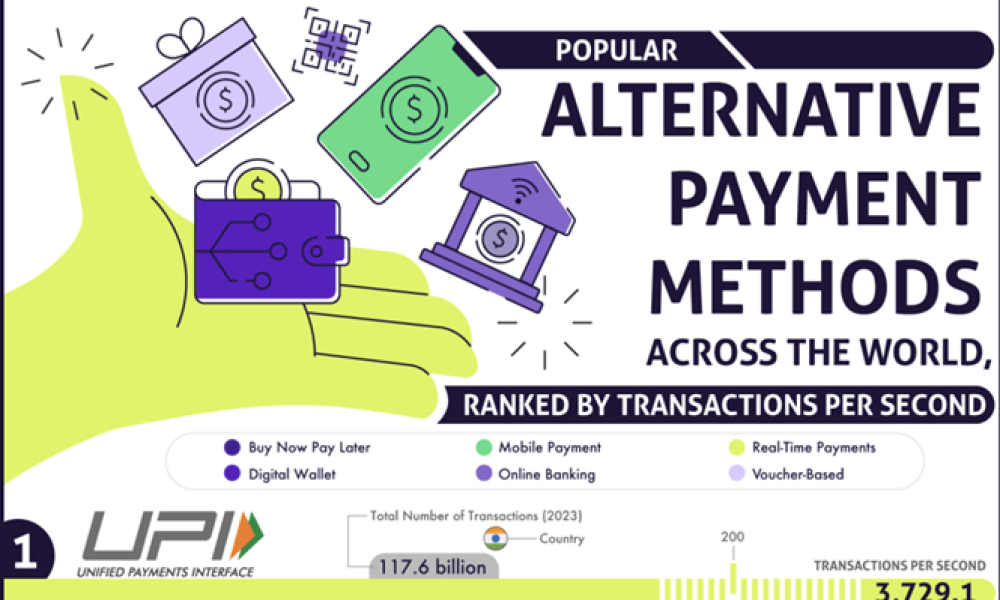
In an increasingly globalized world, alternative payment methods (APMs) have emerged to meet customer demands and expectations. An APM is any method of payment other than cash, credit cards, and debit cards. For the consumer, this wider range of options translates to greater convenience, speed, customer satisfaction, and financial security.
APMs are advantageous for businesses as well. APMs save on card processing fees and cross international borders, granting customers the ability to pay for goods and services from various locations. Consumers are also more likely to spend more money when using their preferred cashless payment method, as paying with cash typically requires more mindfulness than swiping a card or transferring money digitally. Customers may abandon their purchase if their favored payment method is not available. Therefore, it is likely that different payment methods will influence consumer spending behaviors.
Not every APM will work for every business, but it is generally good practice to offer at least one or more types of alternative payment. If businesses refuse to implement more methods for their consumers, they may be sacrificing potential revenue. Factors like security, payout time, cost efficiency, website integration, and—if seeking a multi-national customer base—the ability to process various currencies should be considered. Currently, there are six most prevalent alternative payment methods:
- Buy now, pay later
- Mobile payments
- Real-time payments
- Digital wallets
- Online banking
- Voucher-based
Given that India is the most populated nation with over 1.4 billion people, there is little surprise that its Unified Payments Interface (UPI) takes first place with 3,729.1 transactions per second. Developed by the National Payments Corporation of India and regulated by the Reserve Bank of India, UPI is a real-time payment method that merges different bank accounts into a single mobile application.
The gap between first and second APMs is quite wide, with Skrill amassing 1,553.8 transactions per second from over 100 countries combined. Skrill is a digital wallet that was initially popularized for its low fees for international money transfers and payments. This accessibility lends to its convenience for users from all around the world.
Brazil has its own preferred APM among residents known as Pix. With 1,331.8 transactions per second, Pix sits comfortably in a third place ranking. Similarly to India’s UPI, Pix is a state-owned and real-time system created by the Central Bank of Brazil to ensure rapid and secure transactions for users.
Alipay, the most widely used APM in China, has become essential to daily life as more and more places choose to exclusively accept mobile payments. The prevalence of Alipay combined with China’s population of 1.4 billion people makes it easy to understand why it is fourth place with 1,157.4 transactions per second.
Coming in fifth, PayPal will be the name most familiar to consumers in the United States. It is the first digital wallet of its kind to enter the market and inevitably shaped digital payments for years to come. However, PayPal isn’t only popular among Americans, as it has garnered a user base from 165 countries with 792.7 transactions per second.
The Future of APMs and Digital Transactions
As technology continues to advance, the landscape of APMs is expected to evolve significantly. Emerging trends such as blockchain technology, cryptocurrency, and biometric payments are already beginning to influence the market. Cryptocurrencies like Bitcoin and Ethereum offer decentralized, peer-to-peer transactions with low fees, potentially appealing to consumers and businesses looking for secure, borderless transactions. Biometric payments, which use fingerprints, facial recognition, or voice to authorize transactions, are gaining popularity due to their convenience and heightened security measures.
Key Trends to Watch:
- Cryptocurrency Integration: As more businesses begin to accept crypto payments, these could eventually become mainstream alternatives, especially for cross-border transactions.
- Biometric Payments: With advancements in security, biometric verification could make payments faster and more secure, eliminating the need for physical cards or even mobile phones.
- AI and Machine Learning: AI-driven systems could streamline payment processing, reducing errors and improving the speed of transactions, while also helping businesses detect and prevent fraud in real time.
Businesses that stay ahead of these trends by integrating future-forward payment options will not only enhance customer satisfaction but also maintain a competitive edge in the ever-changing digital economy. The continued growth of APMs signals that both businesses and consumers should be prepared to adapt to new methods as the payment landscape shifts and expands.




