
The Lung Cancer Surgery Market is projected to be valued at USD 1.4 billion in 2024 and is expected to grow at a CAGR of 5.7% over the forecast period (2024–2034). By 2034, the market value is anticipated to reach USD 2.5 billion.
𝐑𝐞𝐪𝐮𝐞𝐬𝐭 𝐚 𝐒𝐚𝐦𝐩𝐥𝐞 𝐑𝐞𝐩𝐨𝐫𝐭 𝐍𝐨𝐰 𝐭𝐨 𝐠𝐞𝐭 𝐏𝐫𝐞𝐦𝐢𝐮𝐦 𝐈𝐧𝐬𝐢𝐠𝐡𝐭𝐬: https://www.futuremarketinsights.com/report-sample#5245502d47422d333936
𝐊𝐞𝐲 𝐌𝐚𝐫𝐤𝐞𝐭 𝐃𝐫𝐢𝐯𝐞𝐫𝐬:
Rising Incidence of Lung Cancer:
- Lung cancer is the second most common cancer and the leading cause of cancer deaths worldwide.
- Smoking is the primary risk factor, increasing lung cancer risk by 15 times and accounting for over 80% of lung cancer deaths.
- The global smoking population is estimated at 1 billion, with numbers expected to surge in the coming decade, particularly in Asia-Pacific and Eastern Europe.
Advancements in Surgical Techniques:
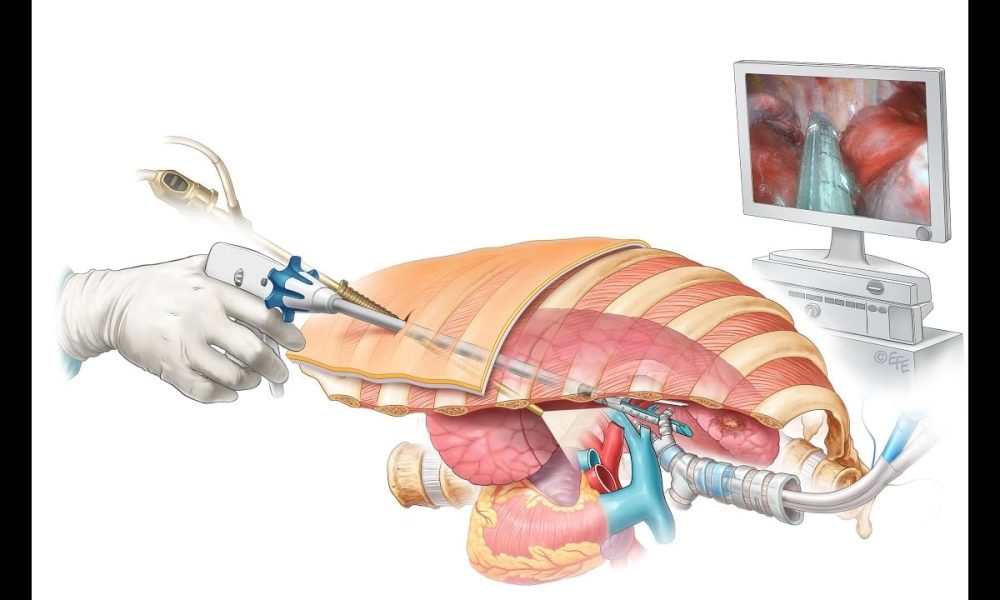
- Minimally invasive techniques, such as Video-Assisted Thoracoscopic Surgery (VATS) and Robot-Assisted Thoracic Surgery (RATS), are gaining traction due to reduced recovery time, less pain, and smaller incisions.
- Robotic systems offer precision and enhanced visualization, increasing the accuracy of tumor removal.
- Growing adoption of advanced surgical tools such as harmonic scalpels, endoscopic staplers, and electrocautery devices.
Early Detection and Diagnosis:
- Increased use of low-dose CT (LDCT) scans and biomarker testing enables early detection of lung cancer, leading to improved surgical outcomes.
- Public health campaigns and awareness initiatives have encouraged early-stage diagnosis, which is more amenable to surgical intervention.
Government Initiatives and Supportive Healthcare Policies:
- Financial assistance programs and insurance coverage are expanding access to lung cancer surgeries.
- Example: Health Minister’s Cancer Patient Fund (HMCPF) in India provides financial support, attracting domestic and international patients.
- Government healthcare schemes in China, Thailand, and Brazil are also boosting cancer surgery adoption.
Growing Geriatric Population:
- Aging population is more susceptible to lung cancer due to weakened immunity and long-term exposure to risk factors like smoking and pollution.
- The increasing elderly population is driving demand for effective and minimally invasive surgical procedures.
𝐌𝐚𝐫𝐤𝐞𝐭 𝐓𝐫𝐞𝐧𝐝𝐬:
Adoption of Robotic-Assisted Surgery:
- Surgeons are increasingly using robotic-assisted thoracic surgery (RATS) for its precision, 3D visualization, and enhanced dexterity.
- Major players like Intuitive Surgical’s da Vinci System and Medtronic’s Hugo RAS are dominating the market.
Shift Toward Minimally Invasive Techniques:
- Video-Assisted Thoracoscopic Surgery (VATS) is becoming the standard for lobectomy and wedge resection due to lower morbidity and quicker recovery times.
- Growing preference for single-port VATS to minimize surgical trauma and postoperative pain.
Emergence of Personalized Surgical Approaches:
- Precision medicine and biomarker testing are influencing surgical planning and treatment strategies.
- Personalized approaches are improving surgical outcomes and patient survival rates.
Integration of Artificial Intelligence (AI) and Augmented Reality (AR):
- Use of AI-driven imaging and AR-assisted navigation systems for real-time surgical guidance.
- AI algorithms help in tumor localization, margin assessment, and risk prediction.
Increasing Collaborations and Strategic Partnerships:
- Collaborations between surgical device manufacturers and healthcare providers for R&D and clinical trials.
- Strategic partnerships to expand product portfolios and market reach.
𝐀 𝐅𝐮𝐥𝐥 𝐑𝐞𝐩𝐨𝐫𝐭 𝐀𝐧𝐚𝐥𝐲𝐬𝐢𝐬: https://www.futuremarketinsights.com/reports/lung-cancer-surgery-market
𝐓𝐲𝐩𝐞𝐬 𝐨𝐟 𝐋𝐮𝐧𝐠 𝐂𝐚𝐧𝐜𝐞𝐫 𝐒𝐮𝐫𝐠𝐞𝐫𝐢𝐞𝐬:
Lobectomy:
- Most common surgical procedure for early-stage non-small cell lung cancer (NSCLC).
- Involves removal of an entire lobe of the lung.
- VATS lobectomy and robotic-assisted lobectomy are gaining popularity.
Segmentectomy/Wedge Resection:
- Involves removal of a small, localized portion of the lung.
- Preferred for small peripheral tumors and patients with limited pulmonary function.
- Increasing use of minimally invasive techniques like VATS.
Pneumonectomy:
- Complete removal of one lung, typically for centrally located tumors.
- Performed less frequently due to high morbidity and mortality rates.
Sleeve Lobectomy:
- Involves removal of a lobe and a portion of the bronchus, followed by rejoining the remaining lung tissue.
- Preserves lung function compared to pneumonectomy.
Radiofrequency Ablation (RFA) and Cryosurgery:
- Minimally invasive alternatives for inoperable lung cancer or small peripheral tumors.
- Involves targeted destruction of tumor cells using heat (RFA) or extreme cold (Cryosurgery).
𝐄𝐧𝐝-𝐔𝐬𝐞𝐫:
Hospitals and Surgical Centers:
- Largest end-user segment due to availability of advanced surgical equipment and expert thoracic surgeons.
- Adoption of robotic-assisted systems and minimally invasive techniques.
Specialty Cancer Clinics:
- Focus on comprehensive cancer care, including diagnosis, surgery, and post-operative care.
- Increasing use of multidisciplinary approaches for personalized cancer treatment.
Ambulatory Surgical Centers (ASCs):
- Growing preference for outpatient surgeries due to reduced hospital stay and cost-effectiveness.
- Surge in minimally invasive procedures performed in ASCs.
𝐊𝐞𝐲 𝐓𝐚𝐤𝐞𝐚𝐰𝐚𝐲𝐬:
- The Lung Cancer Surgery Market is projected to reach USD 2.5 billion by 2034, growing at a CAGR of 5.7%.
- Technological advancements, early diagnosis, and government healthcare initiatives are driving market growth.
- North America dominates the market, while Asia-Pacific is the fastest-growing region.
𝐓𝐡𝐞𝐫𝐚𝐩𝐞𝐮𝐭𝐢𝐜 𝐃𝐞𝐯𝐢𝐜𝐞 𝐈𝐧𝐝𝐮𝐬𝐭𝐫𝐲 𝐀𝐧𝐚𝐥𝐲𝐬𝐢𝐬: 𝐂𝐨𝐦𝐩𝐫𝐞𝐡𝐞𝐧𝐬𝐢𝐯𝐞 𝐓𝐫𝐞𝐧𝐝𝐬, 𝐌𝐚𝐫𝐤𝐞𝐭 𝐅𝐨𝐫𝐞𝐜𝐚𝐬𝐭𝐬, 𝐏𝐫𝐨𝐣𝐞𝐜𝐭𝐢𝐨𝐧𝐬, 𝐚𝐧𝐝 𝐂𝐨𝐫𝐩𝐨𝐫𝐚𝐭𝐞 𝐇𝐢𝐠𝐡𝐥𝐢𝐠𝐡𝐭𝐬 𝐀𝐜𝐫𝐨𝐬𝐬 𝟏𝟓+ 𝐂𝐨𝐮𝐧𝐭𝐫𝐢𝐞𝐬: https://www.futuremarketinsights.com/industry-analysis/therapeutic-device
𝐂𝐨𝐦𝐩𝐞𝐭𝐢𝐭𝐢𝐯𝐞 𝐋𝐚𝐧𝐝𝐬𝐜𝐚𝐩𝐞:
Key players are focusing on innovation, strategic collaborations, and geographical expansion. Leading companies include:
- Asap Endoscopic Products
- Ethicon Inc. (J & J)
- Medtronic Plc.
- Germed USA Inc.
- Teleflex Incorporated
- B. Braun Melsungen AG
- Karl Storz
- Richard Wolf
- Olympus Medical Systems Corp
- Intuitive Surgical Inc.
- Ambu A/S
- PENTAX Medical Company
- FUJIFILM Holdings Corporation
𝐊𝐞𝐲 𝐒𝐞𝐠𝐦𝐞𝐧𝐭𝐬 𝐨𝐟 𝐌𝐚𝐫𝐤𝐞𝐭 𝐑𝐞𝐩𝐨𝐫𝐭
By Product:
By product, the market includes thoracoscopes, mediastinoscopes, bronchoscopes, robotic-assisted thoracic surgery systems, surgical staplers, surgical energy instruments, advanced energy instruments, advanced bipolar instruments, ultrasonic instruments, basic energy instruments, bipolar instruments, and monopolar instruments.
By Application:
By application, the primary procedures are lobectomy, segmentectomy, wedge resection, and pneumonectomy.
By End-user:
By end-user, the market is divided into hospitals and ambulatory surgical centres.
By Region:
The industry is spread across North America, Latin America, Europe, East Asia, South Asia, Oceania, and the Middle East and Africa.




