
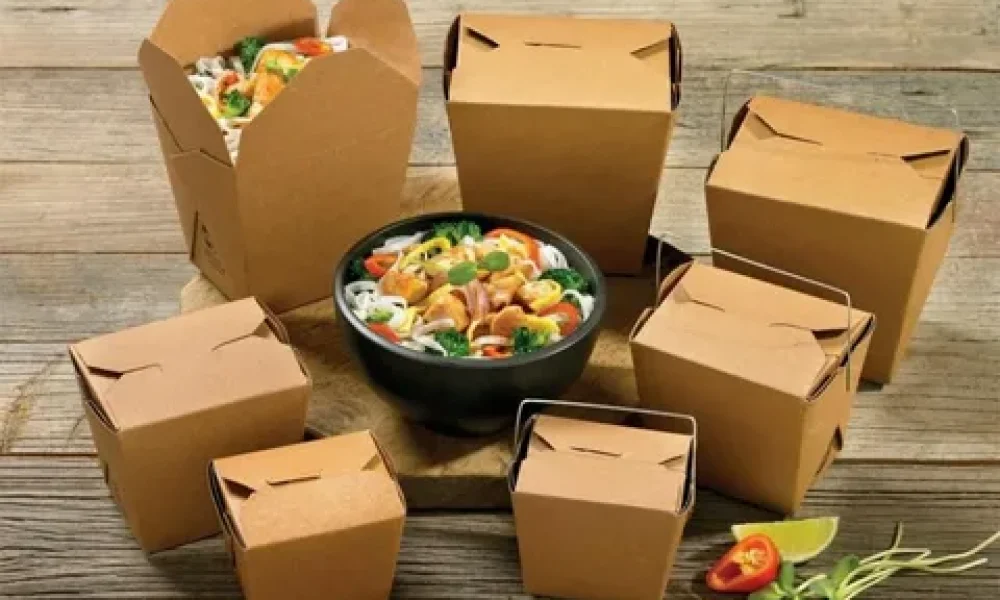
The global compostable foodservice packaging market is experiencing a notable surge, projected to expand from an estimated USD 19.8 billion in 2025 to USD 30.7 billion by 2035, advancing at a steady CAGR of 4.5%. This growth reflects the increasing preference for eco-friendly alternatives to single-use plastics, coupled with rising consumer awareness and regulatory mandates aimed at reducing environmental impact. Among material types, paper and paperboard are expected to capture approximately 40% of total sales, while plates are anticipated to dominate the packaging type segment with a 36.4% share by 2025.
Chain Restaurants Leading Market Demand
Chain restaurants continue to be the largest adopters of compostable foodservice packaging, holding a market share of roughly 35%. The high volumes of both takeaway and dine-in services make these establishments prime candidates for sustainable packaging solutions. Fast-food chains, casual dining outlets, and coffee brands are increasingly aligning with corporate sustainability initiatives and responding to government mandates aimed at reducing plastic waste. Bulk procurement contracts allow these chains to access green packaging at competitive costs, which, coupled with rising consumer willingness to pay for environmentally responsible options, positions eco-friendly packaging as a key brand differentiator. The growing consumer preference for plant-based and organic foods has further incentivized these restaurants to adopt sustainable packaging solutions.
Full Market Report available for delivery. For purchase or customization, please request here:
https://www.futuremarketinsights.com/reports/sample/rep-gb-3210
Material Innovations and Market Drivers
Coated unbleached paper maintains dominance within the paper and paperboard segment, representing approximately 50% of the market. Its robust properties—including strength, grease resistance, and durability—make it ideal for foodservice applications such as takeaway meals, coffee cups, and clamshell containers. Unlike molded fiber, coated unbleached paper offers smoother surfaces, superior printability, and improved liquid-holding capacity, making it a favored option for branded packaging in chain restaurants and coffee chains.
Innovations in compostable foodservice packaging are now focused on combining functionality with environmental responsibility. Standards-led design ensures product development aligns with compostability specifications from the outset, guided by frameworks such as ASTM D6400 and EN 13432. PFAS-free barrier systems are replacing fluorinated chemistries to achieve oil and grease resistance without compromising safety. In addition, tunable biopolymer blends, such as PLA/PBAT/TPS combinations, offer improved toughness, heat resistance, and compostability, while cellulose nanomaterials enhance oxygen and grease barriers on paper and molded fiber packaging. Clear labeling and system guidance further ensure proper disposal, diverting items from landfill to industrial composting facilities.
Application and Packaging Type Trends
Plates continue to hold the largest market share among packaging types, with demand driven by quick-service restaurants, cafeterias, and catering companies. Paper and bagasse plates are favored for their heat retention, durability, and faster decomposition compared to plastic alternatives. Governments worldwide, including in the USA, Canada, Germany, France, India, and China, have introduced bans on single-use plastics, accelerating the shift toward biodegradable and compostable options. Innovations in water-based coatings have further improved moisture and oil resistance, making paper-based containers viable substitutes for traditional plastic-lined products.
Future Market Growth and Regional Insights
The market is forecast to expand significantly over the next decade, with the potential to grow 1.6 times the current value by 2035, offering an incremental opportunity of USD 11.78 billion. Regional growth varies, with North America expected to remain a key market, supported by stringent regulations and federal incentives for sustainable packaging adoption. The USA is projected to grow at a CAGR of 3.4% through 2035, driven by corporate ESG commitments from giants such as McDonald’s, Starbucks, and Whole Foods. Europe is witnessing a rise in zero-waste restaurants and sustainable food initiatives, particularly in Germany, Spain, and the UK, with Spain projected to grow at a CAGR of 4.1%. Asia-Pacific markets, including China, India, and Japan, are expanding rapidly due to growing regulatory support and awareness, with India leading the region at a projected CAGR of 5.6%.
Challenges and Opportunities
Despite growth opportunities, challenges remain. High production costs associated with biopolymers, bagasse, and molded fiber can impact smaller players. Limited industrial composting infrastructure in many regions also hinders the full potential of compostable packaging. However, investment in scalable, economically viable production methods, coupled with the development of biodegradable coatings and fiber-based materials, is expected to mitigate these barriers. The increasing focus on circular economy solutions, reusable packaging models, and eco-certifications will further accelerate adoption and market penetration.
Get the Report Brochure Now:
https://www.futuremarketinsights.com/reports/brochure/rep-gb-3210
Key Players Driving Market Innovation
The compostable foodservice packaging market comprises a mix of established global leaders, mid-sized regional players, and smaller local businesses. Tier 1 companies such as Huhtamaki Oyj, Stora Enso Oyj, Georgia-Pacific LLC, WestRock Company, and Mondi Group lead in production capacity, technological innovation, and global distribution. These firms offer a wide product range, emphasizing sustainability, performance, and compliance with international compostability standards.
Mid-sized Tier 2 companies, including Smurfit Kappa Group plc, Vegware Ltd., Ultra Green Packaging Inc., and Verterra Dinnerware Private Limited, leverage regional expertise and innovative packaging designs to capture local demand. Tier 3 players, often operating at a smaller scale, serve niche markets and provide localized solutions, contributing to market diversity and innovation.
Recent developments highlight continued innovation and collaboration. In 2024, Sabert Corporation launched pulp-based hinged containers and portion cups; IMEX Vision introduced fully compostable paper cups for hot and cold beverages; Kari-Out Company developed plant-based condiment packets; and Eastman partnered with Sealed Air to create lightweight compostable trays for protein packaging. Eco-Products® launched reusable containers designed to reduce single-use waste, demonstrating a trend toward circular economy strategies.
Conclusion
The global compostable foodservice packaging market is poised for strong, sustained growth over the next decade. Innovations in materials, coatings, and product design are enhancing durability, performance, and environmental compatibility. Rising government regulations, corporate sustainability commitments, and shifting consumer preferences continue to drive adoption, while ongoing investments in industrial composting infrastructure and certification programs are ensuring market readiness. As chain restaurants, coffee chains, and other foodservice providers increasingly embrace compostable solutions, the market is set to transform the global food packaging landscape, creating opportunities for both established manufacturers and new entrants aiming to innovate and expand in this dynamic sector.



