

Gasification Market Size, Share and Trend Analysis Report : Global Opportunity Analysis and Industry Forecast 2023-2032
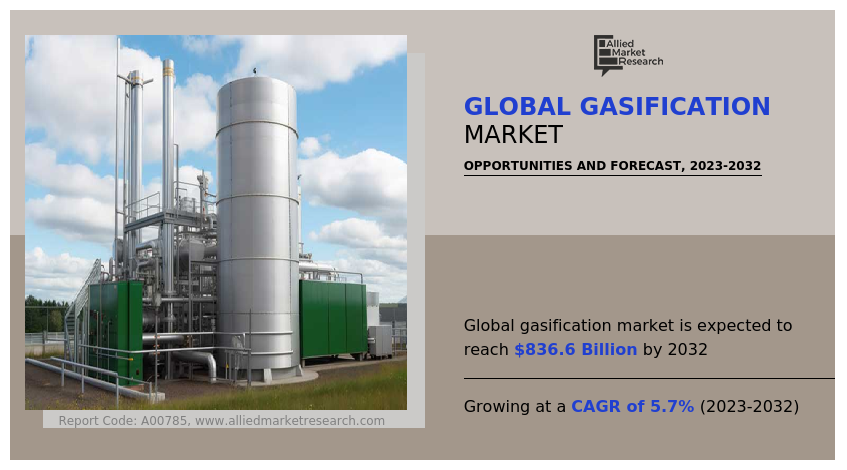
According to a new report published by Allied Market Research, the global gasification market size was valued at $472.20 billion in 2022, and is estimated to reach $836.6 billion by 2032, growing at a CAGR of 5.7% from 2023 to 2032.
Gasification: Transforming Biomass and Fossil Fuels into Energy
Gasification is a thermochemical process that converts organic or fossil-based materials into syngas (synthetic gas), which can be used for electricity generation, heating, and production of chemicals and fuels. This technology offers a promising alternative to traditional combustion methods, enhancing efficiency and reducing emissions.
Download PDF Brochure: https://www.alliedmarketresearch.com/request-sample/932
The Asia-Pacific gasification market registered the highest market share in 2022 and is projected to show the fastest growth during the forecast period.
The key players profiled in the gasification market report include Royal Dutch Shell, Air Liquide, General Electric, Mitsubishi Heavy Industries, SEDIN Engineering Company Limited, Siemens, CB&I, KBR, Thyssenkrupp AG, and Synthesis Energy Systems Inc.
During gasification, the carbonaceous material reacts with a controlled amount of oxygen or steam, producing a mixture of gases composed mainly of carbon monoxide (CO), hydrogen (H2), carbon dioxide (CO2), methane (CH4), and other trace gases. The ratio of oxygen to carbon is carefully regulated to achieve the desired composition of the syngas.
An increase in greenhouse gas emissions, a rise in the use of environmentally friendly energy sources, and a rise in public concern for the environment are the key factors driving the gasification market growth.
Increasing environmental regulations aimed at reducing greenhouse gas emissions and promoting sustainable development have led to a greater emphasis on cleaner energy technologies.
Gasification helps to mitigate environmental concerns by enabling the capture and utilization of carbon dioxide (CO2) emissions and reducing dependence on fossil fuels.
Through the process, corrosive ash components like chlorides and potassium, which can cause a number of issues in the feedstock, are refined to produce clean gas.
The popularity of gasifying fossil fuels for generating electricity at the residential and industrial levels is rising.
Technological advancements in syngas production and reduction of costs are playing an important role in shifting industry preferences toward a responsive and clean source of electricity. These factors are anticipated to have a positive impact on the gasification market forecast.
Key Components of Gasification
- Feedstock: Various materials can be used, including biomass (wood, agricultural residues), coal, and municipal solid waste.
- Gasifier: The core equipment where the gasification process occurs, consisting of a reactor that provides the necessary temperature and pressure for the reaction.
- Syngas: The product of gasification, a mixture of gases that can be used as a fuel or further processed into chemicals and liquid fuels.
Gasification market is becoming more popular as a clean energy replacement due to rising environmental consciousness and increased awareness of sustainability.
Gasification processes are being used in production and manufacturing facilities owing to rapid industrialization, expanding power, chemical, and oil & gas industries, and technological advancements.
Demand for gasification is increasing rapidly in the municipal sector due to the widespread use of gasification for waste disposal and the recycling of complex compost.
The gasification market requires significant upfront investment and operational costs. The capital expenditure involved in building gasification plants, implementing carbon capture and storage, and ensuring compliance with environmental regulations can be significant.
Advantages
- Efficiency: Gasification can convert a higher percentage of feedstock into usable energy compared to traditional combustion.
- Flexibility: The process can utilize a wide range of feedstocks, making it adaptable to different local resources.
- Lower Emissions: Gasification typically produces fewer pollutants compared to direct combustion, reducing harmful emissions and improving air quality.
- Energy Recovery: Syngas can be used for electricity generation, heating, or as a feedstock for producing biofuels and chemicals.
The high costs associated with gasification can pose a barrier to its widespread adoption, particularly in regions where alternative energy sources are cheaper.
In addition, competition for feedstock resources from other industries, such as the agricultural or bioenergy sectors, can further restrict its availability.
Buy This Report (308 Pages PDF with Insights, Charts, Tables, and Figures): https://bit.ly/3VzipWk
Based on type, the fixed bed sub-segment emerged as the global leader in 2022 and the entrained flow is expected to grow with the highest CAGR during the forecast period.
Based on feedstock, the coal sub-segment emerged as the global leader in 2022 and the biomass sub-segment is predicted to have the fastest growth rate during the forecast years.
Based on feed type, the dry feed sub-segment emerged as the global leader in 2022 and is predicted to have the fastest growth rate in the upcoming years.
Based on gasifier medium, the air sub-segment emerged as the global leader in 2022 and the oxygen sub-segment is predicted to have the fastest growth rate during the forecast period.
Based on application, the chemicals sub-segment emerged as the global leader in 2022 and the hydrogen is predicted to have the fastest growth rate.
Applications
- Electricity Generation: Syngas can be burned in gas turbines or internal combustion engines to produce electricity.
- Chemical Production: Used as a precursor for the manufacture of chemicals such as methanol, ammonia, and hydrogen.
- Biofuels: Syngas can be converted into liquid fuels, such as synthetic gasoline and diesel, through processes like Fischer-Tropsch synthesis.
Future Trends
- Advanced Gasification Technologies: Innovations such as plasma gasification and integrated gasification combined cycle (IGCC) systems are being explored to enhance efficiency and reduce costs.
- Carbon Capture and Storage (CCS): Coupling gasification with CCS can help mitigate greenhouse gas emissions, making it a more sustainable option.
- Renewable Feedstocks: Increasing interest in using biomass and waste materials for gasification aligns with global sustainability goals.
Other Trending Reports:-
About Us:
Allied Market Research (AMR) is a market research and business-consulting firm of Allied Analytics LLP, based in Portland, Oregon. AMR offers market research reports, business solutions, consulting services, and insights on markets across 11 industry verticals. Adopting extensive research methodologies, AMR is instrumental in helping its clients to make strategic business decisions and achieve sustainable growth in their market domains. We are equipped with skilled analysts and experts and have a wide experience of working with many Fortune 500 companies and small & medium enterprises.
Pawan Kumar, the CEO of Allied Market Research, is leading the organization toward providing high-quality data and insights. We are in professional corporate relations with various companies. This helps us dig out market data that helps us generate accurate research data tables and confirm utmost accuracy in our market forecasting. Every data company in the domain is concerned. Our secondary data procurement methodology includes deep presented in the reports published by us is extracted through primary interviews with top officials from leading online and offline research and discussion with knowledgeable professionals and analysts in the industry.




