
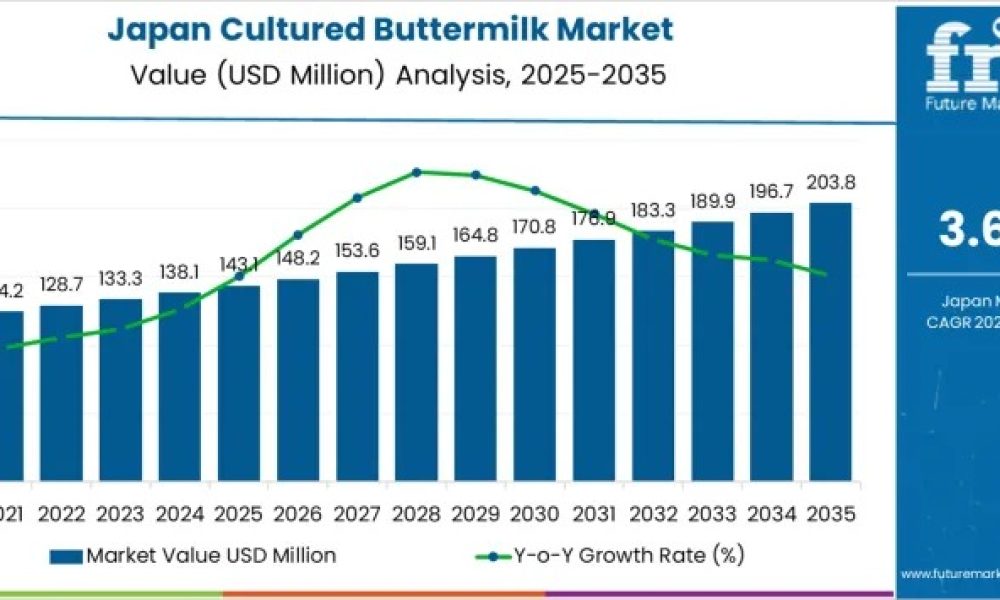
Japan’s demand for cultured buttermilk is entering a phase of steady, health-driven expansion. Valued at USD 143.1 million in 2025, the market is projected to reach USD 203.8 million by 2035, reflecting a compound annual growth rate (CAGR) of 3.6%. This growth is underpinned by rising consumer awareness of digestive health, increasing acceptance of fermented dairy products, and expanding availability across modern retail formats.
Explore trends before investing – request a sample report today!
Cultured buttermilk, traditionally a by-product of churning curdled milk, is increasingly positioned in Japan as a functional dairy option rather than a niche ingredient. Its probiotic content, light texture, and versatility in beverages, cooking, and desserts are aligning well with evolving dietary preferences that emphasize gut health, balance, and preventive nutrition.
Health-Led Consumption Shaping Market Momentum
Japanese consumers are progressively shifting toward foods that deliver measurable health benefits beyond basic nutrition. Cultured buttermilk fits this trend by offering natural probiotics that support digestion, immunity, and overall wellness. This appeal is particularly strong among aging consumers and urban professionals seeking easy-to-consume, health-enhancing products.
Unlike conventional milk, cultured buttermilk is perceived as lighter and easier to digest. As awareness of fermented foods grows—supported by Japan’s longstanding cultural acceptance of fermentation—the product is finding new relevance in both traditional and modern diets. Its use in smoothies, dressings, sauces, and baked goods is further expanding household and foodservice adoption.
Product Type Analysis: Sweet Churned Leads with 63% Share
By product type, sweet churned cultured buttermilk dominates demand, accounting for 63% of the market. Its mild, slightly sweet profile and creamy consistency make it highly adaptable across multiple applications, from ready-to-drink beverages to desserts and culinary bases.
Savory churned cultured buttermilk represents the remaining 37% share. While smaller, this segment is gaining traction among experimental home cooks and foodservice operators seeking tangy, fermented flavors for soups, marinades, and savory recipes. Together, both segments benefit from the broader shift toward clean-label and probiotic-rich ingredients.
Distribution Channels: Modern Retail at the Forefront
Hypermarkets and supermarkets account for 53% of total demand, making them the primary access point for cultured buttermilk in Japan. Their dominance is driven by wide product assortments, frequent promotions, and consumer trust in established retail chains. Shoppers benefit from the ability to compare brands, packaging formats, and price points in a single location.
Convenience stores play a growing role, particularly in urban centers, where busy consumers seek quick, health-oriented options. Other channels, including online platforms and specialty health stores, hold a smaller but expanding share as cold-chain logistics and e-commerce adoption improve.
Regional Outlook: Kyushu & Okinawa Set the Pace
Demand growth varies by region, reflecting differences in demographics, food culture, and health awareness.
- Kyushu & Okinawa lead with a 4.5% CAGR, driven by strong interest in fermented foods and digestive wellness.
- Kanto follows at 4.1%, supported by Tokyo’s dense urban population and high uptake of functional foods.
- Kansai records steady growth at 3.6%, benefiting from its vibrant food culture and wellness trends.
- Chubu, Tohoku, and the Rest of Japan show moderate growth of 3.2%, 2.8%, and 2.7%, respectively, as awareness gradually expands beyond major metros.
These regional trends indicate that while adoption is currently strongest in urban and health-focused areas, broader nationwide growth is underway.
Innovation and Industry Developments Supporting Adoption
Technological advancements in fermentation and packaging are enhancing product consistency, shelf life, and convenience. Single-serve formats, flavored variants, and lactose-reduced options are helping brands reach new consumer segments. Improved cold-chain infrastructure is also enabling wider distribution, including through online channels.
However, challenges remain. Cultured buttermilk competes with well-established probiotic products such as yogurt and kefir, and overall consumer familiarity is still developing. Pricing sensitivity and storage requirements may also limit penetration in less urbanized regions.
Subscribe for Year-Round Insights → Stay ahead with quarterly and annual data updates
Competitive Landscape and Market Direction
Key players shaping Japan’s cultured buttermilk demand include Bettys and Taylors Group, Bharat Group, CALIFORNIA TEA HOUSE, COFCO, and FMS Consumer Products. These companies are focusing on quality, functional positioning, and product innovation to appeal to health-conscious consumers.
As Japan’s functional food market continues to expand, cultured buttermilk is expected to gain a stronger foothold. Its combination of probiotic benefits, culinary flexibility, and alignment with wellness trends positions it as a steadily emerging dairy segment through 2035.
With demand rising across regions and retail formats, cultured buttermilk is transitioning from a niche dairy product to a recognized functional staple in Japan’s evolving food landscape.
About Future Market Insights (FMI)
Future Market Insights, Inc. (FMI) is an ESOMAR-certified, ISO 9001:2015 market research and consulting organization, trusted by Fortune 500 clients and global enterprises. With operations in the U.S., UK, India, and Dubai, FMI provides data-backed insights and strategic intelligence across 30+ industries and 1200 markets worldwide.



