
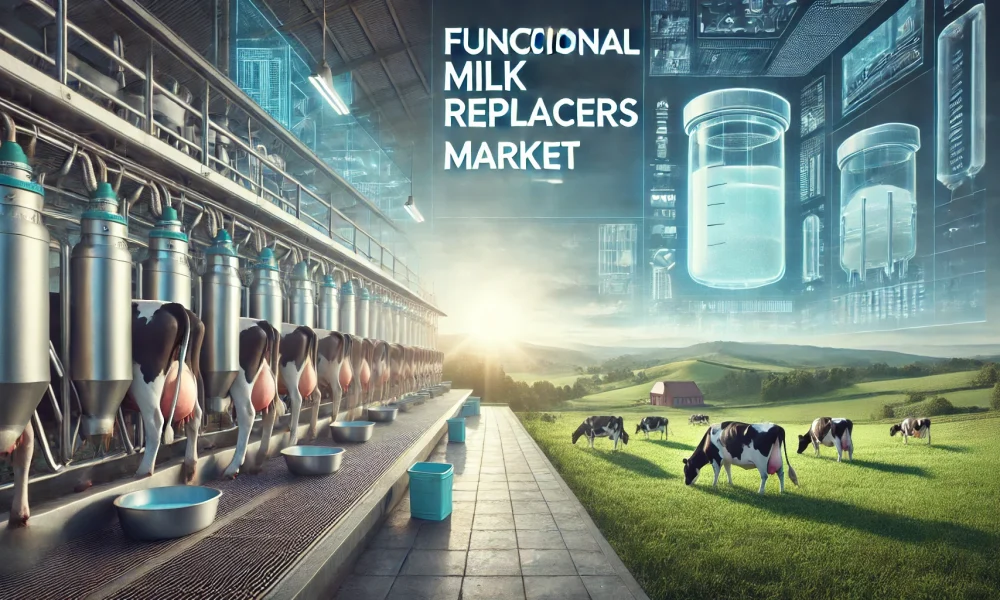
The functional milk replacers market is experiencing significant growth, with its valuation reaching around USD 6,197.54 million in 2025. Projections indicate the market will expand to approximately USD 10,095.14 million by 2035, growing at a CAGR of 5% during the forecast period. The expansion is largely fueled by a growing global livestock population, increasing awareness about animal health, and a notable transition toward sustainable and plant-based milk replacer alternatives.
Functional milk replacers have become an indispensable part of modern animal nutrition. These specialized formulations are developed using a combination of proteins, fats, carbohydrates, vitamins, and minerals to mimic the nutritional content of maternal milk. They are designed to support the development and health of young animals when natural milk is unavailable or insufficient. Their benefits include improved digestibility, minimized disease transmission risk, and better control over nutrient delivery—making them ideal for tailoring animal diets across various species and life stages. As livestock farming trends shift towards efficiency and sustainability, these replacers continue to play a vital role in supporting productivity and health.
Your Guide to Market Intelligence – Download a Sample Copy: https://www.futuremarketinsights.com/report-sample#5245502D47422D3134313332
Key Functional Milk Replacers Market Trends Highlighted
- Shift Toward Plant-Based and Non-GMO Ingredients: Driven by consumer demand and regulatory guidelines, manufacturers are increasingly formulating plant-based milk replacers.
- Probiotic and Prebiotic Integration: Gut health is a growing focus area, leading to a surge in milk replacers enhanced with probiotics and prebiotics.
- Personalized Nutrition and Species-Specific Formulations: Brands are investing in customized milk replacers to match the precise nutritional needs of calves, piglets, lambs, and other young livestock.
- Digitalization and Automation in Feeding Systems: Precision livestock farming and automated nutrition delivery systems are enabling better efficiency and monitoring in feed practices.
Functional Milk Replacers Industry Developments
- ADM Animal Nutrition launched a next-gen milk replacer line with microencapsulated nutrients for improved digestion and absorption.
- Cargill expanded its research partnerships to explore enzymatic and probiotic additives in functional milk replacers, targeting gut microbiota improvement.
- Nutreco initiated a sustainable production program to reduce the carbon footprint of its dairy nutrition products, including milk replacers.
- Land O’Lakes invested in developing high-performance replacers for organic and antibiotic-free livestock production, responding to clean-label demands.
Key Takeaways of Report
- The market is forecast to grow at a steady 5% CAGR between 2025 and 2035.
- Rising demand for sustainable, plant-based, and digestibility-enhanced milk replacers is transforming industry dynamics.
- Technological advancements and strategic collaborations in R&D are playing a pivotal role in innovation.
- North America and East Asia are expected to lead market growth, driven by strong feed production infrastructure and sustainability mandates.
Functional Milk Replacers Market Drivers
- Surge in Global Livestock Population: Increasing demand for meat and dairy products is fueling the need for efficient early-life nutrition.
- Rising Focus on Animal Welfare and Health: Functional replacers ensure animals receive balanced nutrition, reducing mortality and promoting growth.
- Adoption of Sustainable Farming Practices: Eco-conscious farming practices are encouraging the use of replacers to minimize the reliance on maternal milk.
- Increased R&D Investments: Research into alternative proteins, enhanced nutrient delivery, and gut-health-boosting additives is expanding product innovation.
Transform Data into Action – Get the Full Market Report: https://www.futuremarketinsights.com/reports/functional-milk-replacers-market
Functional Milk Replacers Market Regional Insights
United States
The U.S. market benefits from significant advancements in animal nutrition, precision farming, and sustainable agriculture. The presence of major feed producers, coupled with high R&D investment, is propelling innovation. Trends such as bio-based formulations and automated feeding systems are shaping the landscape.
CAGR (2025–2035): 5.2%
United Kingdom
The UK’s focus on sustainable agriculture and strict regulatory standards is fueling growth in plant-based and non-GMO milk replacers. Industry growth is further boosted by investments in nutrient-enriched feed additives and partnerships driving innovation in gut-health solutions.
CAGR (2025–2035): 5.1%
European Union (Germany, France, Netherlands)
High standards in food safety and a strong focus on sustainability have made the EU a robust market for functional milk replacers. The region is seeing a rise in demand for prebiotics, probiotics, and lactose-free formulations, with emphasis on carbon-neutral manufacturing.
CAGR (2025–2035): 5%
Japan
Japan’s demand is driven by high-tech dairy practices, pet nutrition, and precision animal husbandry. The market is moving toward enzyme-fortified and probiotic-rich replacers, with continued investment in robotic milking systems and feed automation.
CAGR (2025–2035): 5.3%
South Korea
South Korea is witnessing fast-paced growth due to innovations in livestock feed, aquaculture, and pet nutrition. Research partnerships are focusing on enzyme-based and gut-health-enhancing milk replacers, making the country a promising player in the market.
CAGR (2025–2035): 5.4%
Competition Outlook
The functional milk replacers market is moderately consolidated, with key players engaging in strategic alliances, acquisitions, and product launches. Leading companies include:
- Cargill Inc.
- ADM Animal Nutrition
- Land O’Lakes, Inc.
- Nutreco N.V.
- Lactalis Group
- FrieslandCampina
Smaller players and startups are entering the space with niche innovations such as vegan formulations, microbiome-targeted replacers, and sustainably sourced ingredients. As the competition intensifies, differentiation through functional claims and clean-label certifications is expected to shape the competitive landscape.
Explore Dairy Alternatives Industry Analysis: https://www.futuremarketinsights.com/industry-analysis/dairy-alternatives
Functional Milk Replacers Market Segmentation
By Source:
- Milk Sources
- Non-milk Sources
- Plant-based
- Soy protein
- Wheat protein
- Pea protein
- Others
- Animal-based
- Plant-based
By Type:
- Instantized Formula
- Non-instantized Formula
By Form:
- Powder
- Liquid
By Distribution Channel:
- B2B (Direct Sales)
- B2C (Indirect Sales)
- Hypermarket/Supermarket
- Specialty Store
- Convenience Store
- Discount Store
- Other Store-based Retailing
- Online Retail
By Region:
- North America
- Latin America
- East Asia
- South Asia & Pacific
- Eastern Europe
- Western Europe
- Middle East & Africa
About Future Market Insights (FMI)
Future Market Insights, Inc. (ESOMAR certified, recipient of the Stevie Award, and a member of the Greater New York Chamber of Commerce) offers profound insights into the driving factors that are boosting demand in the market. FMI stands as the leading global provider of market intelligence, advisory services, consulting, and events for the Packaging, Food and Beverage, Consumer Technology, Healthcare, Industrial, and Chemicals markets. With a vast team of over 400 analysts worldwide, FMI provides global, regional, and local expertise on diverse domains and industry trends across more than 110 countries.




