
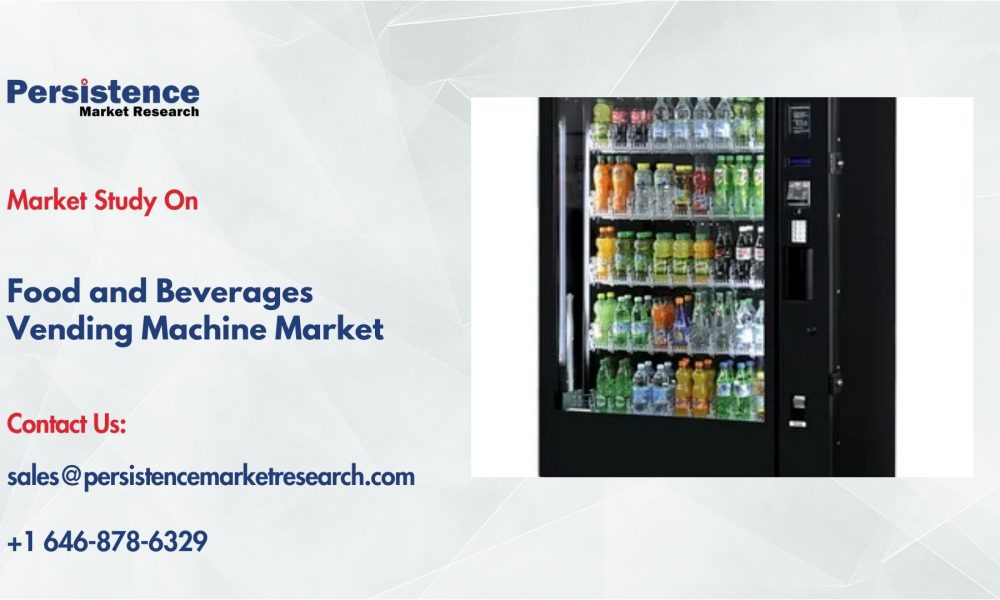
Overview of the Food and Beverages Vending Machine Market
The global food and beverages vending machine market is set to expand steadily, with its size projected to be valued at US$21.5 billion by 2025 and anticipated to reach US$29.1 billion by 2032, registering a CAGR of 4.4% between 2025 and 2032. The rising adoption of vending machines across workplaces, educational institutions, transportation hubs, and healthcare facilities is significantly shaping this market’s trajectory. Consumer demand for convenience, on-the-go food options, and healthier snacks is encouraging manufacturers to innovate with product offerings and advanced machine technology. The growing acceptance of cashless and contactless payments is further boosting demand, aligning with consumer preference for fast, hygienic, and easy-to-use services.
Among the leading segments, beverage vending machines hold the dominant market share, primarily driven by high demand for soft drinks, bottled water, coffee, and energy drinks. Food vending machines offering ready-to-eat meals and snacks are also growing rapidly, fueled by consumer interest in quick-service solutions. Regionally, North America is the largest market, supported by strong adoption across urban infrastructure, higher disposable incomes, and significant investments in digital vending solutions. Meanwhile, Asia-Pacific is emerging as a high-growth region due to expanding urban populations, changing lifestyles, and increasing installation of smart vending machines in countries like China, Japan, and India.
Key Highlights from the Report
- The market is projected to grow at a CAGR of 4.4% between 2025 and 2032.
- North America remains the dominant region, with Asia-Pacific emerging as a growth hotspot.
- Beverage vending machines hold the largest share in the overall market.
- Contactless payment solutions are driving adoption across multiple end-user sectors.
- Increasing demand for healthier snack and meal options is reshaping product offerings.
- Workplace and transportation hubs are key revenue-generating end-use environments.
Market Segmentation
The food and beverages vending machine market is broadly segmented based on product type, payment mode, and end-user applications. By product type, beverage vending machines currently account for the largest share, offering soft drinks, bottled water, and hot beverages such as tea and coffee. Food vending machines, including those providing snacks, confectionery, and ready-to-eat meals, are also witnessing significant growth as consumers increasingly seek quick and nutritious options. Hybrid vending machines that combine both food and beverage products are gaining traction, especially in high-traffic areas.
In terms of payment modes, the market is shifting from cash-based transactions to cashless options, including smart cards, mobile wallets, and QR code-based systems. Contactless payments have become particularly popular in the post-pandemic landscape, offering a seamless and hygienic transaction experience. End-users form another critical segmentation, with workplaces, educational institutions, healthcare facilities, airports, metro stations, and retail centers representing major installation environments. Workplaces and transportation hubs lead in demand, as they cater to a high volume of daily consumers seeking convenience.
𝐆𝐞𝐭 𝐚 𝐒𝐚𝐦𝐩𝐥𝐞 𝐏𝐃𝐅 𝐁𝐫𝐨𝐜𝐡𝐮𝐫𝐞 𝐨𝐟 𝐭𝐡𝐞 𝐑𝐞𝐩𝐨𝐫𝐭 (𝐔𝐬𝐞 𝐂𝐨𝐫𝐩𝐨𝐫𝐚𝐭𝐞 𝐄𝐦𝐚𝐢𝐥 𝐈𝐃 𝐟𝐨𝐫 𝐚 𝐐𝐮𝐢𝐜𝐤 𝐑𝐞𝐬𝐩𝐨𝐧𝐬𝐞): https://www.persistencemarketresearch.com/samples/6454
Regional Insights
North America dominates the food and beverages vending machine market, thanks to well-established urban infrastructure, higher disposable incomes, and consumer acceptance of automated retail solutions. The region has also witnessed rapid adoption of advanced vending technologies, including machines with touchless operations, AI-based product recommendations, and integration with digital wallets. Europe follows closely, with strong growth supported by demand for healthier food and beverage alternatives and stringent regulatory compliance on product safety.
Asia-Pacific is the fastest-growing regional market, fueled by rising urbanization, busy work lifestyles, and the increasing popularity of smart vending solutions in high-density public spaces. Countries such as Japan have long embraced vending culture, while China and India are rapidly expanding their networks. Latin America and the Middle East & Africa are smaller markets but are expected to grow steadily due to improving infrastructure and growing investments in automated retail.
Market Drivers
The primary driver of the food and beverages vending machine market is the global consumer shift toward convenience and quick access to meals and drinks. Rapid urbanization and fast-paced work lifestyles have heightened the demand for on-the-go solutions, fueling installations in transportation hubs, offices, and healthcare centers. The integration of digital technologies, including AI-driven inventory management, remote monitoring, and cashless payment systems, has further enhanced the appeal of vending machines. Moreover, increasing consumer health consciousness is pushing suppliers to stock machines with healthier snacks, plant-based beverages, and low-calorie options, widening the market’s appeal.
Market Restraints
Despite positive growth, the market faces restraints such as high initial investment costs for advanced vending machines and ongoing maintenance requirements. Machines installed in outdoor or high-traffic areas often experience technical breakdowns and vandalism, leading to increased operating costs. Regulatory restrictions on sugar-rich beverages and junk food, particularly in schools and healthcare facilities, can also limit product variety. Additionally, competition from convenience stores, cafes, and e-commerce food delivery services presents challenges to market expansion.
Market Opportunities
Opportunities lie in expanding the presence of smart vending machines equipped with IoT connectivity, data analytics, and real-time inventory tracking. These machines not only improve efficiency for operators but also enhance the consumer experience through personalized product suggestions and dynamic pricing. There is also strong potential in offering organic, plant-based, and locally sourced food and beverage options, catering to health-conscious demographics. Expansion into emerging markets with growing urban populations presents another significant opportunity, particularly as infrastructure for automated retail develops.
Reasons to Buy the Report
- Gain comprehensive insights into global market trends, size, and growth projections.
- Understand key drivers, restraints, and opportunities shaping the industry.
- Identify high-growth segments and regions for strategic investment.
- Access detailed competitive landscape analysis with key player strategies.
- Leverage reliable forecasts to support data-driven business decisions.
Frequently Asked Questions (FAQs)
How Big is the Food and Beverages Vending Machine Market by 2025 and 2032?
Who are the Key Players in the Global Food and Beverages Vending Machine Market?
What is the Projected Growth Rate of the Food and Beverages Vending Machine Market?
What is the Market Forecast for the Industry by 2032?
Which Region is Estimated to Dominate the Food and Beverages Vending Machine Industry through the Forecast Period?
Company Insights
- Azkoyen Group
• Fuji Electric Co., Ltd.
• Sanden Holdings Corporation
• Royal Vendors Inc.
• Westomatic Vending Services Ltd.
• Seaga Manufacturing Inc.
• Crane Co.
• FAS International S.p.A.
• Bianchi Industry S.p.A.
• Rhea Vendors Group S.p.A.
Recent developments in the market highlight growing investments in digital and smart vending solutions. In 2023, Fuji Electric announced the launch of AI-enabled vending machines designed to optimize inventory and enhance personalization. Meanwhile, Azkoyen Group expanded its European footprint by introducing new vending models focusing on energy efficiency and environmentally friendly refrigeration technologies.
The food and beverages vending machine market is evolving rapidly in response to shifting consumer preferences, technological innovation, and expanding infrastructure. With rising demand for convenient, healthy, and digitally integrated solutions, the industry is expected to grow consistently over the forecast period, creating ample opportunities for manufacturers, service providers, and investors alike.
Explore the Latest Trending Research Reports:




